

Amna Saqib
The United States National Security Strategy (NSS) 2025 represents a noticeable tightening of Washington’s global footprint. Unlike earlier approaches of integration broader values, global crisis-management ambitions and ideological commitments, the NSS of 2025 is a defined set of national priorities that focus on domestic economic recovery, migration control, hemispheric consolidation and selective external engagement.
Despite the fact that South Asia has a peripheral position in the document, the changes that are embedded in this strategy will determine the nature of the strategic environment in which Pakistan will conduct its policy choices. The most notable feature of the NSS 2025 is that it minimises international commitments in favour of enhanced domestic foundations.
NSS 2025 shifts US focus to domestic industrial revival, limiting overseas intervention.
The document clearly puts the renewal of America’s industrial base, defence production capacity, supply-chain resilience and energy dominance at the center of national power. Washington’s domestic-first policy has strategic implications for regions like South Asia, where states have traditionally balanced their defence and diplomatic decisions with the sustained security and diplomatic footprint of the US. This published NSS document specifies that the US will be more selective in its strategic resources and how it expends strategic resources by foregrounding an internal industrial strength and requiring reciprocal and not open-ended partnerships.
The framing of China in the present strategy is equally important. While the NSS 2025 views China as the main strategic competitor of the US, yet it also focuses on economic instruments, such as industrial policy, supply-chain security, export controls, investment screening and technological standards, as the main source of competition. Although deterrence in the Asia-Pacific remains a stated priority, the document avoids the ideological or military-forward tone seen as observed in previous strategies.
For Pakistan, this is important as it reduces pressure to align with any bloc, thereby, helps preserves strategic space for cooperation with both China and the US. However, the interest of NSS in securing global supply chains, including critical minerals, might overlap with the new emerging role of Pakistan in minerals development, which will have to be attentively diplomatized.
This NSS is also an indicator of a change in US expectations within Europe and the Middle East. Europe is characterised as a region that has to take central responsibility for its own security, where the US will carry a more supportive yet restricted role. Washington’s engagement in the Middle East has been reduced to functional interests of energy security, counterterrorism, migration and regional stability as opposed to long-term political or military oversight.
For Pakistan, which maintains close diplomatic, labour and security relations with the Gulf, this provides additional space. As the US reduces its day-to-day management of regional affairs, Gulf states can pursue more diversified partnerships, which could allow Pakistan to forge closer security ties and economic collaboration without having to navigate the constraints of an overbearing American regional agenda.
India is no longer framed as the central guarantor in South Asia.
Among the most decisive aspects of the NSS was that it placed domestic industrial revival as the primary pillar of the US strategy. This emphasis on reshoring, production resilience and the development of defence industry can change the American defence partnerships. To India, which is expecting deeper military-technology cooperation with Washington, the shift brings uncertainty: the emphasis on domestic production implies a more reciprocal framework than automatic patronage.
The NSS does not minimize the role of India, but no longer presents New Delhi as the linchpin of the US ‘Indo-Pacific strategy’. Also, unlike earlier US strategic formulations that hinted at India’s regional security role, this NSS evades assigning India an explicit responsibility for regional order or burden-sharing. This distinction shifts the tone. In the case of Pakistan, this may help in easing previous apprehensions about externally shaping regional imbalance and strengthens its view that stability in South Asia is more likely based on balanced deterrence and autonomous regional power equations rather than external guarantees.
The second significant structural factor, which the NSS 2025, and many regional commentaries, have not given significant attention to the American focus on migration as a threat to national security. The policy introduces unrestricted migration as a systemic challenge to national security and outlines extensive interventions in border management, deportation and hemispheric defence.
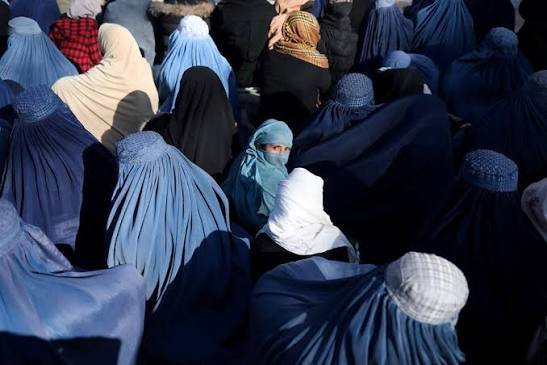
It may also be directly relevant to Pakistan, which harbors a substantial number of Afghan refugees and is central to the humanitarian and migration flows originating in Afghanistan. These US hardening towards migration will influence visa regimes, aid flows, negotiations of refugees and the political environment facing displaced Afghans, issues that directly challenges the domestic and regional security calculus of Pakistan.
Equally, the hemispheric doctrine of the NSS, which focuses on securing Western Hemisphere security and restricting opposing influence over it, indicates a shift in the US priorities regarding its resources and efforts. As Washington focuses inward and westward, its bandwidth to play its role in crises, including South Asia will be limited. One important caveat is that Indian actions can still trigger crisis instability, and with frail bilateral mechanisms and the absence of sustained dialogue, even small incidents can escalate rapidly. This places greater responsibility on regional states to maintain crisis stability and it benefits strong bilateral mechanisms as opposed to depending on US intervention.
Pakistan gains strategic space for non-aligned, multipolar regional engagement.
The structural outcome of this positioning could accelerate the emergence of multipolarity. The US, by scaling down its global ambitions and forward deployments, may inadvertently give regional powers more space to build influence. In South Asia, this strengthens strategic autonomy as the guiding principle for states to balance between China, US and the emerging alignments. For Pakistan, a multipolar environment that is rooted in non-alignment and issue-based cooperation is less threatening to the stability of the region compared to the bloc politics that have traditionally increased the security vulnerability of South Asia.
Although India’s long-term rise may be a structural reality determined by the demographic weight, the economic scale and global integration, NSS 2025 neither accelerates nor guarantees it. Instead, the strategy is based on the fact that the path of India is conditional upon its own economic and political decisions as opposed to being ensured with external sponsorship. In the case of Pakistan, the rational response would be to increase the technological modernisation, stabilise its economy, diversify its partnerships and consolidate its credible regional deterrence.
The NSS 2025, then as viewed through the prism of Islamabad, may be regarded as correction: a move towards American restraint, realism and acknowledgement of the limitations of global engagement through militarization. The paper doesn’t make India a unilateral formal regional guarantor in the region, nor does it frame alliances in ways that compel states to adhere to rigid geopolitical alignment, and it also minimizes ideological than previous US foreign policy.
This realigned approach may provide Pakistan with diplomatic and strategic manoeuvre space in South Asia, in the Gulf and in the broader Asia-Pacific to seek a balanced external engagement and strengthen long held policies of multipolarity, non-bloc alignment and regional equilibrium.

The author is a Research Officer & Assistant Editor at the Center for International Strategic Studies (CISS) Islamabad.