
Faizan Riaz
Sixteenth Report of the United Nations Security Council’s Analytical Support and Sanctions Monitoring Team provides the most authoritative international assessment to date of governance in Afghanistan under the Taliban regime. It depicts a political order marked by extreme centralization of authority, rigid ideological control, limited institutional, and unresolved internal contradictions. Together, these features raise serious concerns about the regime’s long-term effectiveness and its ability to deliver sustainable security and governance.
At the apex of the system stands Hibatullah Akhundzada, who exercises undisputed authority as Amir al Mu’minin. According to the report, Akhundzada is not a symbolic figurehead but an ultimate decision-maker, ruling primarily through religious decrees rather than formal institutions. He remains physically isolated in Kandahar, which functions as the regime’s real political centre and does not engage in policy debate or consultation in any conventional sense.
Decision-making is tightly centralized. Akhundzada appoints loyalists across the administration, while the Councils of Ulema have been established in every province to report directly to Kandahar. These bodies serve as instruments of ideological oversight rather than representative governance. Leadership debate is discouraged, and dissent is managed through dismissal, detention, coercion, or exile.
Beneath this façade of unity, however, the report identifies persistent internal rifts. The most significant tensions lie between Kandahar-based hardliners and Kabul-based pragmatists, particularly between Akhundazada’s inner clerical circle and the Haqqani Network led by Interior Minister Sirajuddin Haqqani. Haqqani has publicly and privately expressed reservations about governance failures and the rigid stance on women’s education. His prolonged absence from Afghanistan in early 2025, following the Hajj and his carefully calibrated statements upon return, reflected an internal balancing act rather than genuine reconciliation. While some observers downplay these divisions as manageable, the absence of any clear succession plan renders leadership continuity a latent vulnerability.
Several senior Taliban figures who criticized policies on girls’ education, including Sher Mohammad Abbas Stantekzai and religious scholar Abdul Sami Ghaznawi were dismissed, detained or forced into exile. These cases underscore how ideological conformity is enforced and how even internal religious debate is increasingly criminalized.
The Taliban regime does not view popular consent as a prerequisite for legitimacy. Governance is opaque, poorly communicated, and strictly top-down, with little regard for public accountability. The sudden nationwide internet shutdown in October 2025 ordered without explanation and later partially reversed, exemplified the arbitrary nature of decision-making. Reports that the order was countermanded by the prime minister rather than Kandahar also exposed internal tensions.
While the regime has consolidated control in urban centres, its writ is uneven across the country. Powerful factions, particularly the Haqqani Network, enjoy operational autonomy so long as they do not challenge regime unity. Selective tolerance of local deviations from unpopular policies further highlights the absence of a uniform rule of law.
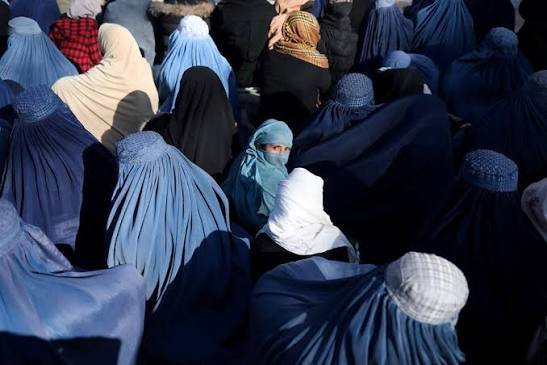
One of the most consequential findings of the report concerns the systematic reengineering of Afghanistan’s education system. Education has been placed under Akhundzada’s direct authority and transformed into a vehicle for ideological indoctrination. Curricula at schools and universities have been rewritten to remove references to civic values, democracy, constitutional law, human rights, women’s rights, ethics, and international institutions. At least 18 academic disciplines were banned outright, while more than 200 subjects were allowed only after being rewritten to conform to Taliban ideology. Entire fields, including political science, sociology, gender studies, media, economics, and law, have been hollowed out or distorted. The continued ban on girls’ education remains the most contentious internal issue, contradicting Afghanistan’s own religious traditions in many regions and carrying severe long-term economic consequences.
Despite acute fiscal constraints, the Taliban have prioritized the construction of mosques and madrassas nationwide. Cabinet meetings chaired by Akhundzada have instructed ministries to expand religious infrastructure and strengthen curricula based on the Hanafi Deobandi school of thought. References to other Islamic traditions have been removed, while surveillance and crackdowns on non-Deobandi religious actors have intensified, reinforcing ideological uniformity at the expense of pluralism.
On security, the report offers a mixed assessment. Overall violence has declined compared to pre-2021 levels, and sustained operations against ISIL-K have degraded but not eliminated the group. ISIL-K continues to operate in small cells, particularly in northern and eastern Afghanistan, and retains capacity for high-profile attacks. More critically, over 20 other terrorist groups remain active in the country, and most maintain cooperative relations with the regime. Absorption of former militants into local security forces increases manpower but heightens risks of ideological infiltration. Corruption, weak accountability, ethnic imbalances, and budgetary constraints further undermine security effectiveness.
The regime governs amid severe economic stress. GDP contracted sharply in early 2025, unemployment stands at approximately 75 per cent, and more than 70 per cent of the population depends on humanitarian assistance. The returns of over 4.5 million Afghans and restrictions on female aid workers have further strained capacity, despite some improvement in domestic revenue collection.
Report concludes that while Taliban have consolidated power and imposed a form of order, this stability is brittle. It rests on coercion, ideological conformity and repression rather than inclusive governance or broad-based legitimacy. For Pakistan and wider region, these internal dynamics carry significant implications as Afghanistan remains internally rigid, externally destabilizing, and deeply resistant to reform.
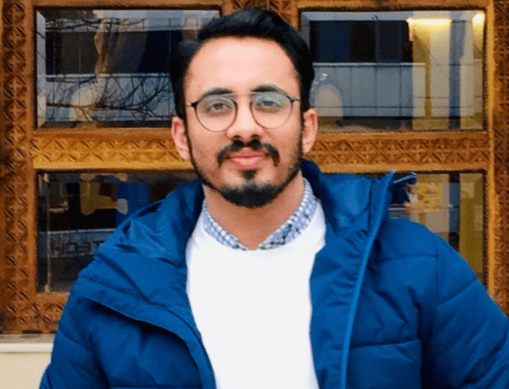
The author is a Assistant Research Associate (ARA) at Islamabad Policy Research Institute (IPRI), Islamabad.
[…] the centre of this system is Hibatullah Akhundzada. Ministries, courts, and advisory bodies exist in form, but they do not drive decision-making. […]