
Dr Attiq-ur-Rehman
The lack of a consensual peace agreement between Kabul and Islamabad on the settlement of their present conflict regarding cross-border terrorism has become an epicentre of contemporary South Asian regional politics, where the Indian critical role cannot be marginalised.
The Islamabad-based government authorities always remained ambitious for maintaining a durable peace and sustainable development, laced with political stability, while providing permanent solutions to the leading disagreements of the Kabul government on cross-border terrorism. Kabul’s reluctance to conclude a peace agreement with Islamabad is always affected by external forces, where New Delhi is a prominent player.
Presently, the government of Pakistan once again raised its concern about the use of Afghan land for multilayered terrorist activities against Pakistan through the banned organisation Tehreek-i-Taliban Pakistan (TTP). It has emerged as the bone of contention between two neighbouring South Asian nations, and the main hindrance in their quests for settling the bilateral issues. It is more appropriate to say that the bilateral cooperative interaction between Kabul and Islamabad is affected by a third state.
The third state, India, always carried its anti-Pakistan obsession in the regional and extra-regional affairs of South Asia. An analytical overview of India-Pakistan’s decades-long hostility suggests that the different phases of Pakistan’s degrading bilateral ties with other nations are affected by India’s opposition to Pakistan’s standing in the international community. The contemporary phase of New Delhi-Kabul collaboration has validated this scenario, in which their ongoing governmental-level meetings have explicitly revealed a shared anti-Pakistan agenda once again.
The recent phase of Indian engagement with Afghanistan could be treated as New Delhi’s reaction to the defeat of the four-day war with Pakistan. The end of this confrontation in the kinetic domain between two neighbouring nuclear powers hampered Indian strategic regional aspirations and Narendra Modi’s illusion of keeping the regional power balance in Indian favour.
Additionally, the commendable position of the United States in mediating a ceasefire impartially evaluated the intense South Asian regional security apparatus. In this setting, the Indian national security architectures preferred to augment their strategic engagements with Afghanistan by initiating a high-level governmental meeting.
Thus, a fresh round of recent meetings was initiated in October 2025, in which Indian and Afghan state officials communicated with each other their intention of diversifying bilateral strategic engagements in multiple areas. The multidimensional collaborative desires of two-sided state authorities outlined a wide range of areas for joint ventures cemented in a common stance over the Pahalgam crisis.
The formulation of a consensual position on the four-day war refreshed their combined anti-Pakistani obsession, parallel to developing an agreement on the common security concerns in the region. In this bilateral meeting held in New Delhi, the Indian government renewed its economic support to Afghanistan in various development sectors.
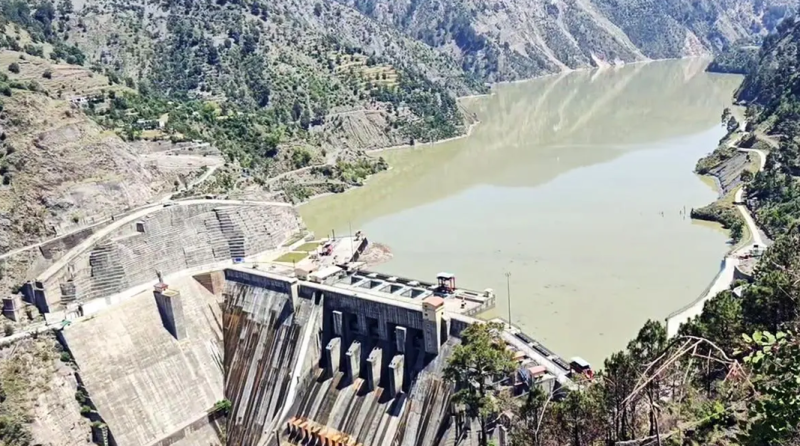
The Indian authorities assured their Afghan counterparts that New Delhi’s plans of investing heavily in diverse areas such as healthcare and public infrastructure development, along with supporting the Afghan government in post-earthquake reconstructions on humanitarian grounds.
The high-level conversation between the two governments led to a diplomatic re-engagement starting from the resumption of formal diplomatic ties through the reopening of the India embassy in Kabul. The result of these bilateral cooperative developments was against Pakistan because the Indian support to Afghanistan disturbed the Kabul-Islamabad cooperative interaction.
The Afghan government started criticising Pakistan on the issue of terrorism while overlooking Islamabad’s positions on the use of Afghan land for anti-Pakistani terrorist activities, with the presence of Fitna-e-Khawarji and Fitna-e-Hindustan. Moreover, the critical position of the Afghan government on the Kashmir issue supported the Indian stance on the disputed areas of Kashmir, showing Kabul’s formal violation of UN Security Council resolutions for the peaceful resolution of the Kashmir dispute.
These anti-Pakistan positions of Afghanistan are mentioned in various joint statements of Indian and Afghan state officials during their formal communications, despite knowing the decades of massive support of Pakistan to the millions of Afghan refugees within Pakistan.
In this way, these developments updated the conventional standards of Indian Afghan policy rooted in a careful engagement with the contemporary Taliban government. New Delhi’s revised patterns of strategic engagement with the Taliban-ruled Afghanistan have multiplied Pakistan’s security challenges, parallel to fracturing the Pak-Afghan interstate cooperation. It has further degraded the scope of a peaceful regional South Asian order with the support of a politically stable and terror-free Afghanistan.
Based on the prevailing trends of India-Afghanistan cooperative engagements cemented in their combined anti-Pakistani obsession, it can be maintained that the New Delhi-based strategic planners have once again activated their aspired models of encircling Pakistan. It depicts the Indian aggression originating from the ashes of Operation Sindoor, which has dragged the Modi government towards the Taliban regime in Afghanistan.
This growing strategic collaboration aims to place Pakistan between two-sided security challenges originating from its eastern and western borders. In this scenario, the Modi government is determined to consider Kabul as a geopolitical lever against Islamabad, which could enable New Delhi to rationalise its regional hegemonic designs.
Additionally, the rebuilding of strategic connections with Kabul provides New Delhi with easy access to the energy-rich Central Asian region, which has strong ideological affiliations with Islamabad. It shows the long-term geopolitical plans of New Delhi for securing influential positions carrying anti-Pakistani sentiments beyond South Asia. This bilateral cooperative pattern of two anti-Pakistani South Asian nations poses serious questions on Pakistan’s security and demands that Islamabad-based policymakers adopt a pragmatic approach.
The adoption of such an approach could be helpful in restructuring Pakistan’s interaction with the territorially adjoining states beyond the traditional frameworks. In this regard, the government of Pakistan is required to prefer its national interest over the decades-long cultural and ideological affections for the outside world, especially with the neighbouring nations.

Assistant Professor, Department of International Relations, NUML, Islamabad. (arehman@numl.edu.pk). https://www.numl.edu.pk/faculty/446