
Dr Adam Saud
President Syder Japarov of Kyrgyzstan paid a state visit to Pakistan after 20 years. Next in line is Presidents of Kazakhstan and Uzbekistan, Mr. Kassym-Jomart Tokayev and Mr. Shavkat Mirziyoyev, who are expected to visit Islamabad during February 2026. It will be the second visit visit of President Mirziyioyev to Pakistan but the first one for President Tokayev.
For more than three decades, Pakistan’s engagement with Central Asia has been shaped by a powerful and seemingly self-evident assumption: geography guarantees partnership. Policymakers in Islamabad have repeatedly argued that Pakistan’s proximity to the Central Asian Republics (CARs), combined with its access to warm-water ports, makes it a natural gateway for the landlocked region.
This narrative has underpinned diplomatic rhetoric, connectivity projects, and regional ambitions since the early 1990s. Yet, despite persistent optimism and repeated high-level engagements, Pakistan-Central Asia relations remain limited in economic depth, institutionalisation, and societal interaction. The gap between promise and performance suggests a simple but uncomfortable truth: geography, on its own, is not destiny.
At first glance, the logic appears compelling. Pakistan sits at the crossroads of South Asia, the Middle East, and Central Asia. Historic Silk Road routes once connected these regions, and shared cultural and religious affinities are frequently invoked as natural bridges. On this basis, Pakistan has positioned itself as a conduit for Central Asian trade and energy, while Central Asia is portrayed as a source of economic diversification for Pakistan. However, three decades on, trade volumes remain modest, major connectivity projects are delayed, and people-to-people ties are weak. If geography were truly decisive, these outcomes would look very different.
One reason for this underperformance lies in the overreliance on geographic determinism in policy thinking. Proximity can reduce transportation costs, but it does not automatically create trade, investment, or strategic convergence. Economic connectivity depends on a range of factors: political stability, institutional capacity, market complementarities, security assurances, and policy coherence.
Pakistan’s Central Asia policy has often assumed that once routes are available, economic activity will naturally follow. In reality, connectivity is not an automatic outcome of location; it is a political and economic process that must be carefully constructed and sustained.
The historical evolution of Pakistan-Central Asia relations illustrates this mismatch between expectation and reality. In the immediate aftermath of the Soviet Union’s collapse, there was genuine enthusiasm in Islamabad. Pakistan was among the first countries to recognise the independence of the CARs and quickly established diplomatic missions across the region. The early narrative emphasised shared heritage and future economic cooperation.
This optimism collided with structural constraints. Pakistan’s own economy was fragile, political instability was frequent, and institutional capacity was limited. Most critically, Afghanistan, the crucial land route, was embroiled in civil war. Geography, far from enabling connectivity, became hostage to regional instability.
The post-9/11 period further complicated matters. Pakistan’s regional engagement became increasingly securitised, with Central Asia viewed primarily through the lens of counter-terrorism, Afghan stabilisation, and great power rivalry. Economic cooperation took a back seat to security concerns. During this time, Russia reasserted its influence in Central Asia, particularly in security and energy, while China steadily emerged as the region’s dominant economic partner through infrastructure investment and trade. Pakistan, despite its geographic proximity, lacked the economic weight and institutional coherence to compete. Once again, geography proved insufficient to offset structural asymmetries.
In recent years, initiatives such as Preferential Trade Agreements, the China–Pakistan Economic Corridor (CPEC) and Pakistan’s membership in the Shanghai Cooperation Organisation have revived the connectivity narrative. Islamabad has once again presented itself as a bridge linking Central Asia to South Asia and beyond.
Tangible outcomes remain limited. Trade between Pakistan and Central Asia is still a fraction of its potential, and flagship projects such as the TAPI gas pipeline and CASA-1000 electricity project continue to face delays. Trans-Afghan Railways project was expected to be completed by 2025 but not progress has been achieved till date. The persistence of these challenges suggests that the problem is not a lack of intent, but a misunderstanding of what connectivity actually requires.
Economic structure is a major part of the puzzle. Trade complementarities between Pakistan and Central Asia are limited. Pakistan’s exports are concentrated in textiles, agriculture, and low-value manufactured goods, while Central Asian economies are oriented towards hydrocarbons, minerals, and capital-intensive products.
Without deliberate efforts to diversify exports, develop industrial cooperation, and integrate value chains, proximity alone cannot generate trade. In contrast to regions like Southeast Asia, where production networks drive integration, Pakistan–Central Asia economic relations remain largely transactional and shallow.
Afghanistan represents another critical factor where geography has failed to deliver. Often described as a “bridge” between South and Central Asia, Afghanistan has in practice functioned as a bottleneck. Decades of conflict, weak governance, and inadequate infrastructure have undermined the reliability of transit routes. Even during periods of relative calm, security risks and administrative inefficiencies have raised transaction costs.
The recent border clashes between Pakistan and Afghanistan over terrorists’ activities inside Pakistan from Afghan soil have resulted in a long border closure. As a result, Central Asian states have diversified their connectivity options through Russia, China, Iran, and the Caspian Sea. Pakistan’s geographic advantage, therefore, is neither exclusive nor indispensable.
Security perceptions further complicate the equation. Large-scale connectivity projects are highly sensitive to risk. Investors, insurers, and financiers require long-term stability and predictability. Persistent instability—whether in Afghanistan or in the broader region—alters cost-benefit calculations and deters investment. Pakistan has made significant strides in improving internal security, but regional perceptions are shaped by history as much as current realities. Geography cannot compensate for these concerns.
Geopolitics also plays a decisive role. Central Asia today is a competitive space, with multiple external actors offering connectivity, investment, and political partnerships. China’s Belt and Road Initiative has reshaped regional infrastructure, while Russia remains a key security and economic actor. Turkey, Iran, the European Union, and the United States all maintain selective engagement.
In this crowded landscape, Pakistan struggles to articulate a distinctive economic value proposition. Its close alignment with China creates opportunities, but it also risks reinforcing perceptions of Pakistan as an adjunct rather than an independent partner. Central Asian states, pursuing multi-vector foreign policies, are unlikely to prioritise Pakistan-centric initiatives without clear and tangible benefits.
Institutional weakness within Pakistan is another often overlooked constraint. Trade facilitation remains cumbersome, regulatory frameworks are inconsistent, and coordination between ministries is weak. While agreements are frequently signed, implementation is slow and uneven. Pakistan’s private sector, which should be the engine of economic connectivity, has limited exposure to Central Asian markets. Lack of market intelligence, financing mechanisms, and diplomatic-commercial support has constrained business engagement. Without strong institutions, geography remains an unrealised advantage.
Equally important is the neglect of people-to-people connectivity. Despite shared historical and cultural linkages, societal interaction between Pakistan and Central Asia is minimal. Student exchanges, tourism, academic collaboration, and cultural diplomacy are underdeveloped. Visa regimes remain restrictive, and air connectivity is limited. Sustainable economic and political partnerships are built not only on roads and pipelines, but also on familiarity, trust, and social networks. Pakistan’s failure to invest in this dimension has weakened the foundations of long-term engagement.
The lesson from comparative regional experiences is clear. Successful integration is not driven by geography alone. ASEAN’s progress rests on institutional harmonisation, trade facilitation, and production networks. China’s engagement with Central Asia combines infrastructure with industrial investment, market access, and cultural outreach. These examples highlight a crucial point: connectivity follows competitiveness and institutions, not the other way around.
A critical reappraisal of Pakistan–Central Asia relations, therefore, requires abandoning the comfort of geographic determinism. Geography can enable, but it cannot substitute for economic strategy, institutional capacity, and political stability. If Pakistan is to realise the long-promised potential of its relationship with Central Asia, it must move beyond rhetorical connectivity and address the deeper constraints that have limited progress.
This means shifting from transit-centric thinking to economy-led engagement, investing in trade competitiveness and industrial cooperation, strengthening institutions, and expanding people-to-people ties. It also requires patience and policy continuity qualities often in short supply. Geography may offer opportunity, but destiny is shaped by choices. For Pakistan Central Asia relations, the challenge is no longer to rediscover proximity, but to redefine purpose.
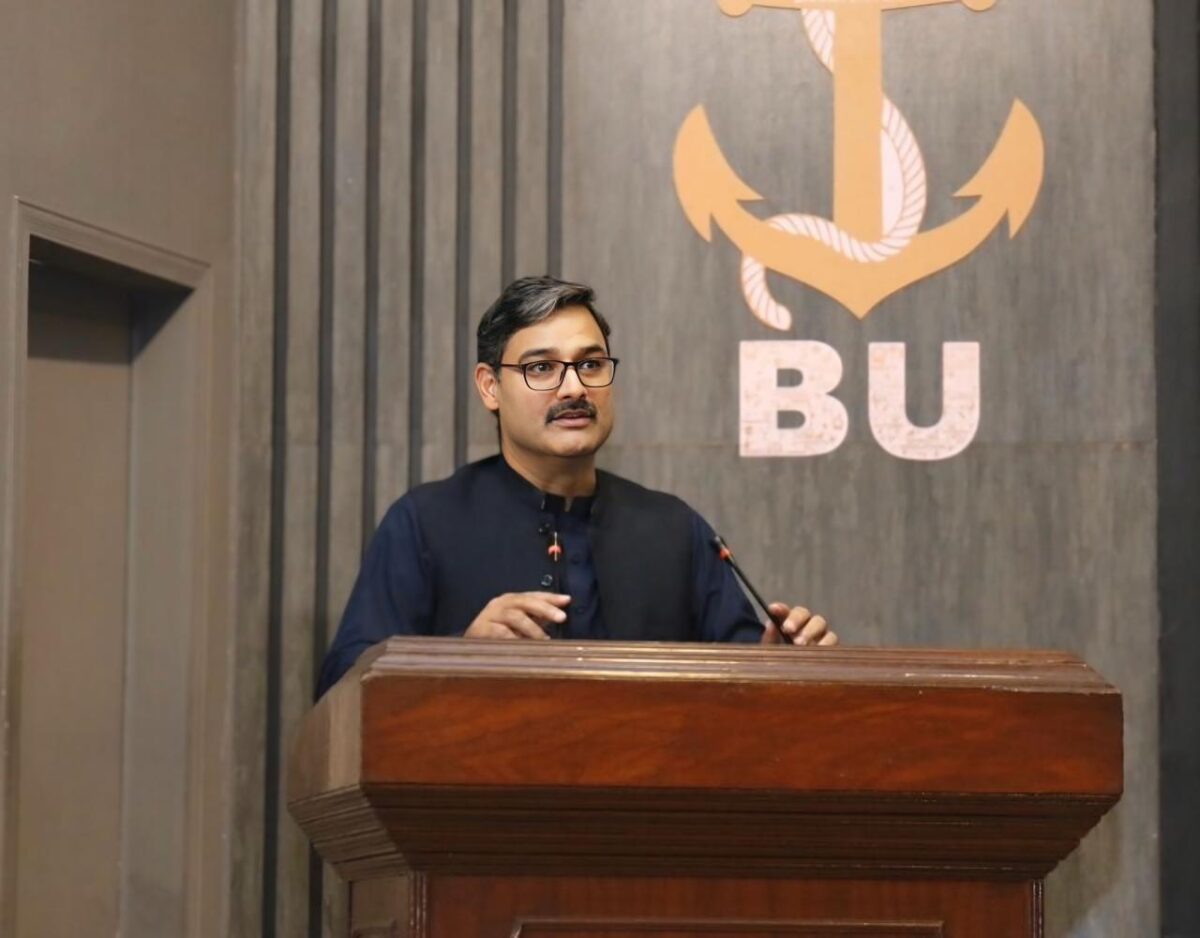
The author is a Professor and Dean Faculty of Humanities and Social Sciences, Bahria University, Islamabad.