

Amna Saqib
On 25 May 2026, India finalised its Letter of Request for 114 Rafale fighter jets from Dassault Aviation. It is the world’s largest active fighter procurement by declared value, at approximately US$28 billion, with 92 aircraft to be assembled on Indian soil. The Indian officials have described the acquisition as a response to Air Force squadron shortfalls and as an expression of ‘Make in India’ industrial ambition. Both explanations are accurate. Neither is complete.
This deal is the most visible expression of a decade-long structural reordering of India’s defence partnerships. This reordering has not been officially announced. But the procurement record, the diplomatic trajectory, and the parallel shifts in great-power alignments across the Asia-Pacific make its direction, and its consequences impossible to dismiss.
The standard framing in which France being an arms supplier, and India a client, actually misrepresents both parties. The presence of France in Asia-Pacific precedes its current strategic ambitions. The sovereign territories across both oceans and a formal regional strategy since 2018 make it a resident power, not an external aspirant.
The AUKUS episode of 2021, in which Australia unilaterally cancelled its submarine agreement with Paris in favour of US-UK nuclear arrangement, gave a clear lesson i.e., Anglosphere-led frameworks offer France little strategic protection. A bilateral partnership with India, built on defence co-production rather than alliance politics, offered a more durable alternative.
India required a Western-standard defence partner willing to transfer technology, manufacture locally, and supply without political conditionalities. France gains a partner that will operate more of its flagship combat aircraft than any country outside France itself; India gains advanced multirole combat platforms independent of Russian supply chains, assembled on its own soil. This is a co-investment in strategic relevance, and both capitals understand it as such.
The philosophical convergence matters equally. The Indian doctrine of strategic autonomy is a refusal of alliance dependency that traces back to Nehruvian non-alignment and has been prosecuted with renewed assertiveness in the current era.
This finds its most natural Western expression in France, a power whose Gaullist tradition has always resisted subordination to Anglo-American strategic architecture. Neither capital asks the other to choose sides. That mutual accommodation is itself a strategic asset in a region where the balance of power remains genuinely contested.
India’s defence import record reflects a strategic reorientation that has proceeded quietly, without official narration. According to SIPRI, by 2022, Russia’s share of Indian defence exports fell from roughly 70 per cent in the 2013-17 period to 45 per cent. Over the same time period, the share of France rose to 29 per cent, which is a 489 per cent increase in French defence exports to India. These figures predate the 114-jet acquisition entirely. The structural shift they describe was already well advanced before the current deal was signed.
The Russia-Ukraine war hardened that logic into operational necessity. The export controls on Russian defence goods and the redirection of Russian military production toward Moscow’s own war effort exposed supply vulnerabilities across India’s Russian-origin platforms, including Su-30MKIs, MiG-29s, T-90 tanks, all dependent on Russian spare parts. The lesson was unambiguous: a military drawing its hardware predominantly from a single external supplier is hostage to that supplier’s foreign policy circumstances.
That logic was tested in real time during the May 2025 conflict. The Rafale aircraft were operationally deployed during Operation Sindoor. Pakistan successfully engaged Indian platforms across multiple domains; a performance corroborated by Pakistani military institutions and acknowledged in international assessments.
Yet, the Indian institutional response was not reconsideration but acceleration. Within nine months, New Delhi granted Acceptance of Necessity for 114 additional Rafale jets. The procurement decision is itself an analytical signal: whatever the tactical outcomes of the conflict, the strategic commitment of India to the France partnership has only deepened.
The implications of India-France partnership extend across the subcontinent and into the broader Asia-Pacific region. First, a near-180 Rafale fleet, an expanding Scorpène submarine force, and growing carrier-based aviation capability represent a qualitative transformation of Indian military reach, which is compressed into a single generation and anchored in a thirty-year French production and maintenance infrastructure.
Collectively, these acquisitions expand Indian operational capacity across the Indian Ocean and into the maritime corridors of the wider Asia-Pacific, reconfiguring the regional military balance in ways that demand careful analytical attention.
Second, the reorientation of India toward Western defence suppliers produces an indirect consequence that has received insufficient attention. The historical restraint of Russia in its military cooperation with other regional actors was premised on preserving its privileged position with New Delhi.
As that position erodes, so does the restraint. A sanctions-pressured Russia with diminishing strategic equities in India is structurally incentivised to deepen defence engagement elsewhere, reconfiguring regional arms dynamics in ways that extend well beyond the India-France bilateral relationship.
Third, the most consequential long-term implication of this partnership may be in the maritime domain. A deepening French-naval architecture, carrier-based Rafale aviation, and deepening French naval cooperation collectively redefine India’s operational reach across the Indian Ocean region (IOR). It is a body of water through which approximately 80 per cent of global energy trade passes and around which China, India, and several middle powers are simultaneously expanding their naval presence.
The India-France naval axis does not merely add capability to one side of that equation. It accelerates the militarisation of a maritime domain whose stability underpins the economic architecture of the entire Asia-Pacific region as well.
The shift is real but its trajectory is not linear. The Russian-origin platforms of India are still the backbone of its armed forces, that will require Moscow’s maintenance support for another fifteen to twenty years. The reorientation is generational, not immediate.
Moreover, France that sells advanced platforms to India while maintaining its own diplomatic relationships across the region is not an unconditional strategic partner. Paris has its own interests, its own red lines, and its own Asia-Pacific calculations that do not always coincide cleanly onto New Delhi’s.
For states across the Asia-Pacific whose strategic calculus is shaped by Indian military capability, the trajectory described above is not a distant contingency; it is an accelerating present. The regional balance a decade from now will be structurally different from the one that has historically anchored deterrence planning, and the window for independent strategic positioning among regional middle powers is narrowing.
The India-France partnership is one component of a broader repositioning, unfolding within an order in which the US, China, Russia, and the European powers are all recalibrating simultaneously, and in which the consequences of each recalibration compound the others. That recalibration will not announce itself with a treaty.
It will accumulate in manufacturing facilities in Pune, on carrier flight decks in the Arabian Sea, in the slow and structural embedding of French military technology into India’s defence infrastructure across a thirty-year production horizon. By the time its full implications for the Asia-Pacific are apparent, the architecture will already be operational. The ledger is being assembled, jet by jet, at a factory in Pune. Its implications affect to the entire region.
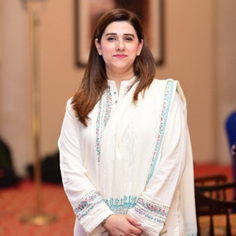
The author works as a Research Officer & Assistant Editor at the Center for International Strategic Studies (CISS), Islamabad.