
Saidrahmon Abdurazzoqov
When a Taliban delegation led by Deputy Prime Minister Mullah Abdul Ghani Baradar arrived in Tashkent in February 2025 to discuss trade, transport, and economic integration, it confirmed something that had been building for years: Uzbekistan has quietly become the country every other regional actor needs to engage with. It is neither the strongest state in Central Asia nor the wealthiest, and it is not, in any conventional sense, a power broker.
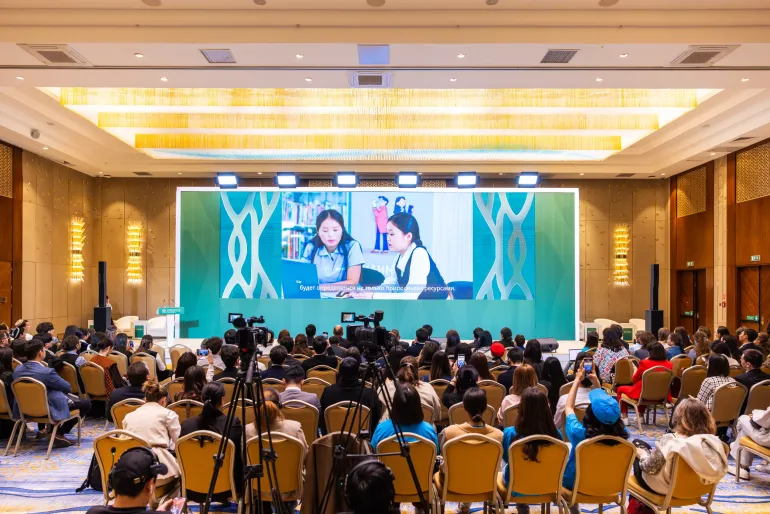
It was Tashkent that hosted the first-ever EU–Central Asia Summit in Samarkand last year, convened the inaugural Fergana Peace Forum after Kyrgyzstan and Tajikistan signed their border peace agreement, and will host the second Termez Dialogue on Central–South Asian connectivity this June. Uzbekistan has built its foreign policy identity around a simple proposition: it does not need to choose between Washington, Beijing, Moscow, and Brussels because its value lies precisely in maintaining dialogue with all of them.
This is worth taking seriously as a strategy rather than simply a slogan. A decade ago, Uzbekistan was among the most closed states in the post-Soviet world, wary of regional entanglements and suspicious of multilateral frameworks. The transformation since 2016 has been significant. Uzbekistan normalized relations with all of its neighbors, reopened borders that had remained closed for years, and began positioning itself not as a country caught between great powers but as a platform through which those powers could engage a region they had largely overlooked.
The C5+1 format with the United States, expanded in 2025 to include artificial intelligence, critical minerals, and supply chain security, now exists alongside an EU strategic partnership and continued economic engagement with both Russia and China. Few countries manage such a broad range of simultaneous relationships without significant friction. Uzbekistan has largely succeeded in doing so, and that achievement deserves closer attention.
The clearest example is Afghanistan. While much of the world disengaged following the Taliban’s return to power in 2021, Uzbekistan pursued economic engagement, calculating that isolation would generate greater instability rather than reduce it. It has advanced the Trans-Afghan Railway, a 650-kilometer, $7 billion project linking Uzbekistan to Pakistani seaports through Afghan territory, introduced a visa-free regime for Afghan nationals, and expects bilateral trade with Kabul to reach around $3 billion this year.
Uzbek officials describe this approach as de-securitizing the relationship by treating Afghanistan as a partner in regional integration rather than a permanent security threat. It is a calculated belief that economic interdependence is more effective at preventing extremism from crossing the border than isolation.
However, being a regional convener is not the same as possessing leverage, and this is where Uzbekistan’s strategy faces genuine vulnerabilities. Tashkent has little capacity to compel Taliban behavior. Its mediation relies on diplomatic persuasion rather than economic or military pressure, meaning it depends heavily on the continued willingness of all parties to cooperate.
The unresolved dispute over the Qosh Tepa Canal, which threatens to divert water essential to Uzbekistan’s agricultural sector, illustrates these limitations. Tashkent can keep communication channels open, but it cannot dictate outcomes. The same asymmetry applies to its balancing act among major powers. Being valuable to Washington, Beijing, Moscow, and Brussels simultaneously is a notable diplomatic accomplishment, but it is also an inherently fragile position. Should any of these relationships deteriorate, or should regional crises force Uzbekistan to make a choice it has so far avoided, its connector model could quickly come under strain, leaving it with limited hard power to rely upon.
The deeper question is whether serving as a regional convener represents a durable foreign policy or simply reflects a favorable geopolitical moment that Uzbekistan has skillfully exploited. The institutionalization now underway suggests Tashkent is preparing for the long term. The Termez Dialogue, launched in 2025, is being developed as a permanent platform rather than a one-time event, while Uzbekistan’s Regional Security Concept, adopted the same year, formalizes cooperation on border management and counterterrorism beyond ad hoc summit diplomacy. Uzbekistan is attempting to transform a period of favorable positioning into lasting institutional architecture because its leaders recognize how quickly convener status can disappear without it.
Uzbekistan’s evolution from a closed and cautious state into Central Asia’s diplomatic switchboard is one of the most underappreciated foreign policy developments in Eurasia. Yet admiration should not obscure the fragility that underpins this model. A connector state without significant hard power remains secure only as long as others are willing to keep engaging through it. For now, every major stakeholder still wants a seat at Tashkent’s table. The true test of Uzbekistan’s strategy will come when one of them no longer does.

The author is a International Relations scholar at Webster University Tashkent with a particular interest in Central Asian geopolitics, European foreign policy, and regional integration. His work focuses on international relations, diplomacy, and emerging policy issues affecting Eurasia. He is currently associated with Policy East.