

Shodiyor Gaybullaev
In recent years, relationships between Uzbekistan and the United Arab Emirates (UAE) have developed in a positive way. At first, it was just a normal diplomatic relations and moved into a strategic partnership in many areas, including investment, renewable energy, technological advancements, educational programs and public administration.
Heads of both countries these days meet regularly and signed many essential agreements. Even so, while investments increase rapidly, more effort is still required to foster cooperation in education, innovation and government organizations. This important situation should be discussed further.
The partnership is based on more than 30 years of diplomatic relations. It officially began in 1992 and has become stronger through regular meetings between the two presidents. In May 22nd the Leader of Uzbekistan Shavkat Mirziyoyev had a meeting with a delegation of UAE accompanied by Minister of Cabinet Affairs Mohammad bin Abdullah Al Gergawi focusing on public administration reform.
Before, in 15th of January, Mirziyoyev and UAE President Sheikh Mohammad bin Zayed Al Nahyan conducted discussions in Abu Dhabi and supported the target to announce 2025-2027 the “New Era of Economic Partnership”, aiming at ten times more increase in trading and a $50 billion investment portfolio by 2030.
Travelling without visa, more direct air services and rising number of business partnerships indicate the top level of political trust between two friend countries. This stage of collaboration is outstanding for a partnership that is still quite new. Most powerful sign of trust is economic cooperation between Uzbekistan.
| Indicator | Figure |
| Mutual trade revenue (end of 2024) | $650 million, up over 20% per annum since 2021 |
| UAE capital companies in Uzbekistan | 337 (114 joint ventures, 223 totally UAE-owned |
| Annual UAE investment amount | Grew from $1.08 billion (2023) to over $1.5 billion (2024) |
| Masdar total investment | Over $2 billion; 2 GW of clean-energy capacity |
| Renewable energy target (Uzbekistan, 2030) | Minimum 25 GW capacity; 54% electricity from renewables |
| Trade expansion target by 2030 | Ten times increase over current turnover |
| Investment portfolio target by 2030 | $50 billion |
Table 1. Key indicators of Uzbekistan and UAE economic cooperation, 2023-2030 targets. Sources: Ministry of Investment, Industry and Trade of Uzbekistan; Masdar; President.uz
and UAE and it has made noticeable results. Mutual trade reached about nearly $650 million by the end of 2024 has become bigger by more than twenty percent per year since 2021. Nowadays in Uzbekistan UAE-owned companies successfully operating and including 114 joint ventures. In 2023, annual investment from UAE increased from $1.08 billion to more than $1.5 billion in 2024. Big investor companies such as Mubadala, AD Ports, DP World, and Jetex have invested in energy, logistics and aviation sectors.
This gives a robust foundation for partnership between two countries. But, depending on mainly investments also creates risks. Global economic fluctuations in product prices or changes in the UAE’s investment goals might impact future investment trajectories and these mentioned factors are beyond Uzbekistan’s control. To guarantee lasting success, partnership should be extended into more fields of cooperation, instead of relying mostly on financial investment.
Renewable energy shows that both power and way the partnership needs to take for their development. Primary clean-energy partner of Uzbekistan is Masdar with investments being higher than $2 billion and roughly 2 gigawatts of operating or contracting capacity and deals for independent battery system, such as Zarafshan wind farm along with Nur Bukhara solar and storage project.
These projects can really help and achieve its renewable energy capacity goals and to produce 54% of electricity sources by 2030. This given target was in discussion recently in Abu Dhabi Sustainability Week. Because of these efforts, United Arab Emirates became one of the strategic partner of Uzbekistan’s long-term developing clean energy.
This cooperation does not just bring investment but also brings knowledge of engineering, skills in project management and bringing together renewable energy into country’s national power system. These mentioned valuable skills are also useful and encourage cooperation in other sectors where same information along with experience are still needed.
As we see there are already several positive developments and the following stage of partnership should focus on these areas. There is a proposal offered by Uzbekistan in a joint artificial intelligence research and training program with Zayed University. The program called “Five Million Artificial Intelligence leaders already attracted more than one million participants. The project that is expected to grow into local government institutions which both countries working on is “Performance Assessment of Government Bodies”.
Besides, partnership is also growing in aviation, tourism, fintech, food security and reading initiatives across country. Every project is a lot smaller than a $2 billion energy investment. But, all they assist to build strong institutions improving skills of professionals and creating common standards. These factors will decide whether partnership becomes more powerful long-lasting and continues to rely on occasional meetings and signing of new agreements.
The fair analysis should also consider challenges that may impact cooperation in the coming years. Uncertainty in global economy and energy price changes would able to reduce investment from Gulf countries while Uzbekistan competing with other countries in the region for investment opportunities from UAE. Even agreements have been signed, the lack of skilled professionals in technical fields and performing projects may slow down and slow administrative procedures can cause issues inside the country.
In addition to that, two countries still need to increase their regulatory cooperation and investment should expand into more sectors besides energy and logistics. These challenges do not appear to threaten the overall progress between two countries but considered normal for quickly growing countries which happens in every emerging developing states. However they call for constant attention and real working solutions to ensure that partnership between countries remain successful in the long term.
To tackle mentioned challenges both countries should focus on practical solutions. Firstly, creating AI center and innovation would provide a lasting place for artificial intelligence cooperation that already began. University partnerships and joint venture research projects can really help building the skills that workers need for future infrastructure projects. Smart government and digital public services cooperation and reforms in public administration was also at the center of discussion by leaders of countries.
Improvement in logistics, aviation and transport cooperation make trade easier between two countries. Additionally, organizing yearly conversation that brings together officials of government, business leaders and universities would support partnership between them. Creating regular cooperation and meetings instead of relying only once in a while state visits or signing new agreements.
These both countries (Uzbekistan and UAE) have built one of the fastest growing strategic partnerships in Central Asia. Considerable growth in investment indicates that partnership has already given its fruits. But, its long-term success should not be measured only by the amount of money invested or just number of energy projects finished. It will also depend on whether both countries can build solid institutions together such as universities, research centers, modern regulations and skilled workforce.
These foundations will aid keep partnership powerful in the future regardless of changes in political leaders or government ministries. If Tashkent and Abu Dhabi continue to develop further the partnership in this way, it can become more than just effective relationship between two countries. It could also become good example of how Gulf countries and Central Asian states can create lasting cooperation that continues to grow beyond individual investment projects.
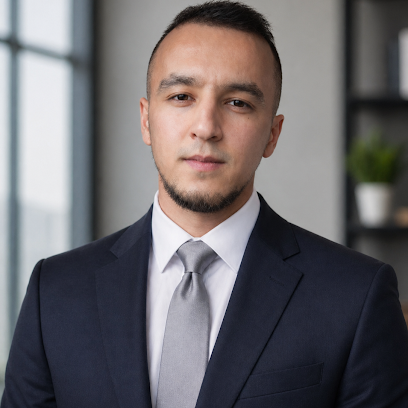
The author is a graduate of Webster University in Tashkent with a background in International Relations. His research interests include foreign policy, public policy, economic diplomacy, regional cooperation and sustainable development with a particular focus on Central Asia and the Gulf region. He is passionate about evidence-based policy analysis and international cooperation.