

Ulzira Bakhitbaeva
The geostrategic importance of Central Asia, located at the heart of the Eurasian landmass, stems not only from its strategic location and proximity to China, Russia, and the Caspian Sea, but also from its abundant natural resources and significant transit potential.
Growing competition among the United States, China, and Russia has created both opportunities and constraints for the region, encouraging Central Asian states to adopt flexible and pragmatic diplomatic strategies. Their ability to preserve strategic autonomy while engaging multiple major powers has become a defining feature of their foreign policy.
One of the region’s principal challenges is its structural geography. As landlocked countries, the Central Asian republics have historically remained closely connected to Russia through political, economic, and security institutions. At the same time, China has rapidly expanded its regional influence through infrastructure investment, connectivity initiatives, and the Belt and Road Initiative (BRI).
Meanwhile, the United States continues to play a more limited yet important role, focusing primarily on security cooperation, governance reforms, and regional stability. Since the early 2000s, Central Asian states have increasingly sought to leverage competition among major powers to maximize their own strategic and economic interests.
The development of the U.S.-Uzbekistan strategic partnership encouraged other Central Asian states, with the exception of Turkmenistan, to diversify their external relationships. While strengthening cooperation with Russia and, to a lesser extent, China through regional initiatives, they also expanded engagement with the United States to ensure that regional opportunities and international support were distributed more evenly. This evolving geopolitical landscape has created a complex diplomatic environment in which closer ties with one external actor often require careful management of relations with the others.
In response, Central Asian governments have adopted what is widely described as a multi-vector foreign policy. This strategy seeks to maintain constructive relations with all major powers while avoiding excessive dependence on any single partner. Kazakhstan offers perhaps the clearest example of this approach. It maintains close ties with Russia through the Eurasian Economic Union (EAEU), expands cooperation with China in energy and infrastructure, and simultaneously deepens economic and investment partnerships with Western countries.
However, maintaining this balance is not without challenges. Economic dependence remains one of the region’s greatest constraints. China has become a major source of financing for infrastructure development, while Russia continues to serve as the primary destination for Central Asian migrant workers. Consequently, many regional economies rely heavily on remittances, making them vulnerable to economic fluctuations and political developments in Russia. At the same time, growing financial dependence on Chinese investment has raised concerns about long-term debt sustainability and economic sovereignty. These realities inevitably limit the strategic autonomy that Central Asian states seek to preserve.
Security considerations further complicate foreign policy choices. Russia remains the region’s principal security partner through institutions such as the Collective Security Treaty Organization (CSTO), while China has gradually expanded its security engagement through counterterrorism cooperation and border security initiatives. Although the United States maintains a less direct military presence, it continues to influence regional security discussions, particularly regarding Afghanistan, counterterrorism, and regional stability. As a result, Central Asian governments must carefully manage their security partnerships to avoid intensifying rivalries among competing powers while safeguarding their own national interests.
Despite these constraints, the emerging multipolar order also presents important opportunities. Competition among major powers has increased international attention toward Central Asia, allowing regional governments to attract greater investment, diversify economic partnerships, and improve infrastructure through multiple external sources. This environment also provides greater diplomatic leverage, enabling Central Asian states to negotiate more favorable political and economic arrangements by balancing competing interests. In this respect, multipolarity has expanded their strategic room for manoeuvre compared to both unipolar and bipolar international systems.
Ultimately, the foreign policies of Central Asian states reflect a pragmatic adaptation to an evolving global order. Their multi-vector diplomacy demonstrates a deliberate effort to preserve sovereignty while engaging constructively with competing global powers. Nevertheless, this balancing strategy remains delicate, as economic dependencies and security considerations continue to constrain policy choices. As multipolarity continues to reshape international politics, the long-term success of Central Asian diplomacy will depend on the region’s ability to maintain strategic equilibrium, diversify partnerships, and strengthen domestic resilience without becoming overly reliant on any single external actor.
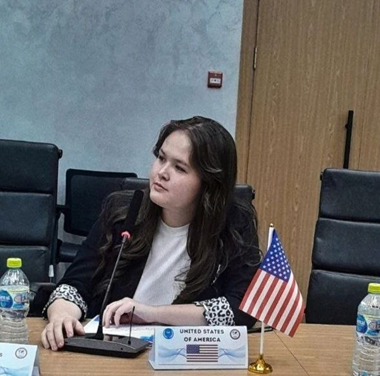
Ulzira Bakhitbaeva is a fourth-year student at the University of World Economy and Diplomacy (UWED), researching international relations, geopolitics, and regional security.