Kamola Sayfullaeva
On October 30, 1992, at the initiative of Turkish President Turgut Özal, the first Summit of Turkic-Speaking States was held in Ankara. Turgut Özal, Abulfaz Elçibey, Islam Karimov, Nursultan Nazarbayev, Saparmurat Niyazov, and Askar Akayev participated. At the summit, participants announced the development of political and economic unity.
The Organization of Turkic States (OTS) represents a significant institutional evolution in Eurasian regional integration. Originally established in November 2009 as the Turkic Council (officially the Cooperation Council of Turkic-Speaking States), the initiative initially originated in the post-Soviet republics of Central Asia, primarily thanks to the diplomatic support of former Kazakh President Nursultan Nazarbayev.
In its early stages, the council served primarily as a forum for political self-assertion, cultural identity, and multilateral dialogue among newly independent states seeking to balance relations with major regional powers such as Russia and China.
A structural transformation occurred at the 8th Istanbul Summit in November 2021, when the organization officially renamed itself the Organization of Turkic States. This transition marked a shift from a consultative structure to a regional organization with structured goals, expanded rights and responsibilities, and a unified long-term vision.
After years of non-participation in the Turkic Council, Uzbekistan officially joined as a full member at the 2019 Baku Summit, fundamentally altering the demographic and geopolitical weight of the OTS (Azimov, 2023; Mustofayev, 2022).
The OTS allows for expanded trade without geopolitical hegemony. Since Uzbekistan’s accession to the organization, trade turnover with its OTS partners has increased more than 2.5-fold, jumping from $4.2 billion to over $10 billion (Center for Economic Research and Reforms, Tashkent). Importantly, unlike blocs dominated by a single power, such as Russia’s Eurasian Economic Union (EAEU) or China’s Belt and Road Initiative, the Organization of Turkic States (OTS) operates on the basis of strict sovereign equality.
The OTS serves as a mechanism for expedited service along the Trans-Caspian International Transport Route, commonly known as the Middle Corridor. Rather than focusing solely on multi-billion dollar physical infrastructure, the OTS prioritizes the harmonization of “soft infrastructure.”
By replacing paper documents with digital transit permits (eTIR and ePermit), the OTS’s joint transport initiatives have helped reduce freight transit times from East Asia to Europe via Central Asia and Azerbaijan from 45 days to less than 23 days (UN Economic Commission for Europe/International Road Transport Union).
The Samarkand Summit, held on November 11, 2022, was the first since the transformation of the Turkic Council (formerly the Cooperation Council of Turkic-Speaking States) into the Organization of Turkic States. In 2022, Uzbekistan and Azerbaijan became the first in the region to introduce completely paperless customs booklets in the Caspian Sea, proving that digital administrative coordination often produces faster results than large-scale construction projects.
On May 21, 2025, an informal summit of Turkic states’ organizations was held in Budapest, the capital of Hungary. It was attended by the leaders of all independent Turkic states, with the exception of Turkmenistan and Northern Cyprus.
The summit resulted in the signing of the Budapest Declaration, Uzbekistan’s accession to the Turkic Culture and Memory Foundation, the extension of the organization’s Secretary-General’s term, and a statement by the Council of Heads of State on Afghanistan.
The Budapest summit visited Hungary for the first time. On June 29, 2015, the Union of Academies of Sciences of the Turkic World was established. In March 2024, the foundation launched the “Turk Discovery” YouTube channel, which features documentaries and films produced by the foundation about the cultural heritage, traditions, and values of the Turkic world.
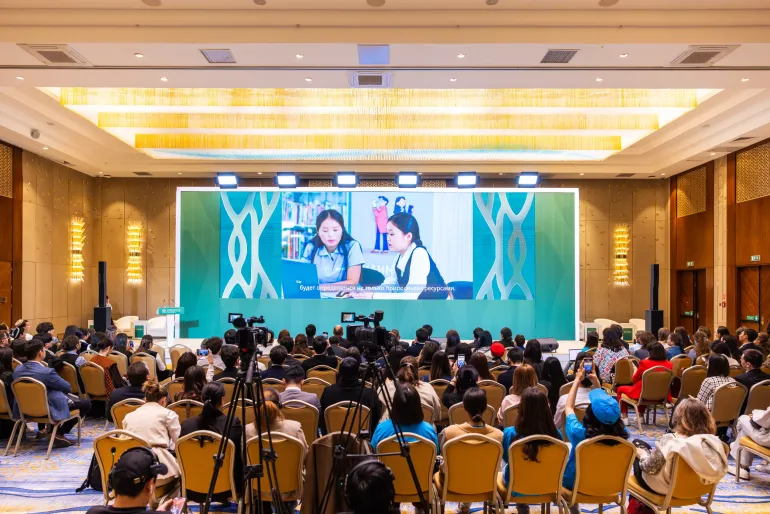
Summits have begun to focus not only on developing political and economic unity, but also on advancing science and medicine. This is clearly demonstrated by the summit held in Baku from June 13 to 14, 2025, the First Congress of Oncologists of the ATC Member States. Specialists from 10 countries participated in the congress.
The Turkic Investment Fund (TIF) was established in 2023 (the agreement was signed on March 16, 2023, in Ankara), began operations in 2024, and its capital was increased to USD 600 million in 2025.
The over-the-counter fund provides targeted financial support through the newly established Turkic Investment Fund (TIF). With a charter capital of USD 600 million, of which Uzbekistan contributed USD 100 million, the TIF directly finances cross-border industrial parks, clean energy networks, and logistics hubs (Organization of Turkic States Secretariat).
For Uzbekistan, where over 4,500 enterprises currently operate using capital from OTC partner countries, this institution is a vital mechanism for absorbing Turkish manufacturing expertise and Kazakh capital, while protecting local markets from external financial shocks (Ministry of Investment, Industry, and Trade of Uzbekistan).
It was proposed that on May 15, 2026, a concept for the “Digital Turkic Corridor” designed to facilitate the exchange of regional data be developed, and that a Technology Forum be held in Tashkent with the participation of OTS member states.
A shared Turkic identity, linguistic roots, historical heritage, and cultural affinity serve as key “stimulating” factors. Member states have reaffirmed their commitment to democratic values, the rule of law, and the principles of good governance.
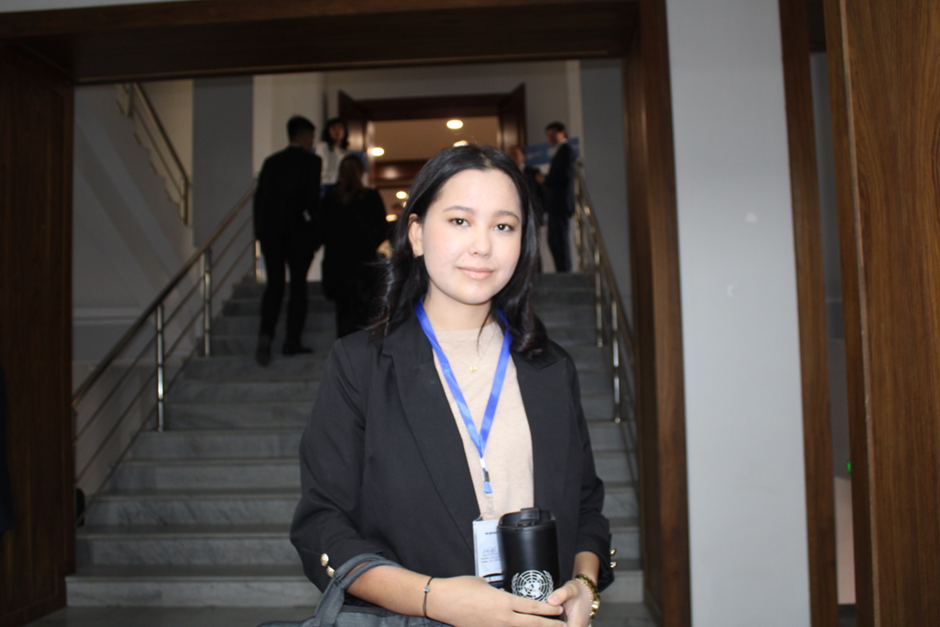
The author is a third-year International Relations student at Middle East Technical University (METU), Türkiye, with a minor in Data Science and AI. A Yale International Relations Leadership Institute alumnus, the author has research experience with Yale University and the Konrad Adenauer Stiftung, focusing on international affairs and Central Asia.