

Aqsa Fazilat
The 2026 United States midterm elections have delivered a political message that extends far beyond the usual midterm backlash against a sitting president. Democrats have reclaimed control of both chambers of Congress, Republicans have suffered substantial losses across traditionally conservative states, and several electoral victories have challenged long-standing assumptions about American political identity. From Texas turning blue to Abdul El-Sayed becoming the first Muslim elected to the United States Senate, the results reveal a changing electorate and a Republican Party confronting difficult questions about its political future.
For Donald Trump, the midterms represent a significant setback to his second presidency. For Republicans, however, the problem is considerably more complicated than losing congressional seats. The party must confront the possibility that the coalition responsible for Trump’s return to the White House is no longer as cohesive as it appeared in 2024. The voters who helped secure his victory have demonstrated that their support is neither permanent nor unconditional.
Perhaps the most revealing development came from Vice President JD Vance himself. In a lengthy post on X following the Republican defeat, Vance attributed the losses to the administration’s handling of the Iran war, the cost of living, inflation and America’s relationship with Israel. His central argument was particularly striking: “The reason we lost is the war.” He also acknowledged that voters who had supported Trump in 2024 were now turning towards Democrats. His intervention exposed an uncomfortable divide within Republican leadership. The Washington Post’s reporting highlights how Vance’s comments placed him at odds with Trump’s continued defense of the conflict.
The dilemma for Republicans is therefore not simply electoral; it is ideological. Trump’s political appeal was substantially built around America First, economic nationalism and resistance to prolonged foreign military engagements. The Iran war has created tensions between those promises and the administration’s foreign policy decisions. Vance now faces a difficult balancing act: defending the administration that elevated him while acknowledging the concerns of voters who supported its original political message. His intervention also raises questions about the future of the MAGA movement and the possibility of a post-Trump struggle over its direction.
Texas provides perhaps the clearest illustration of how dramatically the political landscape has shifted. For decades, Democrats have attempted to turn Texas from a reliably Republican state into a competitive political battleground. On November 3, that ambition became an electoral reality. James Talarico defeated Republican Ken Paxton to win a Democratic Senate seat, ending the party’s losing streak in Texas Senate elections dating back to 1988. Gina Hinojosa also defeated incumbent Greg Abbott to become governor.
These victories are particularly significant because Texas has long been central to Republican electoral strategy. Its population, economic influence and electoral votes have made it one of the foundations of the modern Republican coalition. The Houston Chronicle’s election coverage documents the wider Democratic gains across the state. The results raise questions about whether demographic change, younger voters, suburban realignment and dissatisfaction with Republican governance are reshaping Texas’s political identity.
Yet the election was not simply about party competition. It was also about who gets to participate in defining America’s political future. Abdul El-Sayed’s victory in Michigan’s Senate race is historic: he becomes the first Muslim elected to the United States Senate. His achievement carries particular significance in a country where Muslim Americans have repeatedly encountered political suspicion, discriminatory rhetoric and questions about their belonging, particularly since September 11, 2001.
El-Sayed’s campaign faced attacks that went beyond conventional political disagreements. Donald Trump and other Republican figures invoked his Muslim identity and made allegations connecting him to extremism, which he denied. Nevertheless, Michigan voters elected him. His victory is therefore significant not simply as a milestone for Muslim representation but as an illustration of the limits of identity-based political attacks. As The Guardian’s election coverage reported, El-Sayed’s victory also represented a breakthrough for the progressive wing of the Democratic Party.
His achievement belongs to a wider development. Muslim representation in American politics has been growing, from Ilhan Omar and Rashida Tlaib in Congress to a new generation of Muslim candidates contesting national, state and local offices. According to Dawn’s election reporting, eleven Muslim candidates secured legislative victories across Congress and state legislatures, including seven elected to the US Congress. Their political significance should not be reduced to religious identity. Their campaigns engage with healthcare, economic inequality, civil liberties, education, foreign policy and political accountability. Muslim Americans are increasingly participating in the institutions that shape national policy rather than remaining communities discussed primarily through debates about immigration and national security.
These victories do not mean Islamophobia has disappeared, nor do they establish that American institutions have become fully inclusive. Rather, they demonstrate that discrimination does not automatically translate into political exclusion. Representation matters because it expands whose experiences and concerns are present in legislative decision-making.
For Democrats, however, the election offers both an opportunity and a warning. Winning control of Congress is not the same as securing lasting political realignment. The party benefited from dissatisfaction with the administration, but it must now demonstrate that its electoral coalition can translate into effective governance. Keeping together voters with different ideological positions and expectations will require more than opposition to Trump. It will require credible policies addressing affordability, employment, healthcare and democratic accountability.
For Republicans, the challenge is equally fundamental. The party must decide whether its future rests on maintaining Trump’s political identity or reconsidering the policies and rhetoric that have alienated sections of its own electorate. Vance’s intervention suggests that some Republican leaders recognize the need for that conversation. But recognizing electoral dissatisfaction and responding to it are two different political exercises.
Ultimately, the 2026 midterms should not be understood simply as a Democratic victory or a Republican defeat. They reveal an electorate increasingly willing to reconsider political loyalties, challenge established strongholds and broaden the boundaries of representation. Texas has demonstrated that even deeply entrenched political assumptions can be overturned. El-Sayed’s victory has demonstrated that America’s political institutions are witnessing a new generation of representation. And Vance’s intervention has exposed unresolved tensions within the Republican coalition.
The central question emerging from these elections is not merely which party controls Congress. It is whether America’s political establishment can adapt to an electorate whose expectations, identities and priorities are changing. The 2026 midterms suggest that neither party can afford to assume that yesterday’s political alliances will automatically survive tomorrow’s elections.
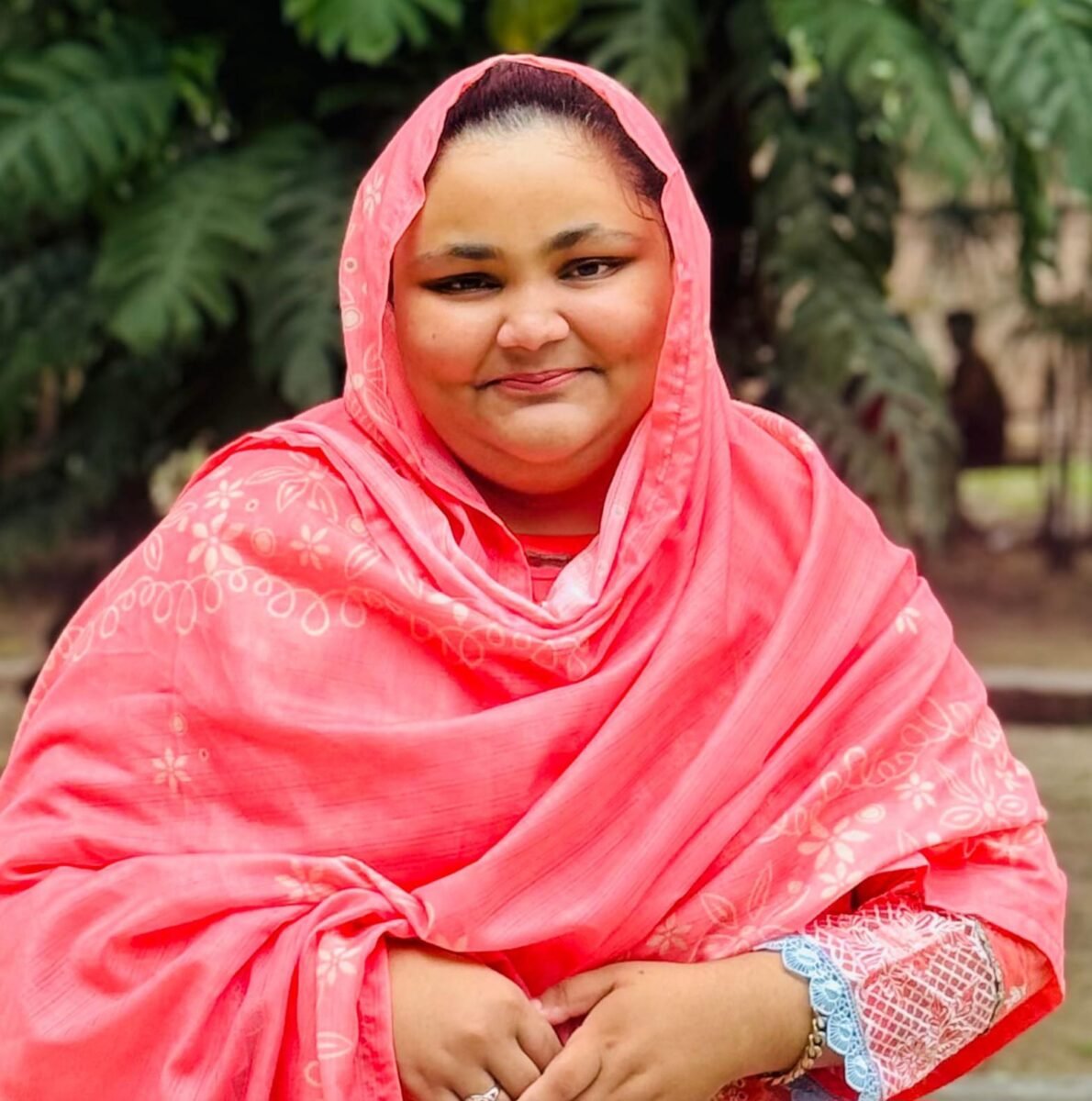
Aqsa Fazilat is a Political Science student with a minor in Philosophy at Kinnaird College for Women, Lahore. Her research interests lie in political geography, contemporary global politics, and international relations. She can be contacted at aqsafazilat9@gmail.com.