
Kamola Sayfullaeva
Uzbekistan has one of the youngest populations in Central Asia, with more than 60 percent of its citizens under the age of 30. This demographic advantage represents one of the country’s greatest national assets. The younger generation is the driving force behind innovation, education, scientific progress, and economic development, making youth the foundation of Uzbekistan’s present and future.
For decades, education across Central Asia followed the traditional Soviet classroom model, where instructors delivered lectures while students memorized information and reproduced it in examinations. While this approach served an earlier era, it no longer meets the demands of a modern, knowledge-based economy. In the age of artificial intelligence and instant access to information, memorization alone has lost much of its value. Today’s labour market increasingly requires both technical and interpersonal skills, including data analysis, digital literacy, critical thinking, practical problem-solving, communication, emotional intelligence, and technological proficiency.
Modern education is no longer centred on memorizing facts but on developing analytical thinking through interactive and student-driven learning. Whether in engineering, agriculture, information technology, or business, students should engage in practical case studies, project-based learning, and real-world applications within supportive learning environments that encourage creativity and innovation.
Recognising these changing demands, Uzbekistan has introduced significant reforms across its education sector. The country offers competitive salaries to attract talented teachers, instructors, and mentors while investing heavily in improving educational quality. Between 2023 and 2025, Uzbekistan expanded its digital education ecosystem through platforms such as ZiyoNet and integrated Learning Management Systems (LMS). At the same time, universities adopted international accreditation standards and the European credit-module system, bringing higher education closer to global best practices.
Alongside university reforms, greater emphasis is being placed on vocational and practice-oriented education. The establishment of specialised colleges and technical institutes aims to prepare highly skilled professionals for key sectors of the economy. These institutions provide valuable opportunities for young people who may not pursue traditional university degrees, enabling them to build successful careers in construction, manufacturing, services, and other technical professions.
Human capital remains one of Uzbekistan’s most important long-term investments. Accordingly, the government continues to reform educational methodologies while improving teacher training and professional development. Teacher certification, continuous training, and retraining have become central components of national education policy. New teaching methods, supported by modern technologies and innovative instructional techniques, are being introduced to enhance learning outcomes for both educators and students.
Students are increasingly encouraged to pursue quality education both within Uzbekistan and abroad. Better-trained and better-supported teachers equip young people with stronger professional skills, helping reduce labour market mismatches and improve domestic employment opportunities.
International exposure also plays an important role in strengthening the country’s human capital. Many young Uzbeks seek educational and professional experience abroad before returning home with new knowledge, skills, and global perspectives. In recent years, awareness of lifelong learning and professional development has grown considerably. Modern certification systems, retraining programmes, and professional qualification frameworks are helping the country build a more competitive workforce.
The government actively supports international educational exchange. Teachers are regularly sent abroad to improve their qualifications and introduce international best practices upon their return. Likewise, the El-Yurt Umidi Foundation provides scholarships that enable talented students to study at leading foreign universities before contributing their expertise to Uzbekistan’s long-term development.
Graduates returning from overseas are further supported through government initiatives, private-sector programmes, and innovation platforms that help integrate their international experience into the national economy. These efforts ensure that global knowledge contributes directly to domestic development.
Youth development has also become a national priority through the work of the Youth Affairs Agency. New digital initiatives, including UstozAI, Mutolaa, and Qizlar Akademiyasi, are expanding educational opportunities while strengthening professional and personal skills among young people. Particular attention is being given to women’s education and empowerment through programmes that support girls in education, technology, entrepreneurship, and employment. These initiatives equip both young women and men with practical workplace skills, communication abilities, and technological competencies required in today’s economy.
Although Uzbekistan’s demographic advantage presents enormous potential, the country’s “human capital dividend” has yet to be fully realised. Recognising this, vocational education has become a central policy priority. Reflecting this commitment, 2026 was declared the “Year of Teaching Modern Skills to the Youth.” In December 2025, the World Bank approved a $250 million EduImkon Programme to expand student financing for approximately 600,000 young people, with nearly 80 percent of beneficiaries expected to be women and students from low-income families.
As the global economy continues to evolve, education systems, youth development strategies, and human capital policies must evolve alongside it. Continuous adaptation, innovation, and investment in education will remain essential for preparing future generations to compete in an increasingly digital and knowledge-driven world. For a country where the majority of the population is young, education is not simply a social sector, it is the foundation of sustainable economic growth and national prosperity.
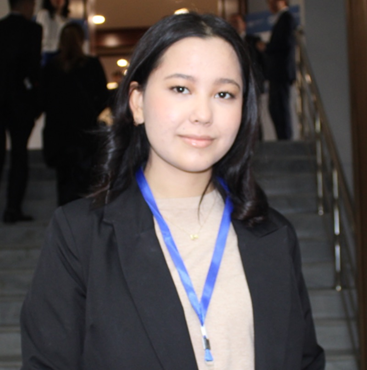
The author is a scholar of International Relations at the Middle East Technical University (METU), Türkiye. She has interned at the Konrad Adenauer Stiftung on German–Türkiye relations, is an alumna of the Yale International Relations Leadership Institute.