

Khawaja Touqeer Ahmed
‘Kashmir’, a region often resembled as ‘The Heaven on Earth’ has been giving its blood infused with boundless emotions, loyalty and devotion to preserve its identity under decades of oppression, brutality and structured violence. The garden keeps on thriving; arousing with flowers and spreading aroma of nearly half a million martyrs that include women and children. Sheer illustrations of sacrifice, resistance and determination can be experienced by witnessing natives of this world space.
From lockdowns, detentions, extrajudicial killings, hailing pallets till the alteration in demographics Kashmiris remain steadfast, determined and never compromised on their stance. They simply demand their due fundamental rights of peaceful living, self-determination and political freedom. The region with established history and distinct identity has been fighting for its perseverance against the 1947 incepted territory i.e. India.
International platforms including United Nation Security Council has passed multiple resolutions for culminating the aggression against the Kashmiris and urged for free and fair plebiscite under UN supervision through which people of Kashmir by exercising their rights determine their fate. But policy of oppression and brutality summed up in each decade and under Modi-RSS coalition, the conditions get even worse.
Revocation of article 370 and 35A (2019) disregards the Jammu and Kashmir special status and places it under direct Indian administration setup. Moreover, to overpower the Muslim majority in Jammu and Kashmir foreign settlements are allowed on large scale to upbring a demographic change. These infamous unilateral actions and repressive tactics against a nation depict the normative structure of global politics and inefficacy of international law and enforcement mechanisms.
2025 Annual Report of Human Rights Watch HRW presents the escalating violence, extrajudicial killings, arbitrary detentions and repression of media and civil society in Indian occupied Kashmir. OIC- IPHRC documented use of pallets against children, fake encounters, cases of rape, molestation, and inhuman treatment. UN High Commissioner for Human Rights released a report calling attention to the use of excessive force, illegal security operations and lack of judicial trials. Pakistan along with OIC countries maintained its stance and keeps on internationalizing the issue over various regional and international platforms like UNSC.
Immensely condemn the existing status quo and severe human rights violations in Kashmir and called for an utmost internationally mediated resolve. Western world along with China have raised considerations on humanitarian crises and urged for peaceful resolution under UN frameworks. Despite having legal, moral, and humanitarian grounds, the Kashmir dispute remained unresolved due to structural shortcomings in the international judicial system and varying interest of major powers that drive those decisions. Anyhow the globe is on brink of profound transformations, and recent developments have assimilated the power clouds that can resume drops of freedom, justice, and peace over Kashmir.
Amidst the transitioning geopolitical landscape that abides by the return of Power politics, struggle for survival and accumulation of resources it is highly anticipated that articulated diplomatic maneuver and vigilant politics can serve to settle the awaited dispute. With the mark of struggling liberal institutionalism, erosion of arms control measures and insignificance of international law major global powers are directly determining the globe’s fate.
Keeping their interests aligned, a new great game is ongoing with revision of the international lines and shifting of the territories. The emergence of multipolarity and rise of populism have reinforced the geostrategic rivalries by subjugating ambitions of collective security and norms of interdependence. US acknowledging the ‘China factor’ had begun to utilize options and develop strategies to contain Chinese influence. US Indo-Pacific strategy has been deeply integrated over countering China in the Indo Pacific Region (IOR).
For that purpose, India was seen as an optimum option for the west to secure its interests in Southern and Eastern Asia. US has signed major strategic, military and economic agreements with India to build it up against China. Strategic agreements like LEMOA, BECA, iCET etc. project the strength of this Indo-Western partnership. Hence UN resolutions, legal and moral voices remain peripheral in resolving the Kashmir dispute as India was oversighting the major western interests.
Without any international condemnation and fear of being sanctioned India carried its aggressive policies over the Kashmir region abstaining them from exercising their basic rights of peaceful living, free will and self-determination. Reported humanitarian catastrophes, prolonged lockdowns, internet blackouts, and demographic alterations exemplify the region as a stark manifestation of structural violence.
But now world realities are experiencing great change under which India is facing serious backlashes in its relations with west primarily US after the recent Pak-India May conflict 2025. In which incompetence and slogans of emerging power were exposed by the humiliation that India faced after loss of its multiple aircrafts, defense systems and air bases.
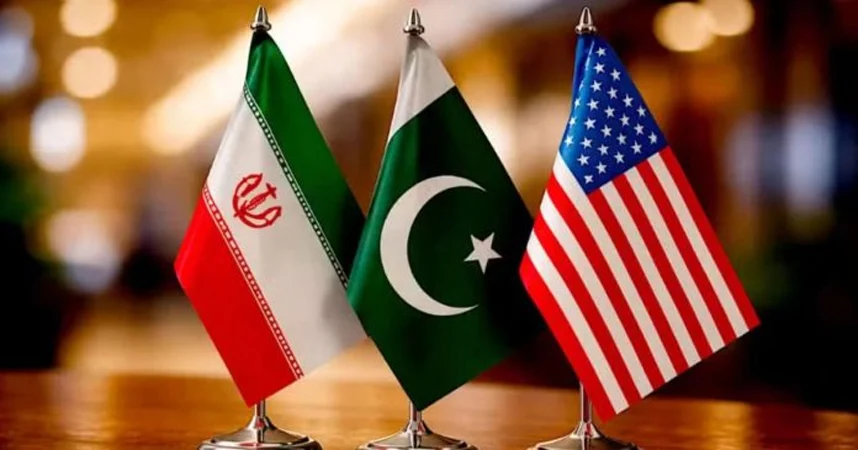
Pakistan after exercising its right of self-defense and administering a befitting response, welcomed US brokered ceasefire and nominated Trump for Nobel peace prize to eliminate risks of nuclear confrontation. Pakistan through its valor, resilience and diplomacy secured a nominal place in Trump’s business-oriented, loyalty-based and inter-personally driven engagement.
Consequently, US became closer and fostered its economic relations with Pakistan including bilateral agreements over minerals, crypto etc. On the other hand, India has been facing serious setbacks in its global engagements incorporating grave economic and strategic costs i.e. raised US tariffs, Chahbahar access denial etc.
In contemporary realist-driven world order, global powers leading the hierarchy are openly exercising tools of power politics and have institutionalized norms of intervention. Likewise, territorial aggression in Palestine, Ukraine, Iran and Venezuela exemplified this trend. Depleting sovereignty, persistent threats for regime survival and surgical strikes have exposed the running accounts of neo imperialism and ambitions of resource exploitation.
In this scenario Pakistan is fortunate enough to balance its bilateral ties among global powers like US and China. Keeping both powers on its side, Pakistan has also cemented its partnerships with Kingdom of Saudi Arabia, Turkey, Azerbaijan etc. that resembles a proactive Islamic block formation reinforcing collective security and enhancing its leverage in international affairs.
Whereas India has faced immense deterioration in its regional and international expeditions like with Bangladesh, Nepal, Maldives, China and Pakistan; its immediate neighbors. Moreover, US has augmented India’s diplomatic isolation by tightening its scrutiny on Indo-Russian and Indo-Iranian trade relations.
International relations are inherently unpredictable as states keep on changing their preferences and shifting their interests. Leadership and state policies change periodically as the governments roll over. In concurrent realist paradigm where states are broadly re-configuring their alliances its very high time for Muslim states to observe foresighted approach and visionary leadership to capitalize the opportunity and draw maximum from it.
Through united and collective measures, they can exert pressure on major powers to address Kashmir’s grievances. Economic pressure, tariffs tactics and sanction policies by developed world would coerce India to adhere on legal and moral obligations. For the time being converging Pak- Western relations, if administered prudently, may kindle a viable hope for the settlement of Kashmir dispute under UNSC principles.
The author is a BS scholar of International Relations from Quaid i Azam University, having keen interest in geopolitics, strategic calculus and regional integration frameworks.