Ayesha Munshi
Through tolerance and dialogue, Oman has cultivated their foreign policy to defuse both domestic and international tensions by encouraging cooperation and maintaining a commitment to open channels to mediate regional conflicts and achieve peaceful co-existence for all. In todays Middle East this approach remains essential.
The foundations of Omani diplomacy were laid under Sultan Qaboos bin Said, whose five-decade reign transformed the country from isolation into a state known for balanced engagement. Qaboos worked with the principles of neutrality, non-intervention and respect for international law to promote compromise and peaceful resolution. He stayed on the best of terms, never compromising diplomatic relations and sought solutions to Oman’s needs by pursuing relations that would be beneficial in the long term and institutionalising balance.
Unlike many Gulf neighbors, Oman resisted becoming fully encompassed within rigid regional blocs. It maintained relations with Iran while cooperating closely with Western powers. It avoided participation in overt displays of confrontation while strengthening its own security partnerships. Crucially, neutrality in the Omani context was never synonymous with passivity. It was a strategic choice designed to maximize autonomy and minimize vulnerability.
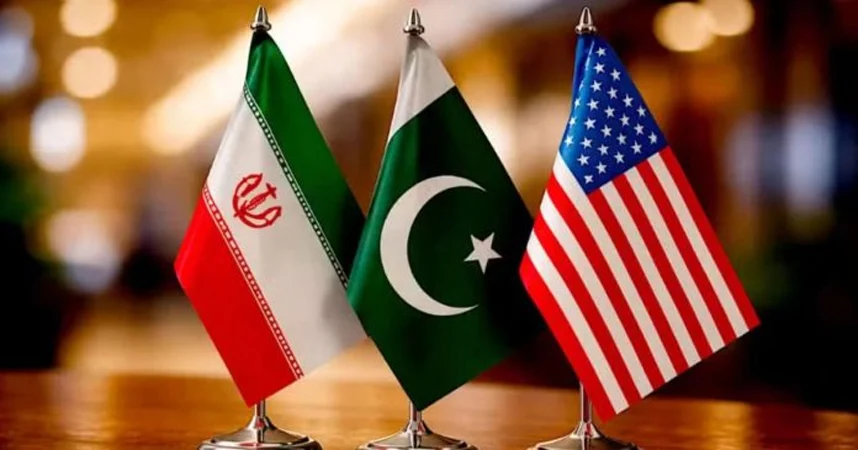
In recent times, Oman has played the role of a mediator. An example of such a role is evident in the 2013 discussions between the United States and Iran which took place in Muscat. These discussions led to the eventual negotiation of the Joint Comprehensive Plan of Action (JCPOA), or “nuclear deal,” two years later. Discussions mediated by Oman continued even after the United States withdrew from the nuclear deal in 2018.
In such situations, Oman only acted when all sides had expressed an openness to engaging in dialogue and the official stance of Oman did not contradict those of the parties involved. It proves how a small Gulf state is capable of hosting discussions that were capable of reshaping global security discourse. In preserving communication and choosing a policy of non-alignment, Oman has accumulated capital in the form of trust.
From an analytical standpoint, Oman’s diplomacy can be seen as a form of niche strategy. Without the population size or military strength of larger regional powers, it focused on mediation and bridge-building as areas where it could exert real influence. By establishing itself as a credible intermediary, Oman secured a role that exceeds what its material capabilities would suggest.
Its facilitation of quiet talks between the United States and Iran before the 2015 nuclear agreement illustrates this approach. Muscat was able to host those discussions precisely because it had maintained working relationships with both sides, even when others had not.
This mediating role has not been limited to high profile negotiations. In Yemen, Oman has kept lines of communication open with all sides, ensuring it remains positioned to facilitate dialogue when opportunities arise. During episodes of instability in the Red Sea, Oman has consistently emphasized de-escalation. Together, these choices reveal a clear pattern: Oman views dialogue not as a weakness, but as a strategic choice.
Developments in the region have reinforced the logic behind this approach. International relations today are operating in a more multipolar environment. For decades, many states depended on the united states for military protection and defense partnerships and today, the Gulf states are navigating multipolarity, and China’s economic presence is expanding.
In such a landscape, fixed alliances can narrow a states strategic options. Omans’ long standing commitment to strategic balance and non alignment has been central to its credibility as a mediator, even during high tension conflicts. This continuity underscores that Oman’s diplomatic posture is institutional, reflecting structural incentives embedded in the state’s identity.
The broader significance of Oman’s diplomatic ascendancy lies in what it suggests about small-states. International relations theory often emphasizes material capabilities as determinants of influence. Oman challenges that assumption. It demonstrates how consistency and credibility can generate leverage that can not be measured by material means.
At a time when regional polarization has intensified, intermediaries play a stabilizing role. They provide a space for dialogue, preserve communication channels during crises, and reduce the likelihood of confrontation. Oman has positioned itself as precisely this kind of actor. Therefore the question is not whether Oman will dominate regional politics. It is evident from its foreign policy that hat has never been its ambition.
The more relevant question is whether the Middle East increasingly depend on states capable of bridging divides rather than widening them. If so, Oman’s diplomacy may serve as a template. Oman’s diplomatic rise illustrates that power can be exercised through steadiness rather than spectacle. In the Gulf’s multipolar moment, that steadiness has become a strategic asset as well as a regional necessity.
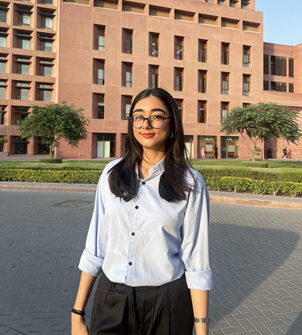
The author is a third year student at the Aga Khan University, Faculty of Arts and Science program. She is majoring in Politics, Philosophy and Economics, and holds a special interest for international relations, wishing to pursue a career in the field.