Abdul Haq
In a relentless war-torn Middle East, competition, and precarious diplomatic efforts, Pakistan’s finest involvement to foreign policy is not loudly siding with one side or the other, but quietly waged to keep the balance of power and de-escalate crises in the region.
Islamabad has made it clear several times that it prefers dialogue over confrontations that dialogue and diplomacy would promote peace and stability in the region and that diplomacy is the only viable path in times of crisis. For a state that can’t afford to make any miscalculation and has important bilateral ties with rival regional actors, restraint is not a sign of weakness but it’s a prudent way to remain cautiously reproached and significant.
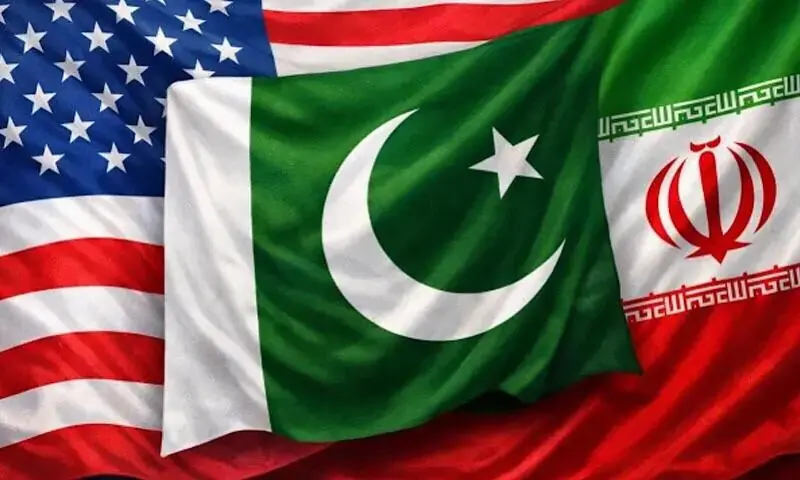
Pakistan’s this stance and case for restraint is stronger because it is in the middle of two competing centres of power. Pakistan keeps in touch with both Washington and Tehran and is seen as a relatively neutral player because it has long-standing ties to Iran and strong ties to Saudi Arabia. Pakistani officials had been sending messages back and forth between the U.S. and Iran and that Islamabad was being talked about as a possible place for talks. In other words, Pakistan’s quest is imperative not because it has less coercive power, but because it can get to actors, having credibility to be trusted, and talk to rivals who can’t always talk to each other directly.
That’s why what Foreign Minister Ishaq Dar said is important in a speech at the Atlantic Council, “On Iran, Pakistan calls for de-escalation and dialogue. . . we will continue to support and encourage Iran for dialogue and diplomacy,” and that Pakistan was doing this as a duty, not as an obligation. This sums up what quiet diplomacy is all about. It’s not just about making rhetorical statement at home or appearing heroic on screen making good points in front of the camera. It’s about keeping channels open, making sure there are no miscalculations, and keeping the door open for a crisis to be handled before it turns into a cataclysmic regional war.
Pakistan can’t afford to cut ties with Saudi Arabia, Iran, or the rest of the Gulf while also maintaining a cautious relationship with the United States. In March 2026, Prime Minister Shehbaz Sharif met with Saudi Crown Prince Mohammed bin Salman in Jeddah. The two leaders talked about what was going on in the region and agreed to work together for peace and stability. This meeting is important because it shows how Pakistan is trying to keep its balance right now. Staying close to a key Gulf partner while still leaving room for diplomacy elsewhere. Quiet diplomacy doesn’t mean being neutral in the abstract sense albeit, it means being involved in a careful way without getting stuck in one camp.
Pakistan’s finest argument for this way of doing things is that it already fits with the language of responsible government. In a joint statement about the Iran crisis, Islamabad and a number of other regional states condemned violations of sovereignty, called for respect for international law, and stressed “the peaceful settlement of disputes.”
It also said that diplomacy and dialogue are the “only viable path” and that using coercive means won’t lead to a lasting solution. This is important because quiet diplomacy works best when it is paired with principled restraint. States are more likely to trust a mediator who speaks in terms of law, sovereignty, and de-escalation than in terms of triumphalism.
There is also a more important reason why Pakistan’s role may be more important than it seems. Pakistan has “unusual credibility as a mediator” because it has good relations with both Washington and Tehran and is far enough away from both to be seen as a credible go-between. Pakistan is Iran’s least hostile neighbour, doesn’t have any U.S. bases, and already has a security relationship with Saudi Arabia. In a place where trust is hard to come by and communication channels are often politically charged, those are not small benefits. Quiet diplomacy works because it isn’t flashy albeit, it gives enemies a chance to talk without losing face.
Henceforward, the policy lesson is evident for Pakistan. It needs not exaggerate its strategic significance or assert that it can resolve the conflicts in the Middle East. That would reveal its limitations and invite disappointment. Nevertheless, it requires keep doing what it is starting to do by keeping open lines of communication, encourage mediation, and upholding that dialogue is better than escalation.
Strategic balance does not equate to indecision in a polarised regional order. It’s is self-controlled strategy and thoughtful diplomatic manoeuvring. Quiet diplomacy is also not a sign of weakness. It is the most sensible approach for Pakistan to stay relevant while lowering the possibility of a more widespread regional catastrophe and collapse.
The author holds an MS degree in International Relations from the School of International and Public Affairs (SIPA), Jilin University, the People’s Republic of China. He is an expert on China, SCO, CARs and South Asian affairs. He writes on global issues, international politics, international law, peace, conflict, and security studies. He can be reached at ahsafi.edu@gmail.com. LinkedIn: https://www.linkedin.com/in/abdul-haq-edu/ X: https://x.com/x_haqitude