
Ammarah Ali
In his New Year’s address to the armed forces this year, President Emmanuel Macron delivered a sobering message that carried weight far beyond the Hexagon, “Pour etre libres, il faut etre craints” (to be free, we must be feared). While the proposal to extend France’s nuclear umbrella to its European allies first came to the surface in 2025, it is the series of volatile incidents of early 2026, marked by the Greenland crisis and the expiration of the US-Russia New START treaty in February, that has transformed this doctrine from a theoretical debate into a geopolitical reality.
France’s foreign policy approach is deeply ingrained in the Gaullist tradition of French diplomacy. This heritage ranges from the pursuit of becoming the puissance d’equilibre (balancing power) to the aspiration of ‘third way’ diplomacy that presents France as a sovereign alternative to the middle powers from the Middle East to the Indo-Pacific in a US-China world. For Macron, the Gaullist tradition’s notion that ‘independence is not solitude’ has become a governing doctrine. Therefore, he’s been using effective multilateralism through like-minded cooperation as a strategic tool as a way to magnify France’s sliding relative power both regionally and globally.
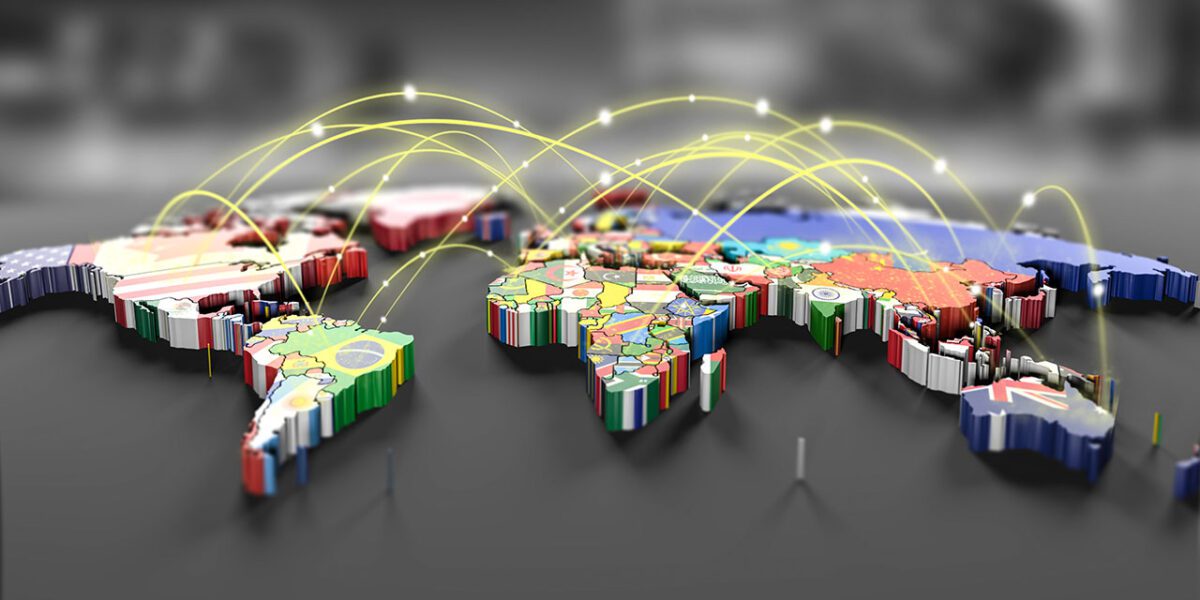
As evident in the Middle East, where the US adheres to a containment policy and China focuses on dominance, France promotes the sovereignty partnership model. It preserves influence through self-assigned role as a mediator between Western and non-Western powers in the region, diplomatic activism, and arms partnership. Whereas, in the Indo-Pacific, France presents itself as a resident power, asserting its strategic autonomy by leveraging its overseas territories and naval presence.
Similarly, the deepening sovereignty partnerships with Indonesia, Singapore, and India, signing of rare-earth and uranium pacts with Kazakhstan, and supporting the India-Middle East-Europe Economic Corridor (IMEC) also serve as significant examples of how France is positioning itself as a key partner and playing out its connective diplomacy in 2026 to build a world of sovereign peers outside Washington or Beijing sphere of influence.
Nonetheless, the most controversial element of this ‘third way’ diplomacy is the rebranding of the French Force de Frappe as the ultimate guarantor of European, and potentially global sovereignty. Through “Europeanization” of French deterrence, he has not only brought back the idea of a European Defence Union but is also making an attempt to lock the continent into a French-led security architecture before the upcoming election resets the board.
As France’s global ambitions are being tested by intensifying great-power competition, the approaching elections also raise fundamental questions concerning the sustainability of France’s grand ambitions of being a global security provider. The fragmented home politics and lack of majority in the National Assembly have constrained the implementation of foreign policy goals for Macron. The opponents believe that Macron is more concerned about international affairs at the cost of domestic unity.
With the 2027 French presidential elections right around the corner, the ‘third way’ foreign Policy strategy has emerged from a mere abstract subject for specialists to a litmus test of leadership credibility and a site of strategic coherence. Beyond domestic friction, these elections take place against the backdrop of a broader rethinking of France’s place amid a shifting international order. In the near future, the credibility of France as a ‘third way’ leader for countries such as Japan, India, the UAE, etc., will depend entirely on whether the next occupant will honor these cross-continental promises like Macron.
Although France has gained its status as the most active connective tissue in this highly polarized world, its sustainability remains in doubt. By institutionalizing these ‘third way’ partnerships, France needs to prove that its foreign policy ambitions are not dependent on one president. While Macron’s increased assertiveness on cooperation has become France’s best hope to remain a relevant power in 2026, whether this commitment will survive the litmus test remains dependent on outcomes still unfolding.
The author recently earned an MSC in Politics, Communications, and Data Analytics from the University of Essex. Her research focuses on counterinsurgency, emerging security trends, and the intersection of these security challenges with technology.