Syeda Tahreem Bukhari
Vladimir Putin’s visit to New Delhi comes at a crucial moment when India is being pressurized by the US to stop purchasing Russian oil, which has spiked from 0.2 percent to 40 percent today. The US Trade Advisor Peter Navarro has gone so far as to refer Russo-Ukrainian conflict as “Modi’s war” and said that the “road to peace runs, in part, through New Delhi.” The US repeatedly communicated to India to stop purchasing Russian oil. Unable to halt the trade, Trump employed coercive economic diplomacy coupled with the imposition of a 50 percent tariff on India and levied direct sanctions on Russia’s largest oil companies.
Putin’s visit shows Washington cannot compel India to abandon Russian oil despite sanctions and tariffs.
The US policy is unable to yield a favorable outcome for Washington, where India’s strategic inflexibility makes it choose Moscow as an alternative market faltering economic ties with the US. Putin’s visit paves the way to unlock the potential of bilateral trade, where they presented a plan for economic cooperation through 2030, aiming to reach the target of 100 billion dollars in trade.
Putin’s visit is more symbolic than substantive in certain aspects, as they did not sign any significant defence agreements. Deals on shipbuilding, vital minerals, and civilian nuclear energy were made, but they are meager in comparison to the current oil trade. Oil is a major factor in record trade levels. The US imposed sanctions against Russia’s two biggest oil companies, Rosneft and Lukoil, from whom India imports 60% of Russian crude oil.
These sanctions would not hinder the oil trade between Moscow and New Delhi, as Putin, in his visit, assured to provide the Indian economy with “uninterrupted” fuel. Bloomberg reported that Russia is offering Indian refiners crude oil of up to 7 dollar per barrel to dated Brent after US sanctions on Rosneft and Lukoil. Reuters also highlighted that Indian refiners are looking to purchase crude oil from non-sanctioned Russian sellers at these lowest prices. New Delhi is also considering more market access in Russia, especially in medicines, machinery, and agricultural products, because bilateral trade is significantly lopsided in favor of Russia.
Russia now supplies nearly 40% of India’s crude, transforming bilateral trade patterns.
Deals on shipbuilding, vital minerals, and civilian nuclear energy were secured. India still wants Russia to accelerate the supply of vital military equipment, such as two S-400 missile defence systems, from a 2018 agreement that has been delayed because of the conflict in Ukraine. The recent sanctions imposed by the US on Russia’s biggest oil companies and the 50 percent tariff on India aimed to deter trade between the two. Contrary to this, Putin’s visit to New Delhi indicates that the US cannot compel India to follow its preferred policies.
The US bet on repeatedly questioned India, not just by Putin’s recent visit to India but also by Modi’s choice to go to the Shanghai Cooperation Summit in Tianjin in September, where he shook hands and exchanged grins with Putin and Xi Jinping. Decades of American policy, which viewed New Delhi as essential to curtail Beijing’s ascent in the Indo-Pacific now in need of redesign. The Trump Administration has taken a myopic view of New Delhi.
Washington’s misreading of India’s geopolitical priorities has exposed flaws in its Indo-Pacific calculations.
A discussion about how New Delhi has become closer to Washington over the past 20 years has been sparked by the way Trump and a number of senior aides have publicly denigrated India in recent months, which has become a political liability for Modi at home. Putin’s visit should serve as a reminder that Russia is a significant player in geopolitical reality. Despite imposing sanctions on Russia, Trump is unable to damage its trade relations with the state, which it termed a strategic ally. It also questioned the US investment in India as a strategic partner.
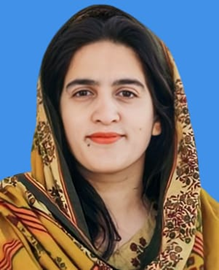
The author is an Associate Director at the Center for International Strategic Studies AJK. She holds MPhil in Peace and Conflict Studies from National Defence University, Islamabad. She is a NESA Alumni and Peace Ambassador at the Institute for Economics and Peace.