Umar Juraev
For three decades, every attempt to build a Central Asian bloc ended the same way: Moscow absorbed it. The C6+ may finally break that pattern, but only if leaders resist the habits that doomed its predecessors. The November 2025 Tashkent Summit marked a key step in Central Asian integration. Leaders from Kazakhstan, Kyrgyzstan, Tajikistan, Turkmenistan, Uzbekistan, and Azerbaijan met for the Seventh Consultative Meeting of Heads of State.
Azerbaijan joined as a full member, changing the C5 format to C6. Uzbek President Shavkat Mirziyoyev proposed a “Community of Central Asian States” with a permanent secretariat and rotating presidency. This development could break the historical cycle of external absorption, mainly by Russia, that blocked past efforts. Today, with doubled intra-regional trade and new security ideas, the C6 offers a chance for real, independent integration. This op-ed examines past failures, current progress, challenges like Russian influence, and recommendations to keep the momentum.
After the Soviet Union ended in 1991, Central Asian states tried to integrate without outside control. They formed the Central Asian Union (CAU) in 1994, which became the Central Asian Economic Community (CAEC) in 1998. This included Kazakhstan, Kyrgyzstan, Uzbekistan, and later Tajikistan. In 2002, they created the Central Asian Cooperation Organization (CACO) for all five states, focusing on trade, security, and borders.
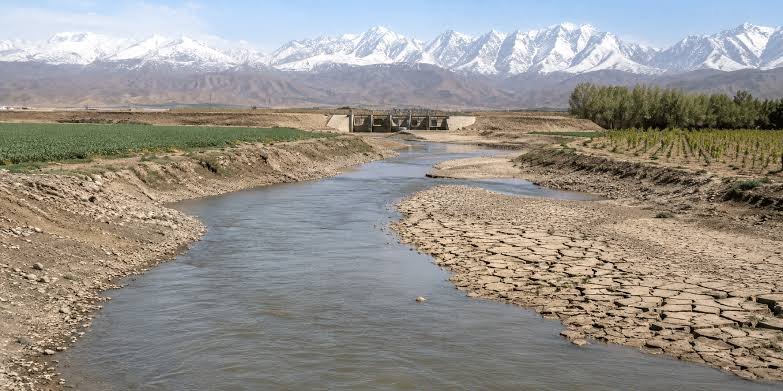
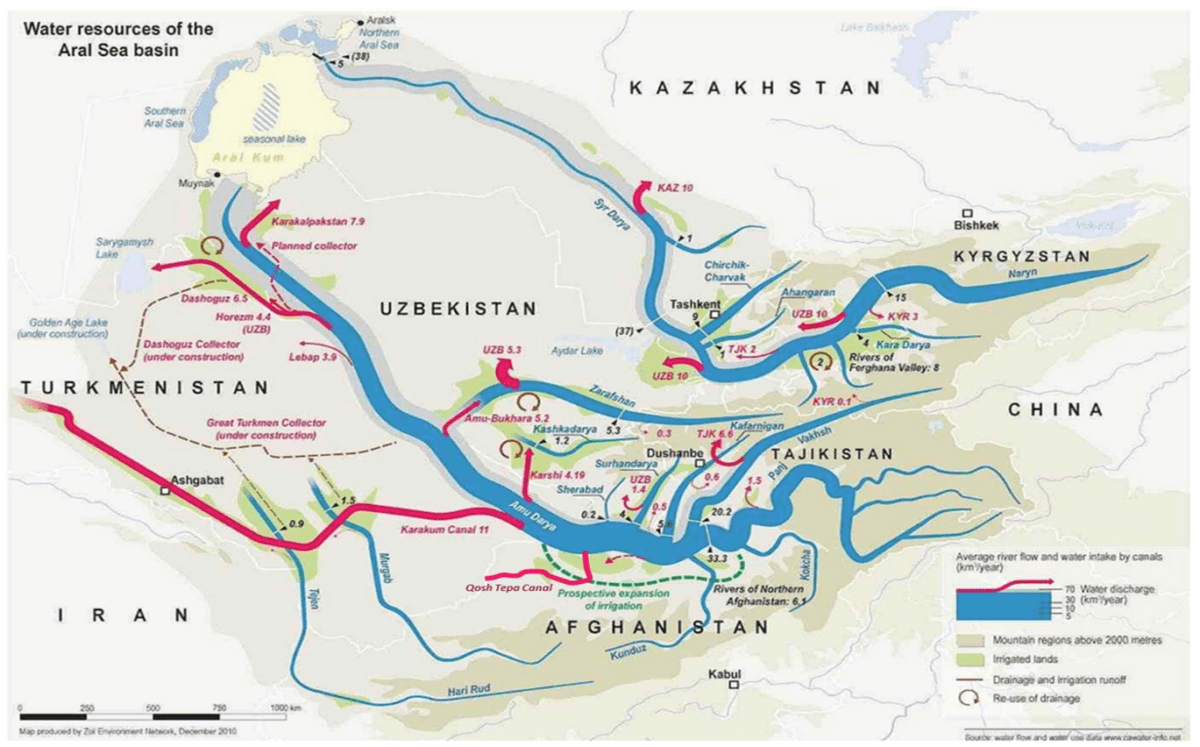
These efforts failed due to internal and external factors. Internally, economic policies differed: Kazakhstan and Kyrgyzstan chose liberal markets with open reforms, while Uzbekistan and Turkmenistan used state-controlled systems. Tajikistan faced a civil war from 1992 to 1997, which delayed progress. Disputes over water, especially between the upstream countries, Kyrgyzstan and Tajikistan, and the downstream countries, Uzbekistan, Kazakhstan, and Turkmenistan, and border disputes contributed to the failure of Central Asian integration. Furthermore, we should note that there was intense competition between the leaders of Uzbekistan and Kazakhstan.
Externally, Russia absorbed these groups using a “Trojan Horse” strategy. Moscow offered Economic incentives and energy subsidies, which, at that time Central Asian states couldn’t refuse. Consequently, they allowed Russia into their Organizations. In 2000, the CAEC merged into Russia’s Eurasian Economic Community (EurAsEC). In 2004, Russia joined CACO, and by 2005, it fully integrated into EurAsEC. This shifted focus to Moscow’s interests. It shows that Russia’s strategy protected its influence, preventing a strong, independent Central Asian bloc.
Despite progress, the C6 faces challenges that could test its independence. In late 2025, Russian state media, including TASS and RIA Novosti, spread speculation about Moscow possibly joining the format. This echoes the 2004 absorption of CACO into Russia’s Eurasian Economic Community, a historical parallel Central Asian leaders clearly recognize.
Central Asian leaders seem to keep the C6 as a flexible format rather than a full organization to limit such external pressures. This approach allows practical cooperation without rules that might open the door to dominant powers like Russia. Russia’s Ukraine war and sanctions have reduced its influence, but ties in areas like labor migration and energy still give it leverage. Internal differences, such as Turkmenistan’s slower economic opening, could also hinder full unity.
This time, Central Asia’s integration through the C6 could succeed where past efforts failed. Russia is unlikely to break as it deals with its own challenges from the Ukraine war and international sanctions, reducing its regional leverage. Leaders have learned from history and are focused on protecting independence, avoiding repeats of earlier absorptions.
The situation is truly different now. Border disputes that once divided the region, such as those between Uzbekistan and Kazakhstan, Uzbekistan and Kyrgyzstan, and Tajikistan and Kyrgyzstan, have been resolved through recent treaties. Furthermore, Central Asian states are trying to solve water disputes. We can see their efforts to solve this issue through the Kambarata-1 Hydro Power Plant Project, where three countries, Kazakhstan, Uzbekistan, and Kyrgyzstan, jointly build and operate this Hydro Power plant. Even Isolated Turkmenistan is joining more regional talks.
Finally, the current leaders of Kazakhstan and Uzbekistan are no more competing with each other like I. Karimov and N. Nazarbayev during their period. The current leaders have “reset” relations, with Tokayev explicitly stating that the two nations are “by no means rivals or even competitors, but rather strategic partners, reliable allies“. Economies are aligning better. Uzbekistan’s reforms since 2016 have opened its economy, aligning more with liberal models in Kazakhstan and Kyrgyzstan.
Intra-regional trade has grown strongly: among the five Central Asian states, and it reached 11 billion. The trade turnover of Uzbekistan with the Central Asian states increased by three times – from $2,4 billion in 2016 to $7,2 billion in 2024, and the number of joint enterprises exceeded 1800.
Azerbaijan’s membership adds further value, strengthening the Middle Corridor with upgrades to ports like Alat and creating new energy routes that bypass Russian control. Overall, Central Asia’s multi-vector foreign policy, balancing ties with China, the EU, and the US—creates diversification that strengthens unity without external dominance.
To sustain the C6’s momentum and avoid past pitfalls, first, establish the permanent secretariat by mid-2026, and locate it in Astana rather than Tashkent. While Mirziyoyev proposed the idea, housing the secretariat in Kazakhstan’s new capital would signal genuine power-sharing and prevent perceptions of Uzbek domination that undermined past initiatives.
Second, promote human capital through expanded educational exchanges and joint research on water management, tapping the region’s young population for innovation. Third, strengthen C6+ ties with partners like the EU and US for green energy projects, building on Azerbaijan’s experience.
Finally, use global forums like the UN to highlight C6 successes and attract investment. Fourth, institutionalize an annual C6+Russia dialogue on labor migration. Rather than ignoring Russian leverage, address it directly: create a formal mechanism where Moscow can discuss migrant worker rights, remittance flows, and consular protection—without gaining veto power over C6 decisions.
Central Asia’s C6 represents a break from absorption cycles, driven by internal reforms and strategic diversification. By prioritizing independence, the region can achieve lasting integration and prosperity.

The author is a senior scholar at Webster University in Tashkent, majoring in International Relations. His research interests include Central Asian geopolitics, regional security, and emerging global power dynamics.