
Abdul Haq
The Islamabad talks is a process rather than a one-off event – showed that even when immediate breakthrough abated – Pakistan can still play a vital role for controlled de-escalation and keeping diplomacy resilient.
Some may opine that diplomacy is collapsed because the 21-hour talks at Islamabad’s Serena Hotel didn’t lead to any fruitful conclusion that I think would be a bad idea. The Islamabad talks taught us that peace is not impossible, but that the cost of let-down is too high for everyone to ignore. Pakistan has genuinely done what a responsible middle power ought to do to keep the peace by hosting the talks in a very secure manner and keeping a line of communication open between Washington and Tehran.
The symbolism of the setting mattered – the Serena Hotel – one of Islamabad’s most secure diplomatic venues, was turned into a temporary command centre for crisis management. Thousands of security personnel were on duty, roads were closed, and the capital was put under lockdown-like conditions. That’s not normal diplomacy albeit an intense one. Even in that tense situation, Pakistan kept the process going long enough for both sides to say what they wanted instead of making threats.
There was never going to be an easy way to settle the substantive disagreement. One of the main U.S. demands was for Iran to pull its troops out of the region and promise not to attack anyone else. Trump warned that things would get much worse if Tehran didn’t agree. The Strait of Hormuz was still the main point of conflict, and that was the only reason the talks were so fragile.
The strait is one of the most important maritime chokepoints in the world, carrying about a quarter of the world’s seaborne oil trade and a lot of LNG. It is the main export route for oil from several Gulf states and carried almost 15 million barrels of crude oil per day in 2025. Any disruption there is not a regional inconvenience nonetheless it is a global economic shock.
That’s why we shouldn’t read the end of the talks with despair, but with caution. It’s easy to think that the U.S. delegation’s departure without any results means the end of diplomacy. It is harder, but more accurate, to think of it as a reminder of how far apart the two sides still are on issues like sovereignty, security, and the future of the region. The IAEA has been keeping an eye on talks about Iran’s nuclear programme. They noted that talks between Iran and the U.S. were still going on in February and that any agreement would still need to address verification and safeguards. The nuclear file is not solved, but it is also not closed.
People don’t give Pakistan enough credit for what it did at this time although some seen Pakistan a surprising mediator, going from being a diplomatic outcast to a trusted partner in crisis management in the region. There was a reason for that change as it shows that Islamabad understands that Pakistan’s own security, economy, and standing in the region depend on stability, not show. A country that is in the middle of South Asia, the Gulf, and Central Asia can’t afford to cheer for more fighting. It has to work for controlled de-escalation, even if it costs a lot of money in politics.
This is also where the most believable optimistic reading comes from. The peace process isn’t over just because one round of talks didn’t work. In fact, it can make it clearer how much it will cost to stop. The Gulf markets have already reacted nervously to the talks’ failure, and that the fragile ceasefire was still under stress because of concerns about oil and shipping. That’s why Pakistan’s diplomatic efforts is so important as it keeps the possibility of restraint alive at a time when one mistake could make the conflict much worse than just Iran and the US.
This demonstrates us an important lesson about strategy. No side can realistically “win” a crisis over Iran just by talking about it. Missiles, drones, maritime disruption, economic interdependence, and a wider multipolar environment in which outside powers can’t just decide what happens are all part of the region’s reality now. Even people who have a lot of military power have to deal with the costs of escalation. Keeping channels open, following ceasefire rules, and using every available intermediary is the smarter way to go. Pakistan has become such a facilitator, which is a strategic advantage not just for Islamabad but for the whole region.
So, the collapse of the talks in Islamabad is not the end of diplomacy but it is a label that warns the world. If the war goes on without stopping, the effects will not be limited to the border or even the Strait of Hormuz. They will spread through energy markets, trade routes, and unstable regional politics.
It is important to recognise Pakistan’s sincere effort to keep the continuing, not because it led to an immediate breakthrough, but because it went against the logic of giving up. In a place where things can get out of hand at any time, holding back is not a sign of weakness but it’s the art of statesmanship and that’s what Pakistan does.
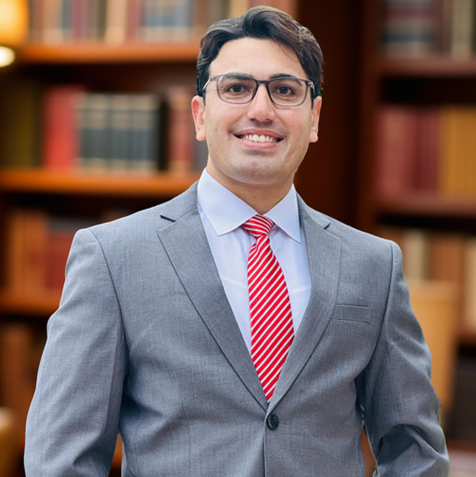
The author holds an MS degree in International Relations from the School of International and Public Affairs (SIPA), Jilin University, the People’s Republic of China. He is an expert on China, SCO, CARs and South Asian affairs. He writes on global issues, international politics, international law, peace, conflict, and security studies. He can be reached at ahsafi.edu@gmail.com. LinkedIn: https://www.linkedin.com/in/abdul-haq-edu/ X: https://x.com/haqitude