
Sarmad Wali Khan
Between the structural determinism of the environment and the sheer possibilism of human agency, contemporary international scholarship on China’s rise is largely dominated by structural realists. They argue that rising powers tend to become assertive while declining powers turn defensive, and that material accumulation ultimately determines state behavior.
However, China’s historical trajectory does not fit neatly within this explanatory framework: a weakened Maoist China engaged in major wars against the United States and the Soviet Union, whereas a significantly stronger China under Xi Jinping has been more selective in its use of military force. This suggests that the answer may lie beyond structural explanations, in the realm of individual agency, specifically, in leaders whose convictions and decision-making shape not only the trajectory of states but also determine their strategic behavior.
Suisheng Zhao’s ‘The Dragon Roars Back’ argues precisely this: that individual leadership matters profoundly, not in narrow terms of personality or psychology, but in the actual convictions and decisions of those who held absolute power for decades and used that power to reshape institutional structures themselves.
This requires admitting that history is not determined, that different choices could have produced different outcomes. Zhao traces this through three paramount leaders: Mao Zedong, Deng Xiaoping, and Xi Jinping, with each of them possessing lifetime tenure in power. What happened to China and how it got to where it is today depended substantially on what these three men decided.
Mao inherited a poor nation, yet refused to accept subordination, and pursued what the author calls ‘revolutionary diplomacy’- a foreign policy that China would act as a great power regardless of material condition.
The Korean War decision exemplifies this, as despite the opposition from party leadership and the enormous risks and human costs involved, he still intervened. He believed China’s security depended on demonstrating that it would not be bullied. Though hundreds of thousands of Chinese soldiers died in a war that ended in a stalemate, Mao made his point that China would not fold under any external pressure.
More striking is the Sino-Soviet split, revealing Mao’s commitment to Chinese independence even within the socialist camp. When Khrushchev denounced Stalin and suggested dialing down the confrontation with the West at the 1956 Communist Party Congress, Mao took it personally.
Zhao reveals that ‘that speech was a watershed and Mao never forgave Khrushchev for attacking Stalin.’ This personal rupture crystallized into an ideological and geopolitical split that reshaped Cold War alignments for decades. One man’s conviction became policy, which eventually became history.
Despite being a revolutionary crusader, his actions frequently contradicted his stated ideological principles whenever strategic or regime security was at stake. While he spent decades promoting a global revolution against Western imperialism and viewing the United States as a ‘paper tiger,’ he justified his rapprochement with the U.S as a necessary tactical shift to build an ‘International Anti-Soviet United Front’ against the more dangerous Soviet threat.
To reconcile this alignment with his revolutionary credentials, he privately dismissed his own aggressive anti-imperialist rhetoric as merely ‘firing empty cannons.’ Similar pragmatic contradictions appeared in his decision to allow continued British rule in Hong Kong, justified as a vital way to circumvent U.S. blockades, and his ‘Noose Policy,’ which deliberately postponed the liberation of offshore islands like Jinmen to maintain a physical tie between Taiwan and the mainland.
Ultimately, Mao employed flexible concepts like the ‘two intermediate zones’ theory to justify cooperation with non-communist developed nations (France, Canada), demonstrating exceptions to his ideological commitments. However, in a nationalist context, Mao’s efforts were to break the international isolationism of China and make it ‘stand up’ as a dignified state.
The second key leader was Deng Xiaoping, who inherited a devastated China, but he came to power with a conviction that differed fundamentally from Mao’s. Where Mao had sought to position China as a great revolutionary power, Deng sought only development. He had been purged twice under Mao. He had watched the Cultural Revolution transform the machinery of state into an instrument of terror, and he understood what ideology without pragmatism could produce. His aphorism needs to be taken literally: ‘It doesn’t matter whether a cat is black or white, as long as it catches mice.’ This is the statement of a man who had seen rigid ideological commitments destroy a nation and wanted no part of its seductions anymore. What mattered was whether China’s people ate, whether the economy functioned, and whether the institutions could develop before it was too late.
Deng completely reoriented Chinese foreign policy toward what Zhao calls ‘developmental diplomacy,’ where Mao had exported revolution and confronted the West, Deng sought peace and access to Western markets and technology. This required keeping a low profile, a strategic restraint of ‘hide and bide’, a calculated patience rooted in historical understanding. He opened China to foreign investment through Special Economic Zones, normalized relations with the United States, reformed agriculture, and did all of this while maintaining Communist Party control – capitalism without democracy.
What distinguishes Deng’s vision was more than his tactical flexibility. It was his strategic confidence rooted in an understanding of history; he believed that time favored China, that as China accumulated economic and technological capacity, its position in the world would change. He told Japanese Prime Minister Fukuda Takeo to ‘postpone the solution to territorial disputes for another twenty or thirty years’ because ‘the issue is too complicated to discuss at this time,’ and he meant it as having faith that in thirty years, China would be strong enough to discuss these things as equals.
Deng’s low profile was not humiliation; it was the patient strategy of a leader who believed that China’s moment would come. When it did, China would owe its resurgence not to sacrifice in distant wars but to the prosaic business of building roads, factories, schools, creating wealth that could be distributed, and demonstrating that communism could be compatible with markets.
The scale of what happened under Deng is easy to understate because we live in its aftermath; exports expanded from $10 billion in 1978 to $25 billion by 1985, and this was merely the opening chapter of four decades of sustained double-digit growth. What actually transpired was the transformation of hundreds of millions from rural poverty to urban working life, the construction of an industrial base, and the building of an advanced infrastructure. And this happened because Deng had decided that this was what mattered. A different leader might have made different choices; we cannot know, but Deng made the practical one.
Xi Jinping inherited a China that bore little resemblance to the China of Mao’s era. By 2012, when Xi assumed power, China was the world’s second-largest economy, had lifted 800 million people from poverty, and was thoroughly woven into global supply chains. Yet Xi looked at this powerful China and concluded something different. Where Deng had counseled patience and restraint, Xi believed the time for patience had passed. He articulated this conviction in the ‘China Dream’, that is, not merely economic growth but restoration of China’s position at the center of an Asian, as well as global order, something ancient China once held.
Under Xi, Chinese foreign policy shifted markedly. He began building artificial islands in the South China Sea and fortifying them militarily. He launched the Belt and Road Initiative, committing trillions to infrastructure projects that created networks of economic interdependence and political influence across continents, which amounted to a modern tributary system where weaker states benefited from association with a benevolent Chinese center.
The COVID-19 pandemic seemed to validate his worldview entirely. China mobilized state resources at a scale impossible in a democratic system, appeared to contain the virus while America floundered, and Xi argued that the Chinese model, which is authoritarian, centralized, and willing to impose collective restraint, worked better than liberal democracy. What fundamentally distinguishes Xi’s approach is his conviction that China’s accumulated power justifies a more demanding and assertive posture.
Where Deng had wanted to keep a low profile, Xi’s implicit message is ‘show your strength and claim your rightful position.’ He has centralized authority to an unprecedented degree, reshaping the entire diplomatic apparatus to serve his vision of China’s role in the world. His ideas of ‘modernization with Chinese characteristics’ and global vision initiatives on governance, civilizations, and development testify to his expansive international aspirations.
What Zhao demonstrates is that understanding China requires understanding these leaders and their convictions, their formative experiences, and their visions of what China could become. Mao believed in revolution and positioned China as the center of the world communist struggle.
Deng believed in pragmatic development and in the long arc of history favoring China’s rise through economic transformation. Xi believes in restoration and in the vindication of the Chinese model as superior to liberal democracy. These beliefs, more than structural logic, shaped the foreign policies that shaped the world we inhabit.
However, leaders do not operate in a void. Deng could not have pursued liberal democracy because the CCP’s legitimacy rested on its revolutionary credentials; Xi operates within a political system where nationalist sentiment runs deep. Within these constraints, however, leaders make choices that matter enormously. Mao’s revolutionary conviction led to Korean War intervention and the Sino-Soviet split; Deng’s pragmatism led to opening and reform; Xi’s confidence in China’s power has led to assertiveness and a challenge to international institutions.
None of these outcomes was predetermined by structural forces alone. Whether this framework is sufficient to overturn structural realism is another question, but it is substantial enough to complicate the story – to suggest that what happened to China depended, in important measure, on what these men decided.
What lingers after reading Zhao’s work is not satisfaction with a theory but recognition of uncertainty. We do not know what comes next. If a future Chinese leader decides differently, decides to negotiate rather than assert, pulls back from territorial claims, and holds that China’s interests are better served by cooperation than assertiveness, the entire trajectory could shift. Structural theories cannot predict this because they assume structures determine outcomes. But Zhao’s analysis suggests that individuals determine outcomes, too, but within structures.
And until we understand that history is written by both constraints and choices, we will continue to be surprised by what leaders decide to do with the power they inherit. Whether the dragon roars or remains silent depends not on the structure of the international system alone, but on the convictions of the man who holds the reins.
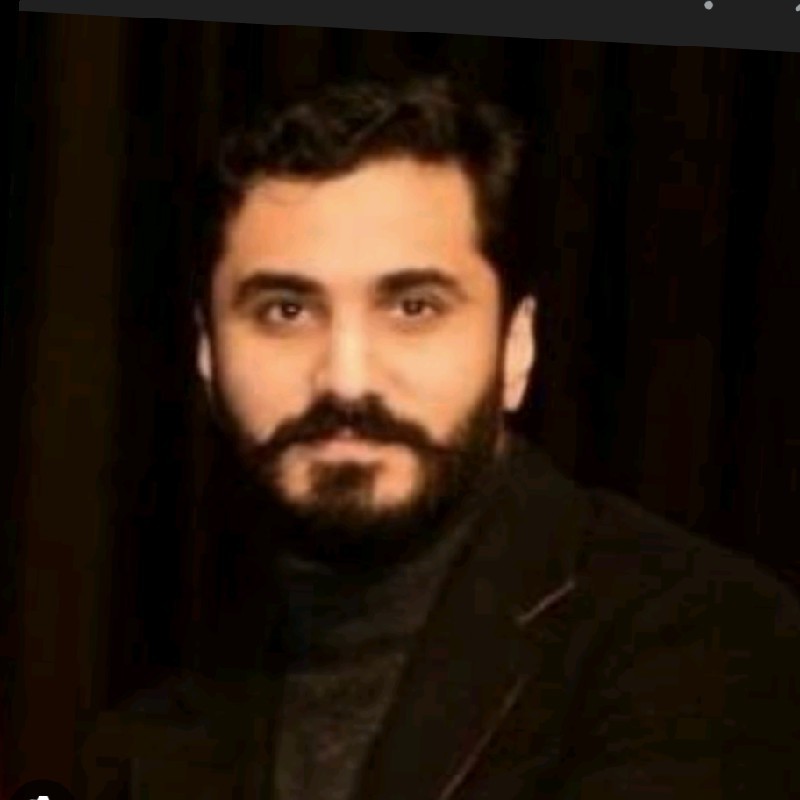
The author is a researcher at BNU Center for Policy Research, and can be reached at sarmadwalikhan@gmail.com