Book reviewed by: Dr. Zahid Shahab Ahmed
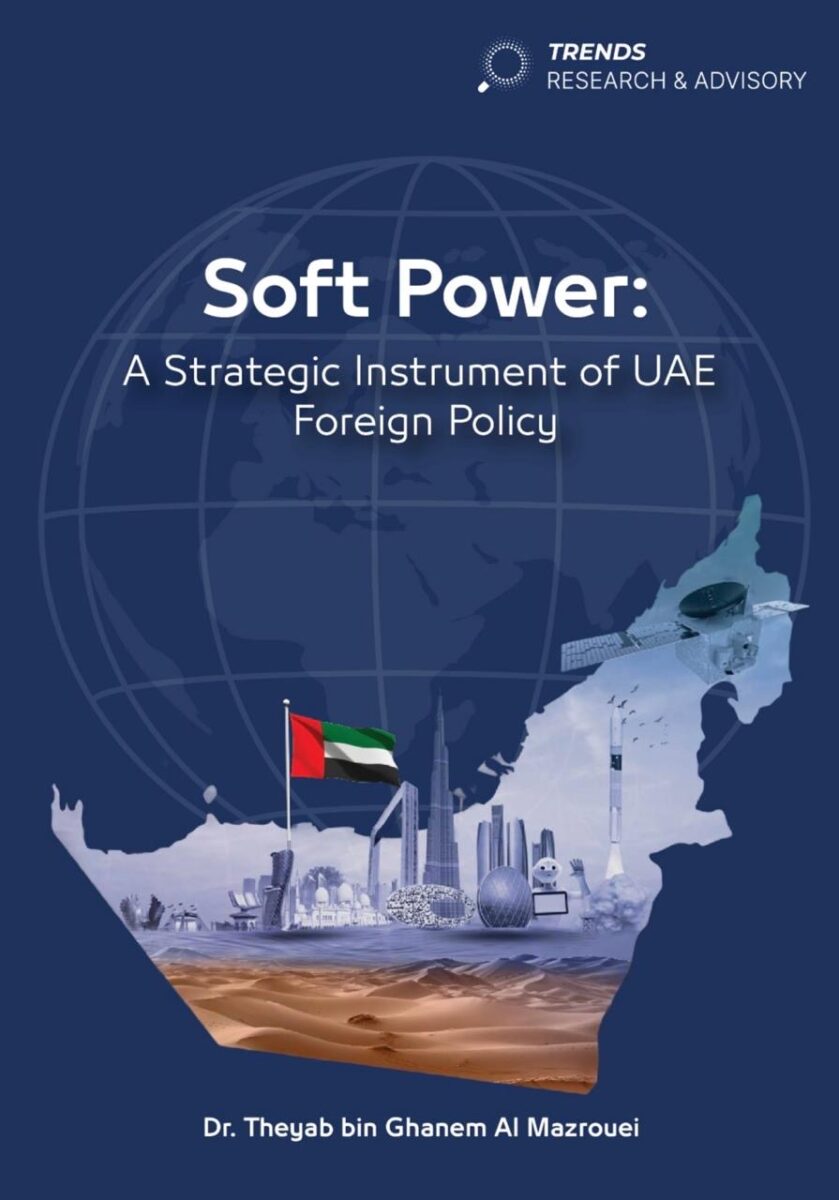
Author: Theyab bin Ghanem Al Mazrouei | Book : “Soft Power: A Strategic Instrument of UAE Foreign Policy” (Abu Dhabhi: Trends Research and Advisory, 2026, 229 p., ISBN: 9789948631750)
The book offers a comprehensive and rigorous examination of the United Arab Emirates’ use of soft power in foreign policy. Building on Nye’s foundational concept of soft power, defined as the ability to influence others through attraction rather than coercion, the author applies this theoretical framework to analyze how the UAE has strategically employed soft power as an instrument of statecraft.
The study provides valuable insights into the country’s multidimensional global engagement since the establishment of the federation on 2 December 1971 by highlighting the evolution and institutionalization of its soft power across political, economic, cultural, humanitarian, and diplomatic domains.
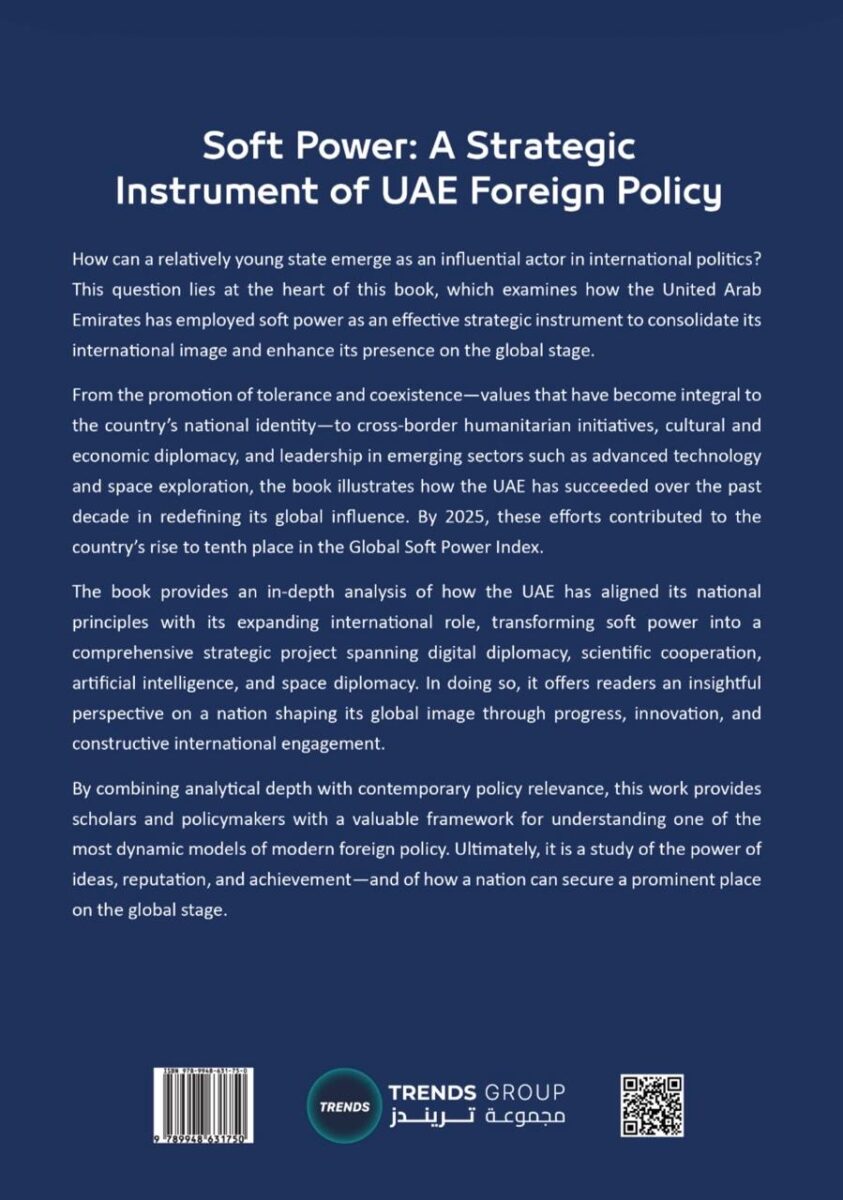
This book is particularly timely given the UAE’s emergence as one of the world’s top ten countries in the Global Soft Power Index, underscoring the growing significance of its soft power strategy in shaping its international influence and foreign policy. The methodology of this research is robust, drawing extensively on official sources, including government speeches, media briefings, and policy documents. This strong empirical foundation enhances the credibility of the analysis and provides valuable insights into the formulation and implementation of the UAE’s soft power strategy.
The literature on soft power has expanded considerably over the past three decades. However, much of this scholarship has focused on major powers, particularly the United States in the post-Cold War era, following Nye’s work in the 1990s.
More recently, growing attention has been devoted to China’s use of soft power in support of the Belt and Road Initiative, including the promotion of its culture, language, and education through the expanding global network of Confucius Institutes. By contrast, comparatively little scholarly attention has been paid to how middle powers develop and employ soft power strategies or to the effectiveness of these strategies in advancing foreign policy objectives.
In this regard, this book makes a valuable contribution by examining the soft power strategy of the UAE, a prominent middle power in the Middle East. Therefore, I agree with the following argument in this book that the “Emirati experience is marked by an early recognition of the strategic importance of soft power in an era when international influence is increasingly measured not just by military capability but also by the ability to persuade, attract, and shape preferences” (p. 195).
In terms of its structure, the book is organized into three substantive chapters. Chapter One provides a comprehensive analysis of the UAE’s foreign policy by examining its strategic objectives and the domestic and external drivers that shape foreign policy decision-making. Attention is devoted to the construction of a balanced foreign policy grounded in national values and interests.
The chapter situates the UAE’s soft power strategy within the broader framework of statecraft by demonstrating how it is integrated across multiple instruments of national power, including diplomacy, information, military, and economic (DIME) capabilities. Central to the UAE’s international image is the principle of “Universal Cooperation and Human Solidarity,” which has underpinned the country’s external engagement since the 1970s.
As the author argues, “the diplomatic instrument serves as the primary channel for effective communication between states and their political systems. Its scope extends beyond bilateral interstate relations to include engagement with international organizations, global associations, and multilateral institutions” (p. 21). The chapter is well structured and provides readers with a nuanced understanding of the key principles and drivers underpinning the UAE’s foreign policy and soft power strategy.
Chapter Two provides a comprehensive examination of the concept of soft power, exploring the motivations that drive states to adopt soft power as an instrument of foreign policy. The chapter places particular emphasis on the relationship between soft power and its cultural and economic foundations by highlighting how states leverage non-coercive sources of influence to advance their strategic objectives.
It establishes the theoretical framework of the book by engaging with key debates on the conceptualization, measurement, and effectiveness of soft power. Furthermore, the author strengthens the analysis using empirical evidence, including data from the Global Soft Power Index, to demonstrate the UAE’s growing capacity to cultivate international influence and consolidate its position as an emerging middle power.
Chapter Three constitutes the core of the book, where the author builds upon the preceding theoretical and conceptual discussions through an in-depth examination of Emirati soft power. The chapter analyses how the UAE has conceptualised, institutionalised, and mobilised soft power through a range of domestic initiatives and foreign policy instruments, resulting in significant gains in terms of its global reputation as a peaceful, tolerant, and secure country where individuals from diverse cultural backgrounds can live, work, and prosper. The analysis particularly highlights key national initiatives, including the establishment of the UAE Soft Power Council in 2017, as an institutional mechanism to coordinate and enhance the country’s global outreach.
Through this case study, the author examines multiple dimensions of UAE diplomacy, including humanitarian diplomacy, leadership diplomacy, public diplomacy, scientific and academic diplomacy, cultural and media diplomacy, economic diplomacy, and the construction of a unified national identity. Importantly, the chapter demonstrates that effective soft power projection is rooted in domestic foundations, as inconsistencies between a state’s internal practices and external narratives can undermine international credibility and reputation. In this regard, the author argues:
The UAE has exercised instruments of soft power since its founding, participating actively in various regional and international forums. Since the establishment of the Union, the country has sought to strengthen its foreign relations with geographical neighbors as well as regional and global partners, while supporting development, humanitarian, and economic initiatives across numerous countries worldwide” (p. 119).
Overall, the book presents a well-researched and theoretically informed analysis of how the UAE has institutionalized soft power through domestic initiatives and projected it internationally to advance its national interests. It makes a significant contribution to the literature on Gulf politics and foreign policy and will be of value to scholars of Middle Eastern studies, international relations, and foreign policy, as well as readers interested in the intersection of soft power, historical development, and regional geopolitics.
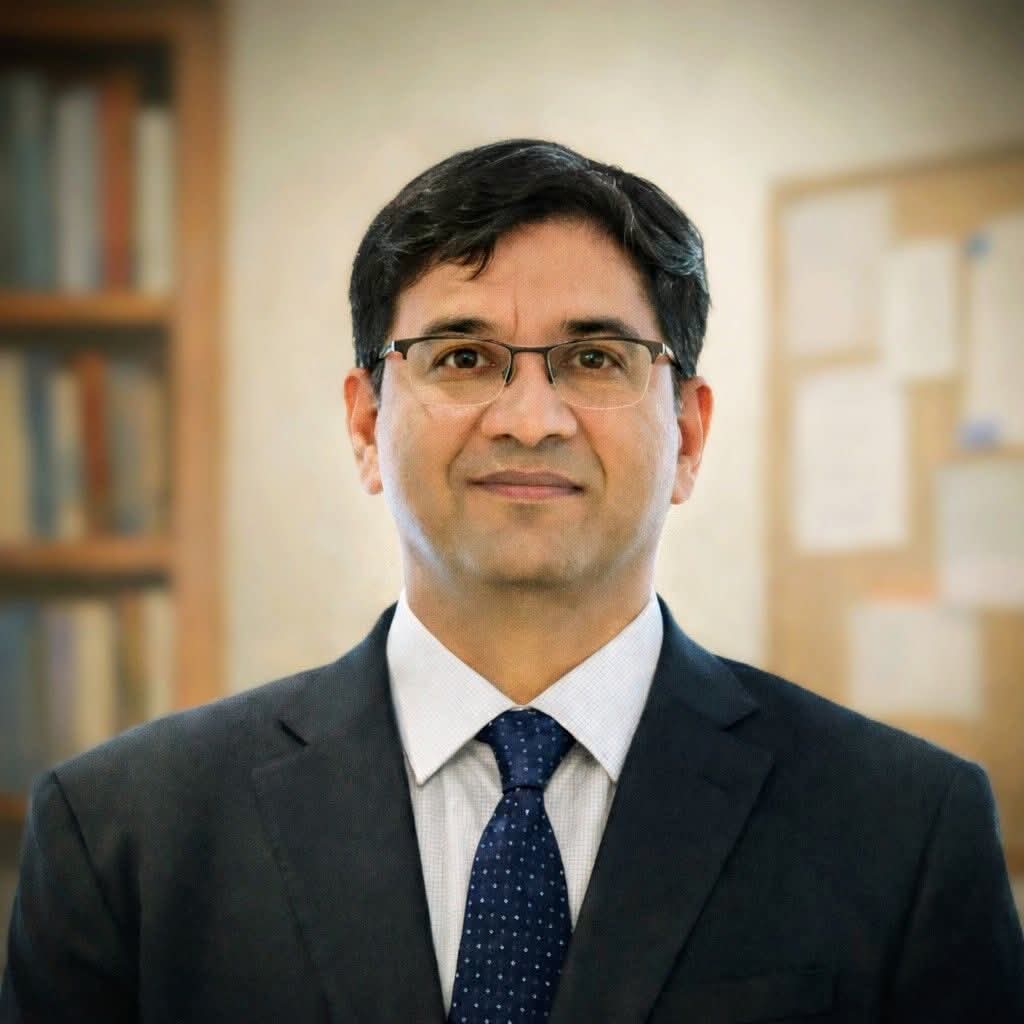
Dr. Zahid Shahab Ahmed is associated with the National Defence College, Abu Dhabi, UAE. He can be reached at zahid.ahmed@ndc.ac.ae. ORCID: 0000-0003-2084-0253