

Saidrahmon Abdurazzoqov
In a village in southern Tajikistan, a half-built house sits waiting for its second floor. The money for it arrives a little at a time, sent home by a son working construction in Russia. Multiply that house by millions of families across Kyrgyzstan, Uzbekistan, and Tajikistan, and you have one of the most important foundations of household income across Central Asia: not gas, not cotton, not gold, but wages earned somewhere else and sent home.
In Tajikistan, in 2024 remittances reached forty-five percent of the entire national economy, the highest ratio anywhere in the world. In Kyrgyzstan the figure is close to a quarter of GDP. In Uzbekistan it is a smaller share of a larger economy, but the sum, nearly fifteen billion dollars a year, is bigger in absolute terms than either neighbor’s entire GDP. For two decades, almost all of that money has come from one place. Roughly four million Central Asians currently work in Russia, and as much as seventy-seven percent of Uzbekistan’s remittances alone originate there. Russia is still overwhelmingly dominant. Recent research confirms that Russia remains the primary destination even as new European routes expand.
The unraveling did not happen all at once. It began with sanctions after the invasion of Ukraine, which squeezed the ruble and the Russian labor market at the same time migrant workers needed it most. It accelerated after the 2024 Crocus City Hall attack in Moscow, when Tajik nationals were named among the suspects and a wave of official hostility followed. Russia has since introduced a mobile app migrants must use before crossing the border, a registry of migrants barred from driving, marrying, or moving without permission, and a cap limiting how much money any one person can send home in a month. None of these measures were designed with subtlety in mind. Together, these measures have made working and living in Russia more difficult for many migrants.
What makes this a story worth paying attention to, rather than just a grim one, is what has started to fill the gap. The number of EU residence permits issued for employment reasons to Central Asians nearly tripled between 2021 and 2024, reaching close to seventy-nine thousand. Britain’s seasonal worker program, once dominated by Ukrainian and Russian applicants, issued more than three quarters of its visas last year to citizens of Kyrgyzstan, Uzbekistan, Tajikistan, and Kazakhstan.
In August 2025, the European Union and the International Centre for Migration Policy Development opened a Migrant Resource Centre in Tashkent to provide information on safe and legal migration, employment opportunities and reintegration. Uzbekistan’s own government has built a platform called xorijdaish.uz to formalize and diversify where its citizens go to work, a modest but telling admission that dependence on any single destination is now a liability rather than a convenience.
None of this means Europe is about to replace Russia as Central Asia’s labor market of choice. The numbers are still lopsided: tens of thousands of new European permits against millions of existing workers in Russia. Language remains a real barrier, particularly for workers moving from Russian-speaking networks into German- or Polish-speaking labor markets. Legal migration channels into the European Union are also far more bureaucratic than the informal, decades-old networks that move workers into Russia within days rather than months. These are not small obstacles, and any honest assessment has to weigh them against the momentum described above.
But momentum is exactly what makes this worth watching. The OECD clearly documents serious labor shortages in nursing and healthcare, civil engineering and construction, hospitality, transport, and other sectors. It also emphasizes that population aging will intensify labor shortages. Central Asia’s governments, for their part, have every incentive to keep diversifying after watching what happened to families who depended entirely on Russian wages during the last few years of crackdowns.
Neither side needs a summit to make this happen. It happens one work visa, one recruitment agency, and one sent payment at a time, the same quiet way the Russian relationship was built in the first place. The half-built house in southern Tajikistan does not care where the money comes from, only that it keeps arriving. For twenty years, it arrived from Russia. The most consequential question in Europe’s relationship with Central Asia over the next decade may not be decided in Brussels or Samarkand at all. It may be decided by whether that money starts arriving, a little more each year, from somewhere else.
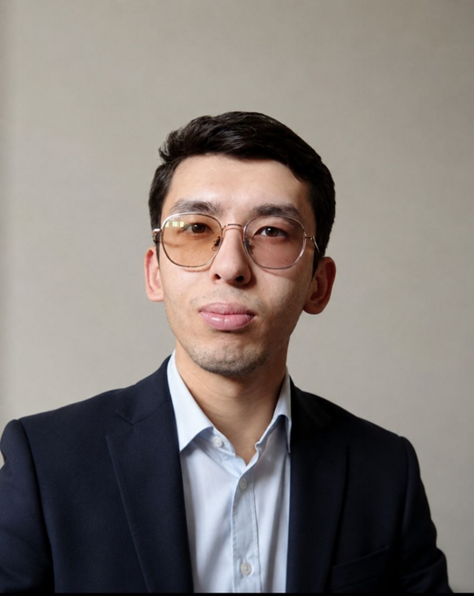
The author is an International Relations scholar at Webster University in Tashkent with a particular interest in Central Asian geopolitics, European foreign policy, and regional integration. His work focuses on international relations, diplomacy, and emerging policy issues affecting Eurasia.