
Usama Bin Ajmal
Security has always been an integral part of International Relations. Historically, it was linked to the concept of military strength, national sovereignty, territorial integrity and external attack. Military rivalry between the United States and the Soviet Union was the predominant feature of the international security system during the Cold War. States reinforced military structures, built nuclear weapons, and formed military alliances to make sure of the protection of their national interests.
In 1991, however, the world’s security situation changed dramatically as the Cold War came to an end. While the traditional military threats were still significant, new threats arose which were beyond the ability of military forces to manage. The issues of climate change, terrorism, pandemics, poverty, food insecurity, cybercrime, and instability in the economy emerged as priorities for national and international security.
This change brought the notion of non-traditional security into the picture, expanding the definition of security beyond the state’s borders. Security also entails protection of human lives, economic systems, social stability and environment today. Thus, the transition from a traditional to a non-traditional security is an important development in modern international politics.
The concept of security has been widely discussed by International Relations scholars. Realist thinkers had had a major impact on traditional security studies, which defined the state as the central player in international politics. Hans Morgenthau maintained that national interest and national power are key components of international relations.
Likewise, Kenneth Waltz pointed out the importance of the anarchy of the international order which promotes state survival and military power. But in his popular book People, States and Fear (1983), Barry Buzan disputed this limited view. He pointed out that security must not be confined to military threats, but also broadened to other aspects such as political, economic, social and environmental security. In addition, Barry Buzan, Ole Wæver and Jaap de Wilde (1998) created the Copenhagen School’s approach in their book Security: A New Framework for Analysis. They stated that there can be threats to security in five categories: military, political, economic, societal and environmental. Their efforts contributed to the development of a general paradigm on modern security issues.
The United Nations Development Programme (UNDP) was another important contributor as the Human Security approach was introduced in the 1994 Human Development Report. It highlighted the need to shift the emphasis from states to individuals with respect to security. The report uses the seven dimensions of human security to refer to economic, food, health, environmental, personal, community and political security.
All these scholars and institutions show that security is multi-dimensional. Their work lies the theoretical basis to understand the transition from traditional to non-traditional security.
The comparative analysis between traditional and non-traditional security came into play in this part.This part introduced the comparative view of traditional and non-traditional security.
The difference between traditional and non-traditional security lies in the focus, nature of threats and the way of responding to them. While conventional security is more about the survival and military strength of the state and defense of territory, non-conventional security is more concerned with threats from various areas of society and human welfare.
Traditional security is primarily concerned with protecting the state from external military threats. Its main priorities include sovereignty, territorial integrity, national defence, nuclear deterrence and military alliances. The Cold War rivalry between the United States and the Soviet Union is a major example of this approach.
Non-traditional security refers to challenges that extend beyond conventional military aggression and threaten the survival, stability or well-being of states and people. These include climate change, pandemics, food and water shortages, economic crises, cyberattacks, human trafficking and transnational terrorism. Such threats often cross borders and require cooperation among governments, international organizations, communities and other non-state actors.
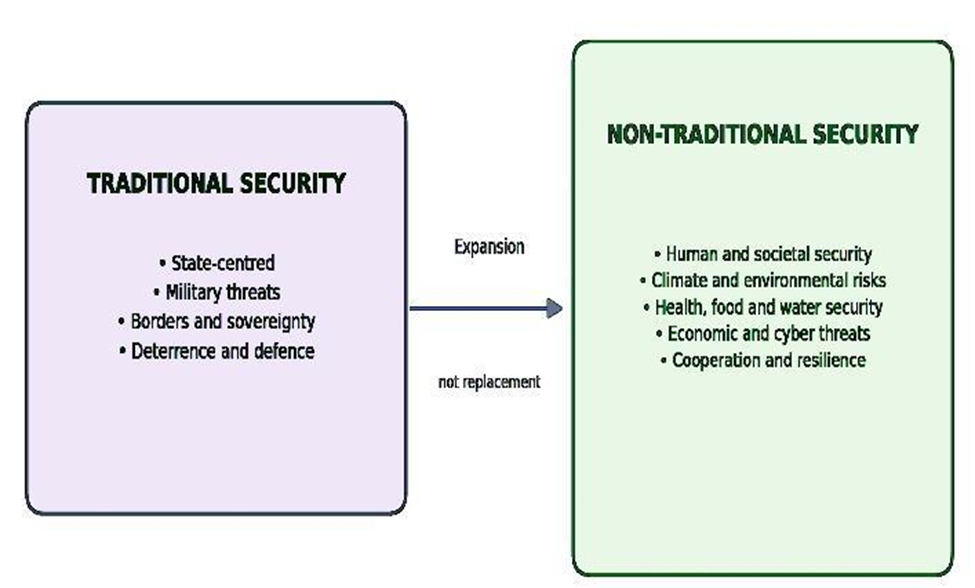
Figure 1. The expansion from traditional to non-traditional security. The newer approach broadens security; it does not make military security irrelevant.
These shifts in the nature of international threats underlie the growth of security studies. States are becoming more vulnerable to cross-border threats due to globalization and the rising economic interdependence. Many non-traditional threats emerge over time, can cross jurisdictions and need a long-term institutional response, as opposed to traditional military attacks.
The case of climate change is a good example of this interconnection. Environmental degradation can have a negative impact on agricultural productivity, food security, poverty and population displacement. Such repercussions can add to the burden on public institutions and economic systems. Likewise, a cyber attack on banking systems, electricity networks etc. and other critical infrastructure can destabilize a Nation without a military encounter.
But with the rising awareness of non-traditional security comes conceptual and policy dilemmas. There’s a big problem with the scope of the security agenda being too wide. The idea can be dangerously diluted if all economic, environmental or social issues are considered a security issue. It can also lead to governments focusing more on emergency action than development policies.
The second challenge relates to institutional capacity. Limited resources are often available in developing countries and disaster-management mechanisms and infrastructure are weak. These restrictions pose a challenge to effectively responding to emergencies in the environment, economy and public health. This is not just the appearance of new threats but also the uneven ability of states to deal with them.
Moreover, non-traditional security is becoming more relevant and important, and at the same time, conventional military preparedness is not becoming less relevant. Territorial conflicts, nuclear tensions, war and external aggression are still a threat to international peace. A single-track approach to addressing non-traditional threats could thus leave the nation vulnerable to threats in other areas of national security.
A key policy dilemma is the need to create a balanced approach to security. Governments need to have credible defence capabilities, alongside efforts to invest in public health, environmental protection, economic resilience, technological security and institutions. This means moving beyond a narrowly reactive to an anticipatory governance and resilience approach.
This is why it is important not to view the change toward more of a security evolution rather than a traditional security deprecation. Instead, it reflects the need for states to cope with both conventional and non-conventional threats at the same time, more and more at stake in the national security field.
In Pakistan, non-traditional security threats have been exemplified by the country’s recent experience in 2025 with monsoon floods. From 25th June to 30th September, 2025, Pakistan faced heavy rains, flash floods, landslides, and river floods. Rainfall for the season was recorded 23% above the long term average according to the National Disaster Management Authority (NDMA). Over 229,000 houses were damaged or destroyed, and 1,037 people died and 1,067 were injured in the disaster.
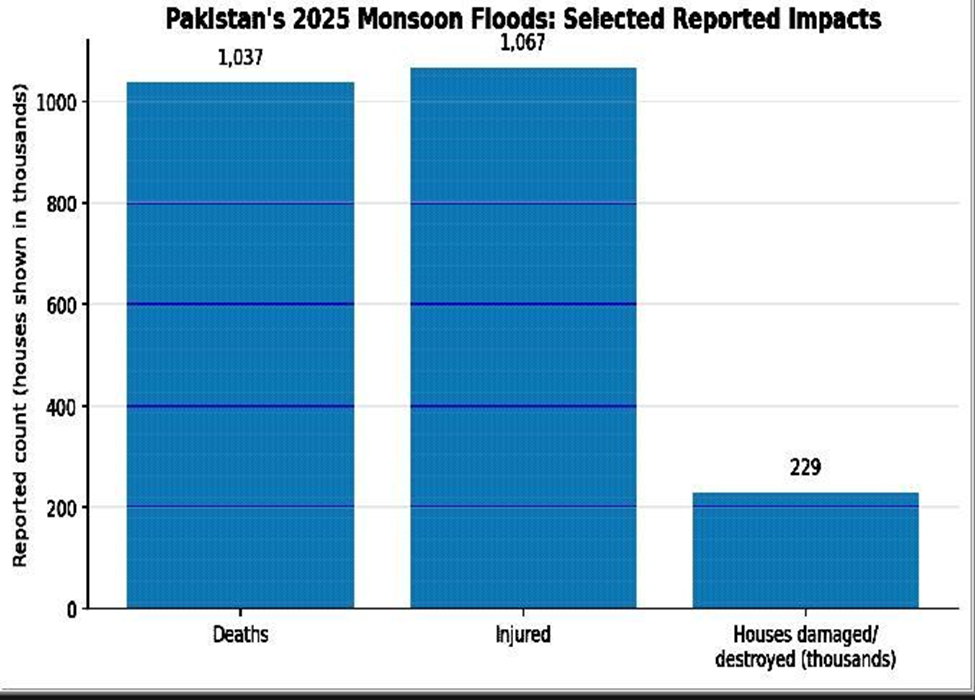
Figure 2. Selected reported impacts of Pakistan’s 2025 monsoon floods. House figures are shown in thousands; other values are counts.
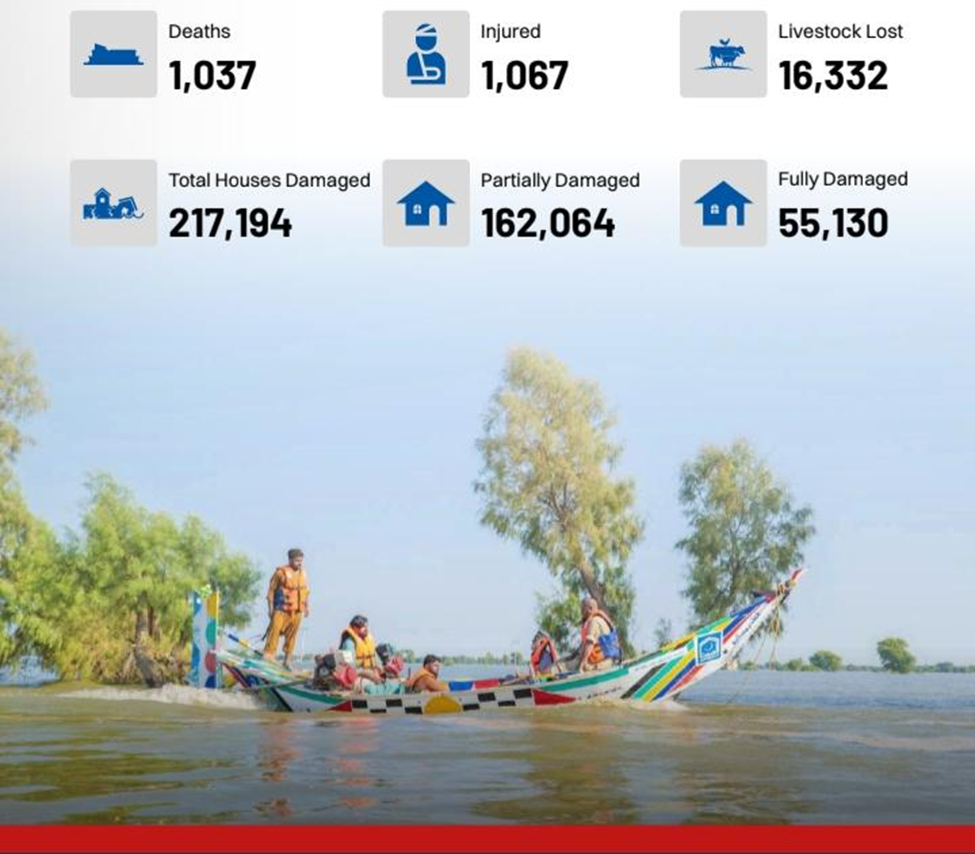
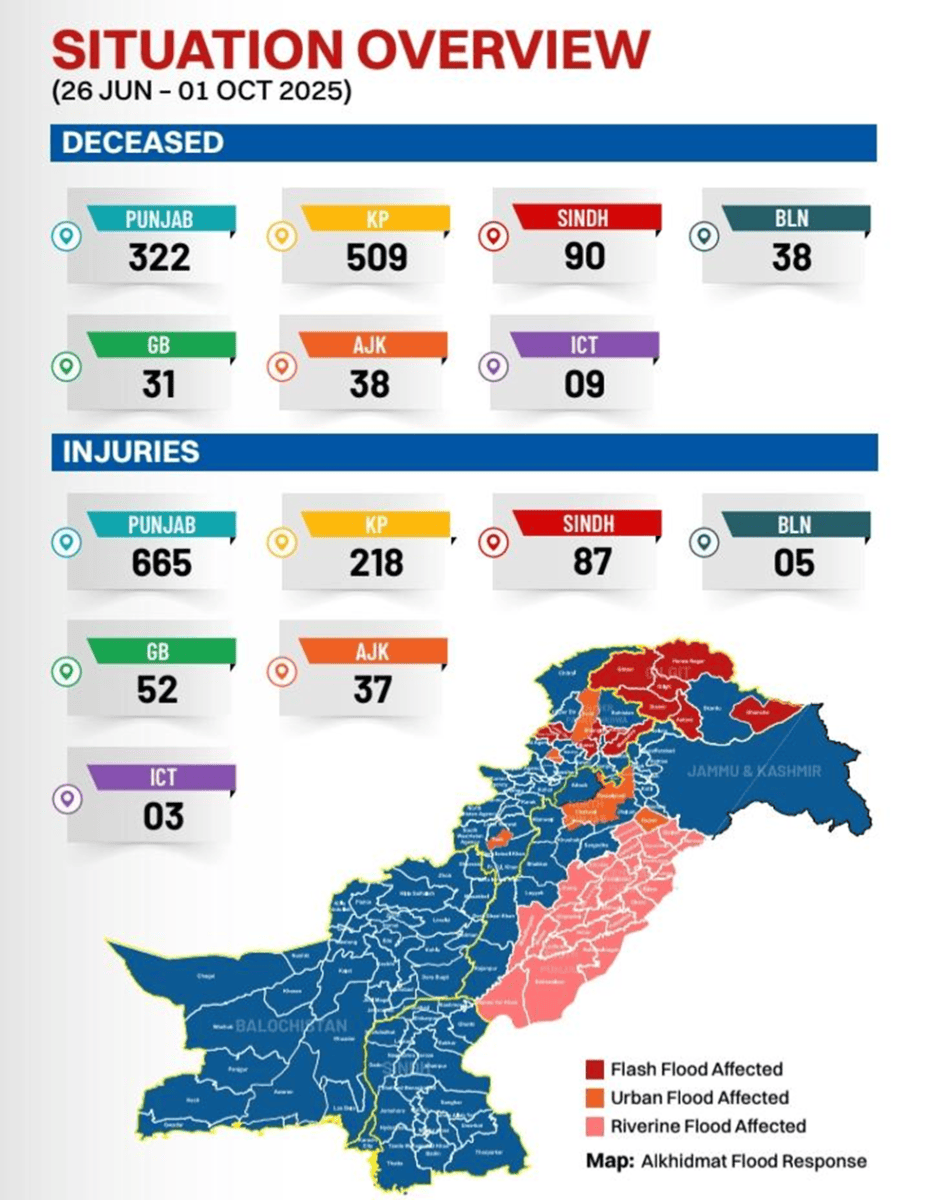
The consequences extended across several security dimensions. Human security was threatened as families lost homes and livelihoods. Economic security suffered through damage to roads, bridges, businesses and agricultural production. Damage to crops raised concerns about food security, while contaminated water and disrupted sanitation increased public-health risks. The disaster also exposed the vulnerability of communities living in flood-prone areas.
Pakistan’s response involved the National Disaster Management Authority, provincial authorities, rescue services, armed forces and humanitarian organizations. These efforts were important for evacuation and relief, but long-term resilience requires stronger early-warning systems, land-use planning, climate-adapted infrastructure, coordinated disaster management and support for vulnerable communities. The case shows that national security cannot be measured only by military preparedness; it must also include the ability to protect people, livelihoods and essential services from climate-related risks.
The floods showed Pakistan and highlighted that a country’s national security cannot be built solely on military readiness, from a critical perspective. While the NDMA, armed forces, rescue services, and humanitarian groups were instrumental in evacuation and relief efforts, it is critical to have better climate policies, early-warning systems, disaster management, and resilient infrastructure for long-term security.
Case study illustrates how an environmental disaster can turn into a humanitarian, economic, food and public health crisis. Hence, climate change as a national security issue should be considered as an important part of the national security policy of Pakistan.
The evolution from traditional to non-traditional security represents a significant development in the theory and practice of International Relations. Traditional security remains essential for protecting national sovereignty, territorial integrity and political independence. However, the changing nature of international threats has demonstrated that military capabilities alone cannot guarantee national stability.
Climate change, pandemics, economic instability, cybercrime and food insecurity increasingly affect the security of states and individuals. These challenges require preventive policies, institutional resilience, international cooperation and a greater emphasis on human development.
Pakistan’s experience with the 2025 monsoon floods illustrates how an environmental disaster can develop into a wider humanitarian, economic, food and public health crisis. It also demonstrates the importance of effective institutions and long-term preparedness in managing non-traditional security threats.
The future of national security depends on integrating traditional defence capabilities with human security, economic resilience and environmental sustainability. A secure state is not simply one that can defend its borders, but one that can also protect its people, institutions, livelihoods and future against the complex challenges of the twenty-first century.

I am Usama Bin Ajmal, a BS International Relations graduate. I previously interned at the Ministry of Foreign Affairs, Pakistan, in the Consular Affairs Section, where I worked on diplomatic and consular processes. I am an alumnus of the Kashmir Cohort 2.0 Fellowship. And currently I am an Intern at Policy East, where my work focuses on policy research and analysis on regional and foreign policy issues.