Maryyum Masood
On 9 October 2026 the International Atomic Energy Agency (IAEA) closed its first International Physical Protection Advisory Service (IPPAS) mission to Pakistan. A seven-member team led by Khammar Mrabit spent the period from 28 September reviewing the national legal and regulatory framework and the physical protection arrangements at the KANUPP Decommissioning Project in Karachi. It was the 112th IPPAS mission since the service began in 1995.
According to that PTI report, the IAEA said Pakistan has established a “robust nuclear security regime”, that it was “appropriately implemented at the facility visited”, and that the team had identified good practices alongside its recommendations. That verdict did not arrive by accident. It is the product of a partnership built patiently over a quarter of a century, and the argument of this piece is that the partnership deserves more credit than it usually receives.
Pakistan has belonged to the IAEA since 2 May 1957, but the security relationship took shape in the early 2000s. Pakistan acceded to the Convention on the Physical Protection of Nuclear Material on 12 September 2000. In 2001 it created the Pakistan Nuclear Regulatory Authority (PNRA) by Ordinance No. III of 2001, giving civilian nuclear activity a regulator alongside the Pakistan Atomic Energy Commission (PAEC), which operates the facilities. The Export Control Act took effect on 23 September 2004, and the Strategic Export Control Division was announced on 30 April 2007.
The IAEA became a working partner in this effort. In 2005 Pakistan and the agency signed a Nuclear Security Cooperation Programme, extended in 2011, with PNRA as the lead coordinating agency. PNRA reports that the programme delivered security upgrades at a nuclear power plant and at nuclear medical centres, training infrastructure, and radiation detection equipment aimed at illicit trafficking. In July 2006 PNRA launched a Nuclear Security Action Plan with agency assistance. Pakistan sought the agency’s help and built institutions to absorb it. The cooperation was still active in January 2023, when the director of the IAEA’s Division of Nuclear Security, Elena Buglova, visited Pakistan from 17 to 19 January.
Pakistan later ratified the 2005 Amendment to the physical protection convention on 24 March 2016, and the Amendment entered into force on 8 May 2016. That commitment is legally binding. It extends the convention’s protection requirements to nuclear material and facilities in domestic use, storage and transport.
The most visible result of the partnership is human capacity, and here Pakistan has become a provider as well as a recipient. Three institutions carry the work. The Pakistan Centre of Excellence for Nuclear Security (PCENS) was set up to train a dedicated security force and, according to Pakistan, operates under a Practical Arrangement with the IAEA. The National Institute of Safety and Security (NISAS), established by PNRA in 2014, was designated an IAEA Collaborating Centre in 2022 at an agreement signed in Vienna, the agency’s tenth in nuclear security. The Pakistan Institute of Engineering and Applied Sciences (PIEAS) contributes to nuclear security education and chaired the agency’s international nuclear security education network in 2010–2011.
The record of international participation is specific. In March 2016 Pakistan hosted the annual meeting of the agency’s network of nuclear security training and support centres in Islamabad, which Pakistan’s Foreign Office describes as the first time the meeting was held outside IAEA headquarters. A regulatory authorisation course run by PCENS with the agency in September 2018 brought trainees from nine other countries, among them Egypt, Ghana, Indonesia, Kenya and Nigeria. A physical protection evaluation workshop in April 2019 drew 18 foreign participants from 12 countries and was taught by four IAEA experts and PCENS faculty. In July 2026 PNRA and the IAEA ran a five-day course on conducting computer security inspections at nuclear facilities, delivered by NISAS with instructors from the IAEA, South Korea and Brazil.
Pakistan told the agency’s 2020 nuclear security conference that PCENS had trained more than 12,000 personnel, a figure given without a breakdown between Pakistani and foreign trainees. The courses listed above are the documented international side of that work. They show a country that offers its facilities to students from Africa, Southeast Asia and Central Asia, which is the purpose of the agency’s support centre model. A state that hosts courses becomes a provider of the capacity it once received.
Pakistan is also a participating State in the agency’s Incident and Trafficking Database, and the IAEA lists it among 26 donors to the Nuclear Security Fund for 2020–2024. Pakistan itself calls its contribution modest, but it is a contribution made by a state that could have been a pure beneficiary.
Director General Rafael Grossi visited Pakistan on 12 and 13 February 2025, met the Prime Minister and the Deputy Prime Minister and Foreign Minister, held talks with the heads of PAEC and PNRA, visited the Chashma Unit 5 construction site and inaugurated a radioactive waste incinerator at Chashma. Pakistan’s Foreign Office says he described the country’s nuclear power programme as one of the most successful in the world. In September 2025 the two sides signed the fifth Country Programme Framework, covering 2026–2031, with priorities in food and agriculture, health, climate and water, nuclear power and radiation safety.
On 4 March 2026 the Board of Governors approved the safeguards agreement for Chashma-5, a 1,200 MW pressurised water reactor, unanimously according to the Foreign Office. Pakistan was elected to the Board in September 2024. In its September 2026 statement to the Board, delivered by PAEC Chairman Raja Ali Raza Anwar, Pakistan said it had presided over the 10th Review Meeting of the Convention on Nuclear Safety in April 2026 and that Pakistani experts had taken part in an IPPAS mission to China and an IAEA emergency exercise in the Philippines. These roles show a state that serves the agency’s mechanisms as well as drawing on them.
The partnership showed its practical value in May 2025, when India and Pakistan exchanged strikes and Indian media reports claimed a radiation leak linked to the Kirana Hills area. On 15 May IAEA confirmed that “there has been no radiation leak or release from any nuclear facility in Pakistan”. A factual statement from a technical body with no stake in the dispute removed one escalatory rumour at a moment when both publics were primed to believe the worst. The agency’s standing as a neutral source is an asset to both countries, and years of routine cooperation help sustain it.
The Nuclear Threat Initiative’s Nuclear Security Index offers an independent measure of the trend. In its 2014 edition NTI recorded the largest improvement of any nuclear-armed state for Pakistan, and in 2020 it named Pakistan the most improved country. In the 2023 edition Pakistan ranked 19th in the theft ranking, which covers the 22 states holding weapons-usable material, with a score of 49 out of 100, up three points since 2020. In the sabotage ranking it tied for 32nd with a score of 61, up four. It scored 100 on domestic commitments and capacity, up 11 points, with domestic nuclear security legislation up 33 points, and 100 on physical security during transport.
At the regulatory level, PNRA’s Regulation PAK/925, published on 12 July 2019, provides the legal basis for the IAEA’s INFCIRC/225/Rev.5 physical protection recommendations. It is the kind of instrument the cooperation programme and the 2016 treaty ratification were meant to support.
The October mission is the most direct form of validation the agency offers. IPPAS is independent advice on implementing the Convention on the Physical Protection of Nuclear Material and its 2005 Amendment, given at the host state’s request. Pakistan said in February 2020 that it intended to host a mission. It prepared through a national IPPAS workshop on 10–12 September 2024 at PNRA headquarters, attended by 26 participants from PAEC, the Strategic Plans Division, the Foreign Office and PNRA together with an IAEA team. It then opened its regulator and a facility to a team that included experts from China, Romania, Russia and Slovakia. PNRA’s chairman, Zia Hussain Shah, said the findings would serve as a baseline for strengthening the legal framework and facility-level practices.
The mission examined the national legal and regulatory framework and physical protection at one facility, the KANUPP Decommissioning Project, so its findings apply to what it examined. Within that scope the agency’s judgment was clear and positive. It also gives Pakistan something concrete to build on, in the form of recommendations that PNRA and the facility operators can now act on.
The record shows a relationship that has moved from technical assistance to a working partnership between institutions. Pakistan signed a security cooperation programme with the agency in 2005, built a regulator, training centres and a body of regulation to make use of it, and by 2026 was hosting IAEA advisers at a nuclear site, teaching officials from other countries in Islamabad and holding a seat on the IAEA Board of Governors after its election in 2024. The Country Programme Framework for 2026–2031, the Chashma-5 safeguards agreement and the October IPPAS mission give the next phase a firm footing.
Publishing a summary of the IPPAS findings and acting on its recommendations would let others see what the partnership has produced, and a follow-up mission to an operating plant would extend the review to a larger facility. The agency’s mandate covers civil nuclear activity, and within that mandate Pakistan has shown itself a capable and willing partner. Both sides have good reason to keep building on what two decades of cooperation have established.
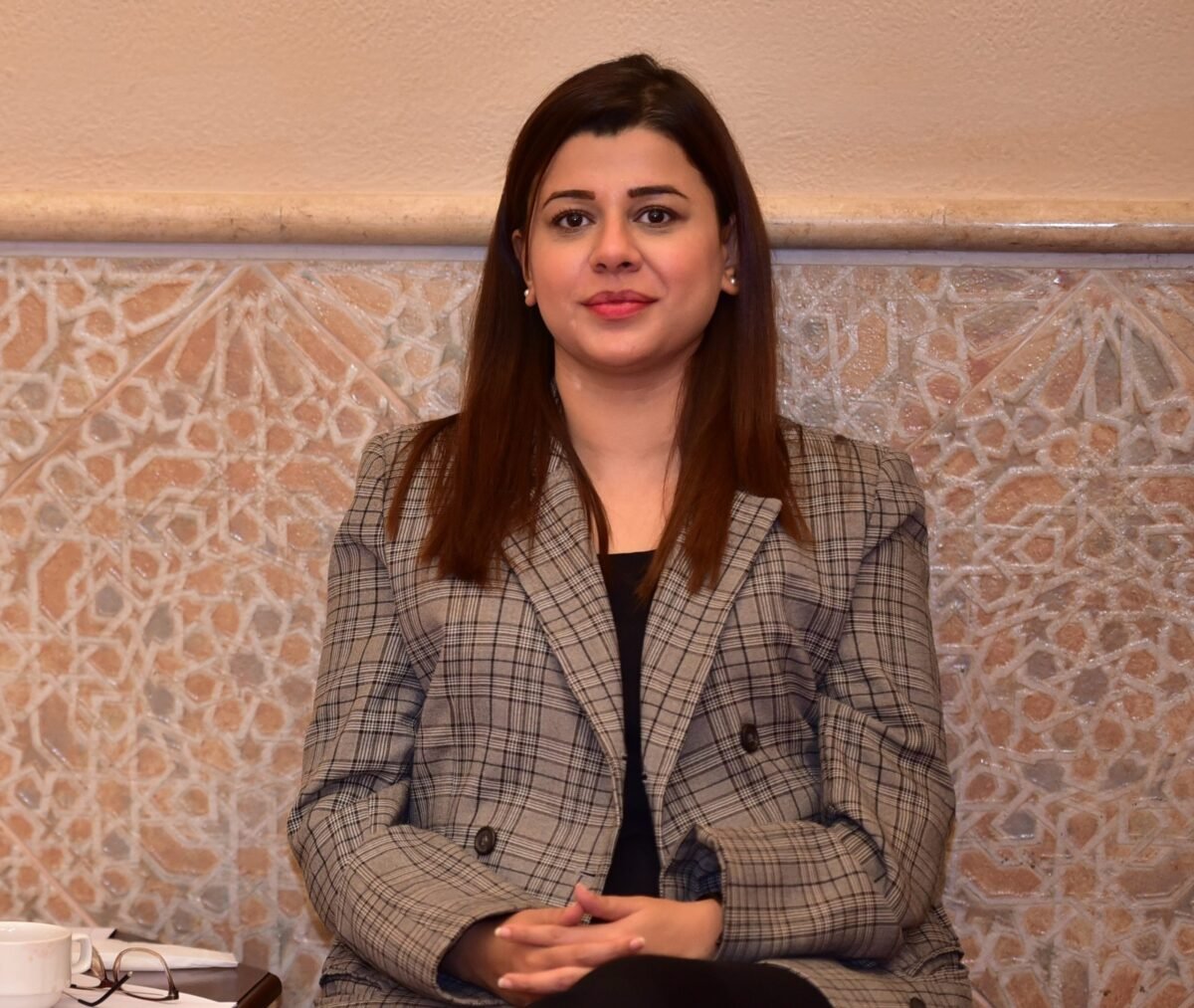
Maryyum Masood is working as a Research Officer & Associate Editor at the Center for International Strategic Studies (CISS) Islamabad. She is an MPhil scholar in the Department of Strategic Studies at the National Defense University (NDU) Islamabad.