
Kamola Sayfullaeva
Situated on the ancient Silk Road, Uzbekistan occupies a strategic position at the crossroads between Europe and Asia. Its economy is one of the most dynamic in Central Asia. With a population of approximately 40 million, Uzbekistan is a large market for a variety of goods and services.
Uzbekistan has rich reserves of natural gas, gold, uranium, silver, copper, and many other minerals. This offers numerous investment opportunities and ensures the country’s macroeconomic stability. The country is implementing large-scale political and economic reforms, which have led to the creation of a more open, market-oriented economy and a more favorable investment climate.
The Republic of Uzbekistan’s foreign trade turnover with the Eurasian Economic Union member states increased by 20.3% from January to June 2026, reaching $11 billion. Exports amounted to $3.7 billion, while imports totaled $7.3 billion.
Uzbekistan’s economy is demonstrating high growth rates: in the first half of 2026, GDP increased by 8.5%. The country’s leadership has set an ambitious goal of reaching 9-10% growth. Services, construction, and industry are contributing the most to this growth.
Free Economic Zones (FEZs) are focused on the production of industrial and import-substituting products. The main ones are: Navoi, Angren, Jizzakh, Urgut, Kokand, Gijduvan, Namangan, Khazarasp, as well as specialized pharmaceutical zones (Zomin-Pharm, Nurafshan, etc.). Participants in special economic zones in Uzbekistan receive government support: Full or partial exemption from land tax, property tax, and income tax. Exemption from customs duties on imported construction materials and technological equipment not produced in the country.
The large-scale economic restructuring launched as part of the “Uzbekistan 2030” strategy has transformed the development model from isolation by raw materials to the formation of an open industrial and logistics system. The geography of trade relations covers more than 200 countries, with China, Russia, Kazakhstan, and Turkey remaining key partners.
The agro-industrial complex has demonstrated a fundamental shift in the structure of Uzbek exports. A complete legislative ban on the export of unprocessed raw cotton and the creation of over 100 specialized agrotextile clusters have enabled the processing cycle to be closed within the country. While in the early 2010s, over 80% of the harvest was exported as raw material, today the sector generates approximately $3 billion in annual exports, primarily as yarn, finished fabric, and knitwear.
A similar cluster model is currently being implemented in the metallurgy and chemical industries. The creation of copper-chemical and technology parks is aimed at producing high-tech products—from electric vehicle components to cables and photovoltaic panels.
The cluster model has expanded to the metallurgy and mining sectors. The development of copper processing plants at the Almalyk Mining and Metallurgical Plant (the Yoshlik I deposit development project) is focused on deep value-added copper processing—the production of cables and wires, copper pipes, and components for the renewable energy sector and electric vehicle manufacturing.
A logistical breakthrough is underway in the country. To overcome geographical limitations, Uzbekistan has shifted to diversifying its transport routes. The China-Kyrgyzstan-Uzbekistan (KKU) railway provides a projected transit capacity of up to 15 million tons of freight per year. The Trans-Caspian International Transport Route has helped Uzbekistan increase container shipping across the Caspian Sea in the direction of Baku-Tbilisi-Kars.
The European Vector of Preferences (GSP+) has opened up more than duty-free access to the EU market. The privatization of assets in the banking, telecommunications, and chemical industries has attracted over $43 billion in total foreign investment and loans to the country, and the number of registered enterprises with foreign capital has exceeded 18,000.
Uzbekistan has attracted many international platforms. Wildberries and Ozon have official representative offices and are developing local infrastructure (pickup points, warehouses) for sellers and buyers from Uzbekistan. Yandex Market has localized its presence in the country’s market.
Traditionally, Uzbekistan exports textiles, automobiles, and electrical goods to the EAEU, as well as food products, primarily fruits and vegetables. The EAEU also exports metal products, petroleum products, timber, machinery and equipment, chemical products, and food products, particularly cereals and vegetable oils. With further integration with the EAEU, Uzbekistan will gain more favorable conditions for accessing foreign markets, particularly with Vietnam, Iran, Serbia, and Singapore, which have concluded preferential trade agreements with the EAEU.
Foreign trade is one of the most important forms of international economic relations for the country. It also facilitates the development of manufacturing, the production of consumer goods, and the provision of various services. In today’s environment, amid active globalization and integration processes, the degree of openness of national economies is increasing. The effectiveness of a country’s foreign trade activities depends on how actively it participates in international economic relations.
Today, New Uzbekistan has become a country with an independent voice in the international community. Political, diplomatic, trade, economic, and cultural ties have been established with leading industrialized countries. Bilateral and multilateral mutually beneficial relations are developing. At the same time, significant work is being done to strengthen relations with neighboring countries and develop ties in the economic, social, trade, industrial, and cultural spheres.
Especially after Uzbekistan gained independence, its membership in international economic organizations and the intensification of processes within these organizations became an important key factor in the liberalization of international trade.
Today, Uzbekistan is an equal member of such organizations as the United Nations, the Organization for Security and Cooperation in Europe (OSCE), the Commonwealth of Independent States (CIS), the Shanghai Cooperation Organization (SCO), the Central Asian Cooperation Organization, the Economic Cooperation Organization, the World Bank (WB), the International Bank for Reconstruction and Development (IBRD), the International Development Association, the International Finance Corporation (IFC), the Asian Development Bank, the Islamic Development Bank, UNESCO and others, and is also an observer of the World Trade Organization (WTO).
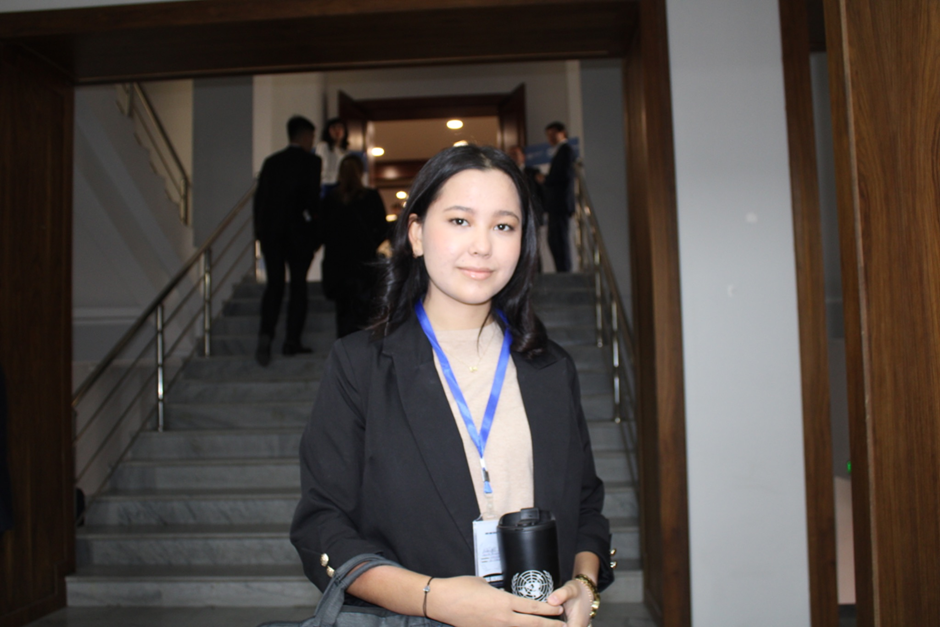
The writer is a Scholar at Turkiye’s Middle East Technical University. Majoring in International Relations and a minor in Data Science and AI.