

Aatika Murtaza
Water security is becoming more and more a matter of power, diplomacy, and national interest. Freshwater was previously mainly considered from the point of view of development and environmental management, but is now acquiring a strategic significance as the effects of climate change, population growth and competing demands place increasing pressure on shared water systems.
This change is especially important for countries whose rivers begin outside their own borders, since decisions regarding dams, reservoirs, hydropower and water releases can have consequences that go well beyond domestic development. The situation is even more complicated by the changing climate, which is making it harder to predict both when water will be available and its availability. In South Asia, Central Asia and the Middle East, Transboundary Rivers are therefore becoming more and more closely associated with issues of food security, energy security and regional stability.
The full extent of the challenge can be better understood when the geographical distribution of water is looked at in connection with the political situation of states. Over 60% of the world’s freshwater passes through Transboundary Rivers, lakes and aquifers, and 153 countries share water that crosses national boundaries.
However, the international systems in place for managing these resources are uneven: according to the most recent UN monitoring, only 43 countries had operational arrangements covering at least 90% of their transboundary basin areas in 2023, while at least 20 countries had no such arrangements.
Meanwhile, climate change is increasing the strain on these already complicated systems. The IPCC states that about half of the world’s population faces severe water scarcity at some point during the year, and climate change is changing precipitation patterns as well as making both droughts and extreme rainfall more severe.
The combination of hydrological uncertainty, rising demand and inadequate cross-border governance is turning water from a matter of resource management into a strategic one. In situations where the water security of one state depends on decisions made by another, water can become a means of leverage, a cause of diplomatic friction and a source of regional instability.
The fact that water is becoming more political doesn’t mean that competition will always lead to traditional conflict. On the contrary, viewing ‘water wars’ as an inevitable result may cause us to ignore the more complicated connections between scarcity, power, and cooperation.
The IPCC has found no consistent causal link between climate-induced changes in the availability of water and conflicts between states; rather, the outcomes are largely determined by the existing political relationships, economic conditions, institutional capabilities, and the existing imbalances of power. Here the conventional security approach is inadequate: it sees water mainly as a finite resource to be secured, rather than as a shared system that needs to be managed through negotiation.
Moreover, cooperation by itself does not ensure fairness. UNESCO points out that competing demands from agriculture, energy, infrastructure and investment can result in an unequal distribution of benefits even in the case of the existence of cooperative arrangements.
The key issue, then, is not whether water will cause conflict, but whether states can prevent unequal control over shared water resources from becoming a source of strategic advantage. This distinction is essential for understanding the future of water geopolitics.
The importance of water from a geopolitical point of view is already clear in the case of major river systems where the interests of different nations come into conflict. In the Indus Basin, the 1960 Indus Waters Treaty set up a lasting arrangement between India and Pakistan by assigning the western rivers mostly to Pakistan and the eastern ones to India, at the same time providing for the exchange of information and the settlement of disputes.
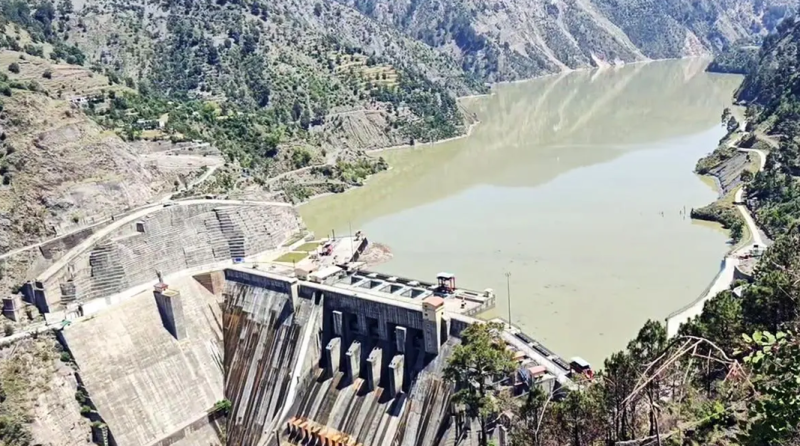
Nevertheless, disagreements regarding India’s Kishenganga and Ratle hydropower projects show how water infrastructure can become linked with wider strategic tensions; both nations have followed different procedures for resolving disputes within the treaty. A similar situation can be seen in other areas. In the Nile Basin, the Grand Ethiopian Renaissance Dam has brought Ethiopia’s desire for hydropower into close connection with Egypt and Sudan’s worries about water security downstream.
In Central Asia, the competing demands for hydropower upstream and for irrigation downstream result in an estimated annual cost of $4.5 billion due to a lack of water-energy cooperation, as stated by the World Bank. These examples show that water takes on a geopolitical dimension when control of rivers comes into play with questions of energy, agriculture, sovereignty and regional influence. The current conflict is therefore not merely about the availability of water, but about who has the authority to decide how the shared water is to be developed, managed and distributed.
Water is not merely a matter of how much a country has, but rather depends on the way power, politics and climate uncertainty affect who gets access to and controls it. Since the pressure on shared river systems is growing stronger, the decisions taken today will determine whether water becomes a means of promoting cooperation or instead turns into another area of geopolitical rivalry.
Although current treaties and institutions may provide important foundations, it is uncertain whether they will be able to cope with increasing strategic competition and a climate that is becoming more unpredictable.
The problem is especially acute for states whose economic and food security are heavily dependent on water that comes from outside their borders. If water is becoming a strategic resource, can the existing diplomatic arrangements adapt quickly enough to avoid hydrological dependence turning into political vulnerability? Can states balance their own development goals with the security of their downstream neighbours? And as climate change makes water flows more and more unpredictable, will the politics of the future be shaped by competition over control of water, or by cooperation to secure it?

An Environmental Science graduate from the National University of Sciences and Technology (NUST), Islamabad, Pakistan. Her interests include climate change, environmental policy, disaster risk reduction, and sustainable development, with a focus on promoting evidence-based solutions to Pakistan’s environmental challenges.