
Ahmad M. Behzad
The most evident consequence of the 2021 withdrawal of The United States is that apparently Afghanistan has been less tagged in the global media. The question is, does global community forget Afghanistan completely or there are some backstage calculations? The ongoing turbulence, from US-Iran asymmetric conflict to Russia-Ukraine attritional war demonstrates that we are in the threshold of a new order. Among all, is Afghanistan and Taliban involved in course of this transition?
By assassination of the Al-Qaeda leader, Ayman al-Zawahiri, in center of Kabul city in August 2022, the US former president Joe Biden implied that his country monitors terrorism remotely and US anti-terrorism mission has not terminated. However, this has been the first and last visible action of US against Taliban so far. Later, Donald J. Trump revealed his intentions on retaking the Bagram military base, which seemed to be more campaign promoting rather than a serious decision.
Mysteriously, the anti-terrorism terminology moved to Pakistan several months later. Pakistan has done numerous air strikes on Kabul and western cities of Afghanistan since 2022, claiming that Taliban shelter and support TTP (Tehreek-e-Taliban Pakistan) to export them inside Pakistan. Taliban denied the claim and retaliated more dramatically by integrating into border conflicts each time.
While another front is opened by resistance groups inside Afghanistan. Level of military activities opposing Taliban maximized in the previous months, specially, in pivotal province of Badakhshan and other eastern provinces bordering Pakistan. Although resistance is indigenous and started in the aftermath of Taliban taking power, doubts have been raised on whether Pakistan supports some groups to initiate an infantry proxy war.
Of course, there are other contributors who stepped into Afghanistan file during recent years. Namely, Russia is the only country which recognizes the Taliban as a legal De Jure government of Afghanistan. The recognition was done in April 2025. In May 2026, Russia signed a technical military collaboration agreement with Taliban, coincided by Pakistan attacks intensification.
In October, Sergei Naryshkin, head of Russia’s Foreign Intelligence Service arrived in Kabul in a non-preorganized trip. Nonetheless, the stance of Kremlin has not been solidly determined yet. Paradoxically, Russia alerts that it will not agree to another Afghanistan invasion by NATO, while it also shows concerns on terrorism menaces along northern borders of Afghanistan.
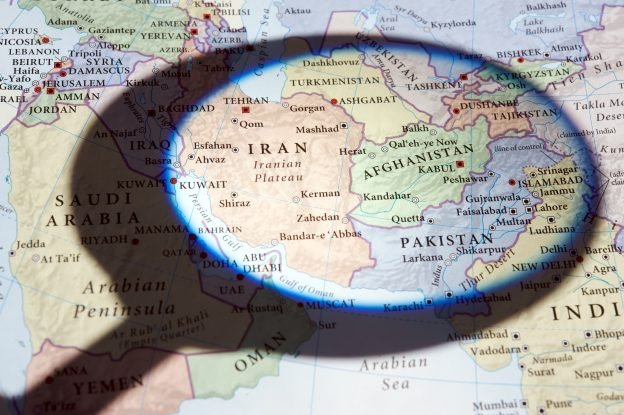
The Islamic Republic of Iran is on to the other side of the scene. We reach interesting results by tracking Iran side contemporary to the US -Israel attacks. Despite The Islamic Republic relations with the office of Taliban regarding refugees, their relationship entered a serious phase as the twelve-day war started.
The ambassador of Iran in Kabul once announced that the Islamic Republic might soon recognize the Taliban administration. Most recently, Iran closed offices of Taliban opposition in Tehran and dedicated 1.1 Km area in Chabahar for Afghanistan. The corollary is that economic relationships have either a political or intelligence incentive to be created and held.
Moving on, two other key players are India and China. Unexpectedly, India kept silence and supposedly gave up one of his great geostrategic games to the ISI in 2021 collapse of Afghanistan. Some analytics whispered that India is tactically silent and will run a new game by supporting anti-Pakistan groups in Baluchistan and Khyber Pakhtunkhwa like the TTP, but there is no supporting evidence for this so far. Abruptly, India made another unexpected move on 2025.
A sudden diplomatic intimacy with the Taliban administration which tempted Pakistan to punish Taliban more than before. India has returned to the pitch, but why? Well, first, the flee of Indian-influenced prime minister, Sheikh Hasina, in Bangladesh was a considerable victory for Pakistan. Second defeat for India took place in the 2025 short conflict in Kashmir which Pakistan fought more advantageously, at least in media lenses by promoting Asim Munir to be Field Marshal.
We would not find a considerable strategy by remarking Chinese policy which is more economic-opportunistic and tactical than being a long run doctrine in Afghanistan. What is ultimately inferred from this long preface can be one phrase: A new Afghanistan-centered geopolitical game is shaping. In previous five years, standpoints of political actors were wobbly toward Taliban.
The above-mentioned chronology concludes that powers are taking their places about what to do in Afghanistan right now. One circle is shaped by Russia, Iran, India, with provisioning of China; while another camp initiated by US includes Macca Treaty members, especially Pakistan which puts forward US blueprint while having its own interests. US is mainly focused on Afghanistan as a door to blitzkrieg the Islamic Republic from backside and pressure China and Russia.
Meanwhile Russia foresees a new area of dealing beside Ukraine and oil business with US. The Islamic Republic is warned and is deterring any possible treat from their eastern neighbor. All in all, again, ‘’Alleviate to Asia’’, the Go game is about to rerun in Afghanistan. Though for elites of Afghanistan, the only way to minimize disaster is to clarify, unify, and act.

Ahmad M. Behzad is a scholar at the American University of Central Asia.