
Noureen Akhtar
The world today is not merely experiencing conflict; it is undergoing a profound transformation in how power is understood, exercised, and sustained. What appears on the surface as a series of regional tensions and global rivalries is, in fact, part of a deeper structural shift, one that is redefining the very foundations of international order.
To grasp this transformation, it is useful to revisit 1979, a pivotal year that quietly altered the trajectory of global politics. At the time, the international system was dominated by a binary contest between two superpowers. Ideology, governance, economics, and even culture were shaped within the rigid boundaries of this rivalry.
Despite their stark differences, both sides shared an implicit consensus: religion had no legitimate role in political governance. The emergence of a revolutionary model that placed religion at the center of statecraft disrupted this consensus. It introduced a new dimension of resistance, one that challenged not just a single power, but the dominant assumptions of the global system itself.
This development carried an important message: power was not solely the domain of the strongest states. It could also emerge from ideological conviction, social mobilization, and resilience. However, during the Cold War, the presence of competing superpowers limited the global spread of this idea. It was only after the collapse of one pole that the full implications began to unfold. In a unipolar world dominated by a single power, alternative models of resistance and governance gained renewed significance.
Historically, dominant powers have responded to challenges through a combination of economic pressure, political isolation, and military containment. These tools have been deployed repeatedly in an effort to maintain strategic dominance. Yet, their effectiveness is not absolute. What has become increasingly evident is that endurance itself can be a form of power. The ability of states and non-state actors to persist, adapt, and evolve under pressure challenges traditional metrics of success.
At the same time, global influence has continued to be exercised through strategic alliances and regional partnerships. Nowhere is this more visible than in regions that hold critical geopolitical importance due to energy resources, trade routes, and historical narratives.
However, a growing disconnect has emerged between the objectives of external powers and the realities faced by regional actors. While major powers often pursue balance and influence, states within these regions are primarily concerned with immediate security and survival. This divergence has contributed to prolonged instability and unresolved conflicts.
The nature of conflict itself has also undergone a significant transformation. Traditional warfare, characterized by clear frontlines and decisive victories, is increasingly being replaced by more complex forms of engagement. Proxy conflicts, hybrid warfare, and the involvement of non-state actors have reshaped the battlefield. Success is no longer measured by territorial gains alone but by the capacity to sustain pressure, adapt to changing conditions, and endure over time. In this evolving landscape, resilience often outweighs dominance.
Simultaneously, the global system is witnessing shifts at the structural level. The era of a single dominant power is showing signs of strain, particularly as differences within long-standing alliances become more pronounced. Emerging actors are asserting themselves more confidently, not only in economic terms but also in shaping narratives around sovereignty, governance, and international norms.
This does not necessarily indicate a clear transition to a multipolar world. Rather, it suggests the emergence of a more fragmented, multi-bloc system, where regions operate with greater autonomy and diverse alignments.
In this context, regions that were once considered peripheral are gaining central importance. The interconnected space spanning South Asia and the Middle East is becoming a focal point of global transformation. Its strategic location, demographic weight, and political complexity position it as a critical arena where new forms of cooperation and competition are unfolding. Instead of a single unified bloc, what is emerging is a networked system of overlapping partnerships and rivalries.
Amid these changes, a critical challenge arises: the growing gap between shifting power dynamics and existing global rules. International institutions and legal frameworks are struggling to keep pace with the speed and complexity of geopolitical transformations. If this gap continues to widen, the consequences could be severe. A world in which power defines legitimacy and rules are applied selectively risks becoming increasingly unstable and unpredictable.
The path forward, therefore, lies not in resisting change but in managing it responsibly. This requires strengthening international frameworks, fostering inclusive dialogue among both major and regional powers, and acknowledging the legitimacy of diverse political and cultural models. Equally important is the need to move beyond zero-sum thinking. In an interconnected world, instability in one region inevitably affects others.
We are living in a transitional era where the old order has not fully disappeared and the new one has yet to take definitive shape. This uncertainty creates space for competing narratives, of decline, emergence, conflict, and opportunity. Each of these perspectives contains an element of truth. The real challenge lies in navigating this complexity without allowing it to descend into disorder.
The question is not who will dominate in the short term, but whether a global system can be constructed that accommodates change while maintaining stability. This responsibility extends beyond great powers to include scholars, policymakers, and informed citizens.
The future of global order will not be determined by a single event, but by a continuous process of decisions, interactions, and ideas. In this evolving landscape, the ability to adapt thoughtfully may prove to be the most important form of power.
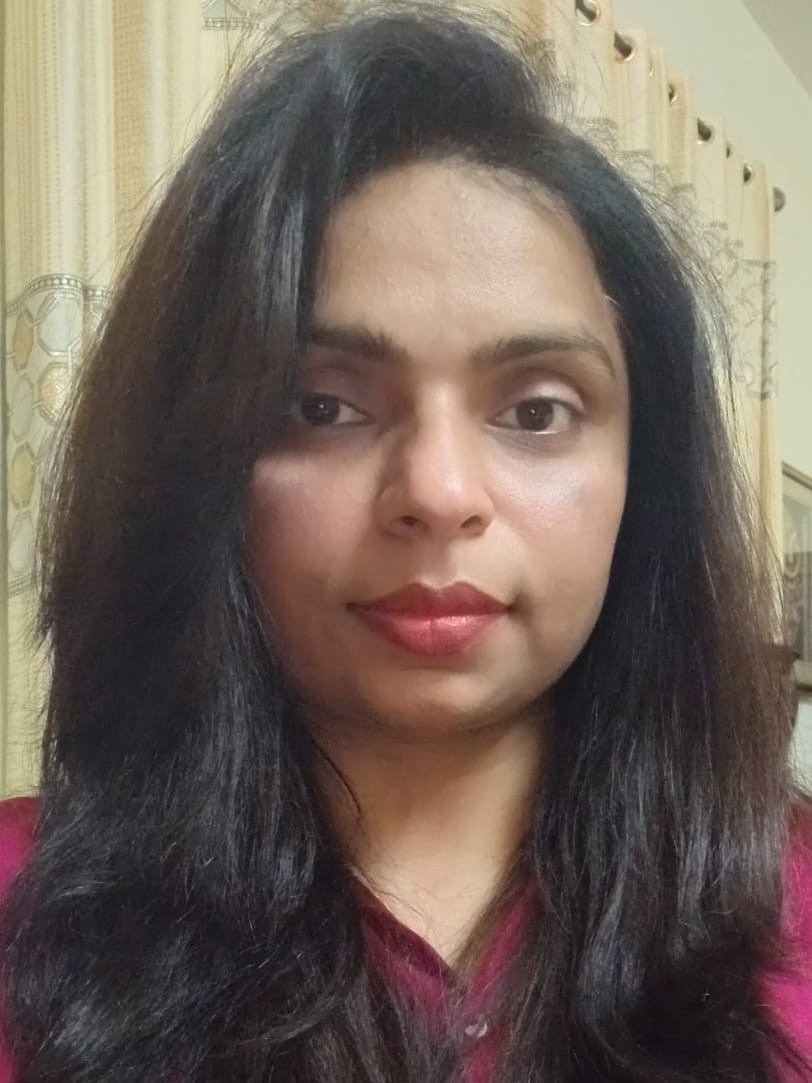
The writer is an Islamabad based Research & Policy Consultant.