
Taha Jabbar
Artificial Intelligence has evolved from domestic applications to states using it in various sectors, including military applications, diplomacy, and governance, thus becoming a strategic asset for states. AI has become the new battlefield of the 21st century. The US and China invest billions in infrastructure, cloud computing, and skill development, which are essential variables in AI advancement.
The geopolitical rivalry of the US and China has prompted them into an AI Cold War, shaped by gatekeeping technologies, trade embargoes, and tech competition. Meanwhile, weaker states are trapped in a cycle of strategic dependence, their sovereignty being shaped by broader dynamics of great power competition.
AI has become a part of the broader geopolitical rivalry between the US and China. The foundation of traditional US dominance in AI roots from initiatives like DARPA, which funded the internet and long-term research in language processing models and machine learning. Tech giants like Google, Microsoft, and OpenAI invest billions in AI research and development, data infrastructure, and cloud computing.
Meanwhile, US government policy on AI focuses on government support with private innovation: the government funds foundational research through institutions like DARPA, puts export controls on AI tech to secure strategic advantage, and allows big tech companies to commercialize and diffuse AI technologies.
On the contrary, Chinese AI policy is shaped by the state itself. China aims to lead the world in AI by 2030, mainly under its AI Development Plan, which places AI as the core tenet for achieving economic goals, military technological advancement, and government capacity. It invests billions into AI infrastructure, cloud computing, semiconductors, and talent development.
Meanwhile, research is coordinated across universities, laboratories, and national tech firms like Baidu, Tencent, and Huawei. Unlike the US, where the state shapes the AI ecosystem indirectly, in China this is shaped by direct state control, which aligns technological advancement with broader national security objectives and geopolitical ambitions.
What shapes the AI Cold War is the trade war, technological sanctions, and restrictions on research access. The US controls the export of advanced 3nm semiconductor chips to China, as well as talent flow and research access. This shows that AI has moved from the domain of just a technology into a variable in great power competition, where controlling technological chokepoints has become necessary in national security strategy.
This strategic dilemma mainly stems from the ability of AI to shape modern state power across multiple domains: modern warfare with autonomous weapon systems, surveillance systems, cyberwarfare tools, and intelligence operations, and global economic competition particularly affecting global supply chains, semiconductor exports, and AI-driven finance.
AI increases the soft power of a country in the dimensions of global AI governance, tech standard-setting, and influencing global norms. A clear example illustrating the significance of AI is US restrictions on Chinese access to research, technology, and infrastructure to slow the development of advanced AI technologies. Meanwhile, China uses the US’s strategic dilemma to its Favor, leveraging initiatives like the Belt and Road to export technology and gain influence in the developing Global South.
While both the US and China differ in their AI development strategies, it still gives birth to a technological hierarchy that leaves little room for bargaining for technologically weaker states. In the US, private companies control critical platforms, cloud infrastructure, and foundational models. Meanwhile, in China, the state controls the ecosystem and technological exports.
What this signifies for the Global South is that for AI technology, they have to either align with US-led corporate standards or with China-led state platforms. This creates a dependency cycle for weaker states and embeds power asymmetry into digital infrastructure. Meanwhile, powerful states use it as a geopolitical tool to trap weaker states in long-term dependency.
Emerging economies face increasing opportunities and vulnerabilities to external influences in the AI era, with most of them advancing their agriculture, cities, surveillance systems, healthcare, and education with the help of US and Chinese technologies.
Knowledge and financial asymmetry have concentrated talent and infrastructure in the US and China, which they use as leverage to tie weaker states into their own strategic priorities. While these countries advance their technology at the cost of external political influence, economic vulnerability, and constrained sovereignty, they are embedding global power asymmetries into their digital infrastructure.
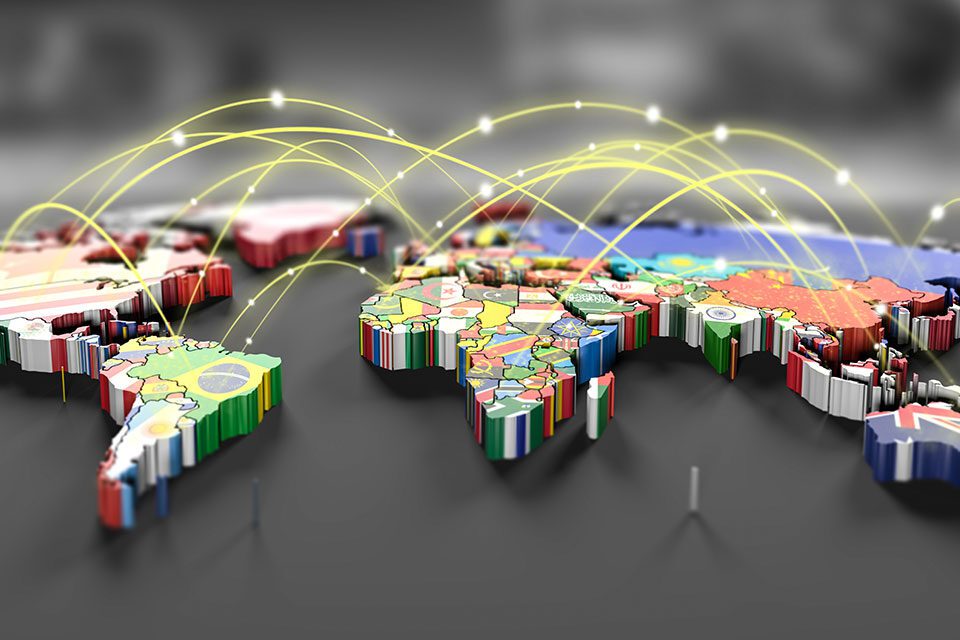
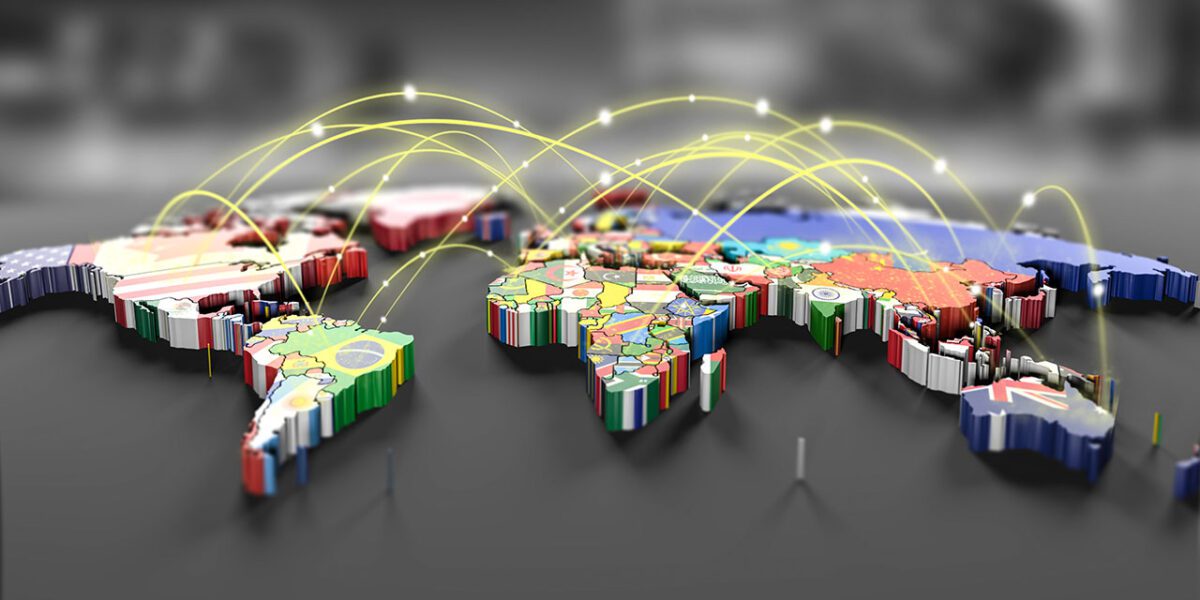
This places the Global South as the battleground for the emerging AI Cold War, with states pulled toward either US-led corporate ecosystems or China-led state platforms. To deal with this, developing economies must invest domestically to increase capabilities, build local AI research ecosystems, diversify their technology partnerships, and advocate for open standards and multilateral cooperation. They should participate in global governance frameworks to ensure that AI advancement helps development and does not deepen dependency.

The author is a International Relations scholar at the National Defence University, Islamabad, with focus on security, geopolitics, and conflict studies. Passionate about analysing regional dynamics and strategic affairs, he writes op-eds and explore traditional and non-traditional security challenges. His work bridges academic insight with policy relevance, aiming to inform readers about the complex interplay of threats shaping region dynamics.