

Leyla Rasgeldiyeva
Throughout the history of Central Asia, water has been a balancing act. There are two main rivers in the region: Amu Darya and Syr Darya providing a water supply for over 75 million people, however the two countries bordering the rivers have different needs. The mountain river springs are controlled by more than 80 percent of upstream countries, such as Kyrgyzstan and Tajikistan. They cannot rely on oil and gas hence, they use water in cold seasons to operate hydroelectric dams to heat and generate electricity.
Water consumption by the downstream countries (Uzbekistan, Kazakhstan and Turkmenistan) exceeds 85% of the water in the region, but during the hot summer months requires water to grow large cotton and wheat crops. The Soviet Union imposed a simple trade strategy, downstream states would ship coal and natural gas to upstream countries in winter, and upstream states would store the water to get it ready to irrigate in summer.
With the fall of the Soviet system in 1991, this trade began to fail, with the upstream countries suffering extreme cold during the winter months and the downstream farms experiencing droughts during the summer. These neighbors are now being compelled to settle for mutual solutions instead of old arguments due to the growing environmental pressures in today’s times.
A new approach is necessary, as there is little room for mistake in the region. World Bank and Asian Development Bank studies show that Central Asia’s glaciers surface declined about 30 % over the last 60 years. By 2050, scientists predict another 10-15 % reduction in river flows. To top it off, as much as 40% of the diverted river is lost in the old Soviet-built canals due to cracks and evaporation before it ever reaches a farm. According to the World Bank, the overall lost harvest and emergency assistance costs to Central Asian countries due to the lack of good cross-border water management are more than $4.5 billion annually.
For years, countries have tried to address this issue through a short-term agreements. Downstream countries traded millions of kilowatt-hours of power in the winter to prevent the reservoirs from drying up; the Toktogul Reservoir, which holds 19.5 billion cubic meters, is the largest of the states’ reservoirs. Upstream dams released 300 to 500 cubic meters of water per second during the summer growing season. However, the agreement could be broken if there was a single cold winter or a poor harvest of fuel, leaving farms without water.
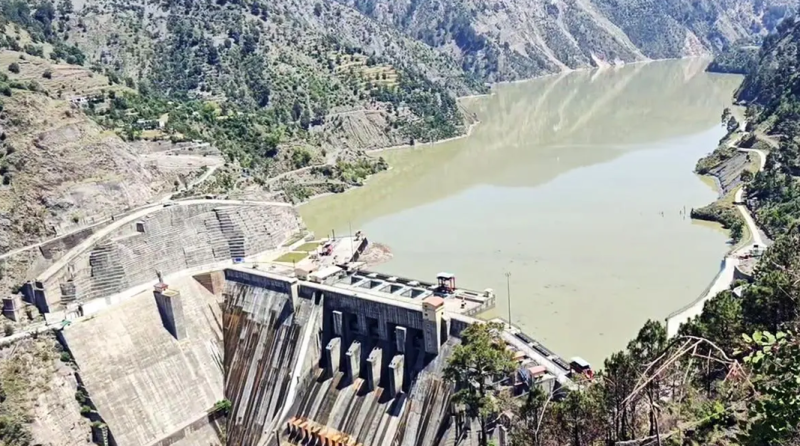
Central Asian countries are now shifting from temporary transactions to business partnerships in order to create stability in the long-term. The most significant success has been the $4.2 billion Kambarata-1 Hydropower Plant project in the Naryn River in Kyrgyzstan. The plant, which will feature a 256m-high dam and a 5.4bn cu m reservoir, will generate 5.6bn kWh of clean electricity annually.
The building was not to be built by Kyrgyzstan alone, instead an agreement was reached to share the facility between Kyrgyzstan, Uzbekistan and Kazakhstan, with Kyrgyzstan owning 34 per cent and both Kazakhstan and Uzbekistan owning 33 per cent each. As co-investors, downstream states do not just wait in line for water releases; they are on the board of directors along with the others and participate in determining water release programs.
Kyrgyzstan receives additional funds for winter electricity, and the water supply for Uzbekistan and Kazakhstan is guaranteed for their fields. Water in Central Asia is not only a resource of nature, but also the resource that connects and controls economy. Upstream power, downstream food security are interchangeable and need each other.
Building partnerships for infrastructure in the place of annual trade discussions demonstrates a shift from past conflicts to pragmatism. If Central Asian countries keep investing in the shared rivers, they will not only guarantee their water supply, but their shared geopolitical future as well.

The author is a scholar of International Relations with academic interests in global politics, diplomacy, and international security. She also has a strong interest in the current geopolitical developments and aims to make research and analytical writing a valuable tool for informed policy discussions.