
Momina Fatima
When the world is revolving around America and China, the middle power is being cornered, busy creating new poles of the world. It’s not a single country competing, but dozens in this domain. As we are aware of traditional middle powers, Australia, Canada, and nomads who are determined to work according to institutions. We see existing middle powers putting effort to change their existing order, like Turkey, Brazil, Australia, and South Africa.
Some rising middle powers are contributing globally as mediators, some playing a part in global finance, influencing global markets. Some middle powers, like India, are arguably straddling middle power and great power status. After the end of the Cold War, world politics has revolved around America for 3 decades, but now middle powers, instead of waiting for anyone’s orders, are resolving issues with the edge of money, resources and diplomacy. We see not a single middle power inclined totally towards America or China.
Two strategic postures are viewed as salient among middle powers: framing, followed by informing relations with great powers. In international relations theory, two types of middle powers have emerged: status quo middle powers and revisionist middle powers, which fall under the realism conceptual framework.
Status quo middle powers focus on protecting the system, operating through established institutions, i.e., the UN, WTO, NATO, and theG7. Like Canada, blockade NATO reforms from inside. While the revisionist middle powers focus on reforming the system, which they see as biased, i.e. UN Security Council seats, IMF voting shares. These powers’ transition theory of Organski was created to shed light on great power war, but in the contemporary multipolar world it is broadly applied to middle powers
Not every rising power wants a revolution, some just want a better seat. The increasing engagement of middle powers shows a transparent shift towards a multipolar world by managing international issues. Like Turkey brokered black sea grain deal by keeping the channels open with Russia and NATO simultaneously. Likewise, India is putting effort into deepening its ties with the US/Quad while staying in BRICS as well as buying Russian oil.
Similarly, Brazil is adopting a multi-alignment strategy in which it is negotiating with the US, China, and the Global South instead of choosing one. In a similar vein, Indonesia is forcing global players to cooperate with it directly through leveraging its nickel/ EV supply. In the same way, Gulf states, i.e., the UAE, Qatar, and Saudi Arabia, are focusing on turning oil wealth and diversifying it, also playing a part in mediating conflicts, like dealing with ceasefire and hostage issues.
$2.9 trillion. Its not a defense budget. It’s a warning. If we observe, we see different countries expanding their militaries; $2.9 trillion was spent in 2025; this is more than their entire economy. There is just an increase in military spending; a decline is never viewed. Big 5 are making up 60% of military spending. NATO members like Poland, Romania, and Sweden spent 30 to 40% on the military. Like I2U2, the Quad, and IPEF.
Now mini-lateral clubs are superseding old giant alliances. They are alliances with groups with common interests. Money is turning into new chaos among countries like India and Brazil are starting to trade through currencies, i.e., rupees, yuan, and others. All of this is weakening the dollar dominance. So, we see how small countries are ramping up.
Middle powers aren’t making speeches, but it is proving themselves through their actions, and the functions it is performing are impacting the entire world. Through all these actively participation, it is expanding its influence globally and reshaping the global order by demonstrating its capabilities. The dollar isn’t collapsing. It is being quietly outvoted. The world’s de-dollarisation: 9 out of 10 trades are going through the US dollar. For a few years, a shift away from the dollar has been observed; 90% of trade between Russia, China and India goes without the dollar.
The shift is changing; no one is handing out invitations anymore, and none of it is bringing peace. We can see these two splitting parts in two ways. One is the optimistic side, that is guaranteeing a balanced world through institutions of economics and peace and the other darker side as dog eat dog world where there is no check and balance.
More tension is rising as we see an increase in nuclear weapons and arms destruction. For example, China itself added 100 new nuclear warheads in a year. It’s crystal clear from all that the world has changed its direction. The question of this decade isn’t how the US and China handle their rivalry, but rather who else gets a say and on what terms? Now the middle powers aren’t waiting for anyone’s approval and aren’t waiting to be invited to the table. They are themselves pulling up their own chairs and sitting down. Something has quietly flipped, and most people haven’t noticed yet.
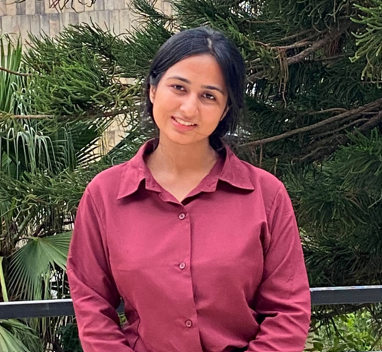
The author is a scholar of International Relations at Quaid-i-Azam University. She is an aspiring researcher, writer, and journalist with a keen interest in international relations, global affairs, politics, philosophy, and history.