Prof. Dr. Adam Saud
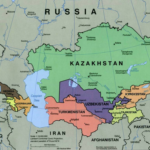
Uzbekistan is the largest double landlocked country in the world. With a population of over 38 million, Uzbekistan ha huge reserves of natural gas and gold. It is also one the leading cotton producer in the world. Majority of its population I under the age of 30 years. The GDP of the country is around $181 billion. Per capita income is the GDP per capita is roughly $4600 while GDP purchasing power parity (PPP) is around $ 14000. Growth rate is over 7%.
Uzbekistan has emerged as one of the leading reformist states not only in Central Asia but the whole Eurasian region. President Shavkat Mirziyoyev’s model of economic development can be declared as the second best after China. After continuing the state controlled, inward looking, and snail-paced economic reforms after the independence under the first President Islam Karimov, Tashkent witnessed gradual but sustainable structural economic reforms under President Mirziyoyev since 2016.
These reforms have been successful to attract massive foreign investment through modernization of economy and branding itself as the regional trade hub. Although, reforms have rapidly been adopted, economy is still carefully liberalized. Today, Uzbek model of economy represents a hybrid approach where trade liberalization is strongly supported but with a strong state direction. There is a strategic move where the state is gradually transforming the traditional commodity exports towards good exports with the help of strategic opening to global markets.
Major economic reforms introduced by Mirziyoyev’s regime are included but not limited to reduction in the trade restrictions, simplification and investor friendly tax policies, unified exchange rates, liberalization of currency from state controls, and investor friendly legal framework. The sequenced reforms by the Uzbek regime has been an effective strategy. This strategy helped Tashkent avoiding the shock therapy while adopting gradual and very carefully managed reforms. Despite the fact that state still coordinates major economic activities, private sector is active because of the legal and institutional reforms introduced by resident Mirziyoyev’s regime.
Macroeconomic reforms have been given priority by the state at this stage. In order to reduce and control the inflation, central bank ha been given independence besides tight control over the monitory policies. Inflation rate has been dropped to less than 7.5% in 2025. To improve the investment in infrastructure and social services, state has brought fiscal reforms for the improvement in transparency as well as expanding the tax base. In order to avoid the dual exchange rate system, Mirziyoyev regime introduced a major reform by implementing the currency exchange liberalization policy in 2017.
This move helped in building the local and foreign investors. It also resulted in the intensive engagement of International Financial Institutions like the IMF and World Bank with Uzbekistan. Such policies helped Tashkent to absorb major economic shocks of COVID-19 when the pandemic badly disrupted production and supply chain across the world. However, Uzbekistan remained one of the resilient economies while maintaining the strong growth rate as compared to other regional economies. This resilience has been attributed to prudent fiscal management and diversified trade partnerships.
Traditionally, Tashkent heavily relied on cotton and gold production and their export. Nevertheless, Mirziyoyev regime has diversified the economy beyond cotton and gold production. Major emphasis is on manufacturing. To attain this objective, state has invested millions of dollars in the manufacturing units while establishing special economic zone (SEZ) as well as industrial zones. Such initiatives have helped Uzbekistan in expanding the textile, food processing, chemicals, and automobile industry.
Reforms in the tax structure and modernization of infrastructure also heled in achieving this outcome. Uzbek textile industry has been under restrictions by the western countries under the pretext of so called ‘forced labor’ in the cotton fields. The ‘obligatory’ cotton plucking by the students have been eliminated, which has resulted in the uplift of Uzbek cotton and textile export to the European markets.
Another area of reforms has been the renewable energy. This move is not only to preserve the natural gas and uranium reserves but to protect the environment a well. With the help of foreign firms, Uzbekistan is producing the solar and wind energy that aligns with the SDGs and energy diversification strategies. Agricultural reforms have also been given high priority. Since most of the rural population is dependent on agro-economy.
The farmers have been given greater independence to produce crops of their own choice by reducing their quotas in wheat and cotton production. Careful land reforms have also helped in improving the productivity. Uplifting and modernization of agricultural research centers have helped the horticulture and fruit exports. Moreover, by encouraging diversification into higher-value crops, Tashkent aims to increase rural incomes and reduce vulnerability to commodity price swings.
Infrastructure and Connectivity: Leveraging Geography
Uzbekistan’s overland trade within the region and global markets depends on the neighboring states and region. Tashkent strongly supports regional connectivity initiative. Within the country, the government is investing massively to improve the transportation network. Upgradation of main highways, improvement and electrification of major railways routes, and operationalisation of smaller airports for domestic and international flight, are a few initiatives to integrate more deeply into Eurasian trade routes. Despite being the double landlocked country, Uzbekistan has made its greatest challenge as the greatest strength by positioning itself at the center of intra-Eurasian, and China’s trade with the European markets.
Since President Mirziyoyev came into power, Uzbekistan has substantially improved its relations with the neighboring countries. Under the visionary leadership of President Mirziyoyev, Uzbekistan resolved its long standing border conflict with Tajikistan and Kyrgyztan, and it has managed the water conflicts with these states as well. Such developments have not only facilitated the intra-regional trade in Central Asia but China’s international trade through the China-Central-Asia-West-Asia Corridor under the Belt and Road Initiative. Furthermore, Trans-Afghan railways project, a brainchild of the Uzbek president has also been acknowledged worldwide. Such initiatives have brought Uzbekistan at the center stage of regional integration initiatives.
As stated earlier, Uzbekistan’s gradual strengthening of private sector has been a key element of its model of economic development. State initiatives to introduce reforms have simplified business registration, reduced licensing requirements, and strengthened property rights protections. Due to such initiatives there has been a steady rise of FDI particularly in the fields of energy, banking, and construction. In order to finance the mega projects as well as modernize utilities, public-private partnership model has been initiated. Furthermore, a careful but gradual privatization of state enterprises is also ongoing. The key enterprises contributing in the state economy has yet to be privatized, but the partial listing in this regard would improve the efficiency as well transparency which may further strengthen the development model.
Uzbekistan’s model of economic development takes care of the social protection. Major aim of this model is investment in the human capital. Major reforms have been introduced in the higher education sector by opening up private universities as well allowing the global universities to open their campuses in the country. This initiative has not only exposed the Uzbek youth to international standards of education, but has also helped in improving the output of Uzbek Universities.
Major focus is on technical and professional education which is aligned with the industrial diversification. Other major steps are the improvement of healthcare and poverty reduction. According to UNDP, poverty rate has dropped from 17% in 2021 to only 6.8% in the first quarter of 2026. Although, inequality is still a challenge for the state, targeted social assistance programs seek to cushion vulnerable populations during the reform transition.
For the sake of investors’ confidence, a robust judicial system supporting the rule of law is a pre-requisite. Uzbek government has also introduced reforms in judicial policies which, now predominantly safeguards the investors’ interests. Similarly, transparency through digitilised governance model has not only boosted the investors’ confidence but also improves the administrative efficiency. E-governance has paved the way for direct financial transactions, setting aside the bureaucratic bottlenecks and increasing the transparency. Despite challenges, such initiatives have contributed positively towards Uzbekistan’s economic progress.
One of the strongest pillars of Uzbekistan’s economic reforms is the state guided transition. This strategy is set by the government in order to avoid the rapid liberalization, which may lead to further economic crises. Through this initiative, government prioritises the strategies which are eventually integrated into the expanded market mechanisms. This strategy is a key to balance the public and private sectors. Ownership of the key state assets alongwith careful privatization while keeping the social stability as a major priority is the key to this strategic balance. Although, such state directed privatization may slow down the efficiency and question the competitiveness, this surely avoids the economic shocks besides possible social dislocation.
Every transformation is entangled with certain challenges and risks, so is the case of Uzbekistan’s economic reforms. The reforms need sustainable institutional support. There should not be a change in the policies once Mirziyoyev regime is not in power. The strong institutionalization will help counter the bureaucratic hurdles and opposition from the state-owned enterprises. Being a double landlocked country, it is dependent on neighboring states for its international trade. Recent conflicts like Ukraine and the Middle Eastern crises, and Pakistan-Afghanistan tension is another challenge to Uzbekistan’s quest to reach international markets through new routes.
Being of the youngest nations in the world, demographic pressure in the form of youth who is seeking for job opportunities is a big challenge for the state. Failure to provide them ample job opportunities may affect the social cohesion and stability in the long run. Uzbekistan also faces severe climatic challenges. Dried Aral Sea and increased stress on the existing water sources particularly Syr darya pose a risk to the agricultural productivity and energy exports. In order to mitigate the environmental challenges, regional mechanism is inevitable.
Despite these challenges, Uzbek regime is committed to provide its citizens a respectable economic environment. For which it has adopted five priorities which include industrial diversification, improving the infrastructure, adopting digitalization, focusing green initiatives, and careful and guided privatization. If materialized effectively, these pillars would help Uzbekistan attaining the status of upper middle income country in near future. However, success will depend on sustaining investor confidence, enhancing institutional independence, and ensuring that growth remains inclusive.
Uzbekistan has adopted a gradual and state guided path to privatization and economic diversification. This is a pragmatic approach where, at the one hand state avoids abrupt shocks of the liberalization policies but at the other hand, it wants to encourage private enterprises to contribute in the economic diversification. Under President Shavkat Mirziyoyev, reforms have reshaped macroeconomic policy, improved the business environment, and revitalised regional diplomacy.
While challenges persist, from demographic pressures to climate risks, the trajectory suggests cautious optimism. Uzbekistan presents a case study to the regional states as well as other countries of the world with an alternative model of economic reforms. However, sustainable intuitions, consistency, and support from the general public, will determine the future success of this economic model. Nevertheless, for now, Uzbekistan stands as one of Central Asia’s most compelling economic transformation stories.
The author is a Professor of International Relations at Bahria University, Islamabad, Pakistan.