

Alimjanova Fotima Iftixorovna
Central Asia is approaching an energy paradox. The region needs substantially more electricity to support economic growth, industrialisation, urbanisation, and digitalisation, yet one of its most important energy resources – water – is becoming increasingly uncertain. Electricity demand across Central Asia is projected to triple by 2050 under a business-as-usual scenario, while regional electricity trade currently accounts for only about 3% of total demand and variable renewables contribute just 4% of power generation.
The central question is therefore no longer simply how Central Asia can produce more electricity, but how it can build an energy system that remains reliable when water becomes less reliable.
This vulnerability is already embedded in the region’s energy structure. Kyrgyzstan generates around 90% of its electricity from hydropower, while hydropower accounts for approximately 78% of its generating capacity. Tajikistan is even more dependent, obtaining more than 98% of its electricity from hydropower. Such dependence becomes a national security concern when water availability changes.
During the 2015-2016 water shortage, Kyrgyzstan’s hydropower production fell to approximately 11,300 GWh, 13.6% below its ten-year average, contributing to winter shortages, rolling blackouts, and increased reliance on imports. The experience demonstrates a broader principle: when electricity generation is concentrated in a climate-sensitive resource, a hydrological shock can quickly become an energy-security shock.
Yet the region’s response to growing electricity demand could deepen this exposure unless it is carefully designed. Central Asian states are investing in major hydropower projects because they offer large quantities of relatively low-carbon electricity and can strengthen regional supply. Uzbekistan plans to increase its hydropower capacity from around 1.91 GW to 3.785 GW by 2030.
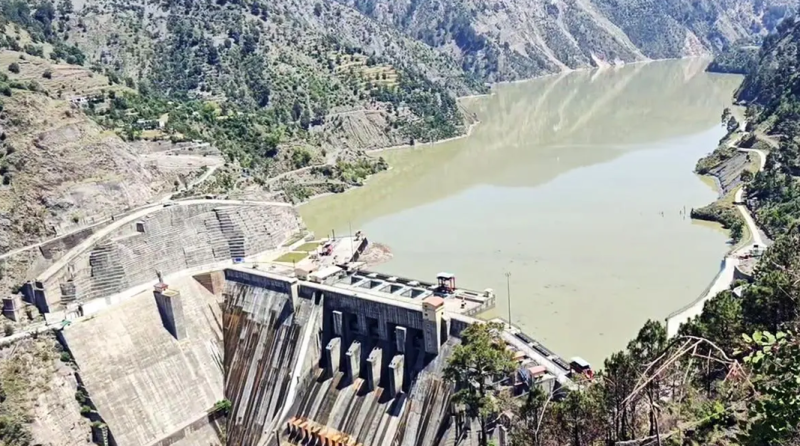
Tajikistan’s 3.78 GW Rogun Hydropower Project is expected to generate approximately 14,400 GWh annually, while Kyrgyzstan’s planned 1.86 GW Kambarata-1 project is expected to produce around 6,000 GWh. These projects can make a significant contribution to energy security, but they also expose the central dilemma: expanding water-dependent generation does not remove hydrological risk. It increases the importance of managing that risk.
That risk is becoming more significant because the region’s water outlook is deteriorating. The Asian Development Bank estimates that water volumes in the Syr Darya and Amu Darya basins could decline by 10–15% by 2050. By 2050–2100, reductions could reach up to 30% in the Syr Darya and 40% in the Amu Darya. Uzbekistan’s water deficit, currently estimated at around 3 billion cubic metres, could reach 7 billion cubic metres by 2030 and as much as 15 billion by 2050.
These projections matter for energy policy because the same rivers support agriculture, households, and hydropower across borders. Water scarcity can therefore create competing demands for the same resource, turning what appears to be an environmental challenge into a regional economic and energy-security problem.
The experience of developed economies shows why this risk should be addressed before a crisis occurs. Spain’s severe drought in 2016–2017 reduced hydropower output by as much as 50%, contributing to record electricity prices and increased fossil-fuel generation. California faced a similar problem: drought reduced in-state hydroelectric generation by 32% in 2021 compared with the previous year. Neither case suggests that hydropower is an unsuitable technology.
Instead, both demonstrate the danger of allowing one climate-sensitive resource to carry too much responsibility for electricity security. For Central Asia, where hydropower dependence is particularly high in some countries, diversification should therefore be considered a form of energy-risk management rather than simply an environmental policy.
Diversification, however, requires capital on a scale that national budgets alone are unlikely to provide. Central Asia has around $20 billion in identified energy investment opportunities by 2030, including renewable generation and modernization of electricity grids. Investment should prioritize solar and wind alongside hydropower, but generation alone is not enough.
Battery storage can provide flexibility when renewable output fluctuates; modern transmission infrastructure can move electricity between areas of surplus and shortage; and energy-efficiency measures can reduce pressure on the system altogether. Uzbekistan’s target of obtaining 25% of electricity generation from renewables by 2030, 11.2% from hydropower, 8.8% from solar and 5% from wind, illustrates how diversification can reduce reliance on any single resource.
The effectiveness of these investments will ultimately depend on whether Central Asia treats its electricity networks as interconnected regional infrastructure rather than five largely separate national systems. Kyrgyzstan and Tajikistan possess substantial hydropower resources, while Kazakhstan, Uzbekistan and Turkmenistan have greater fossil-fuel generation capacity and rapidly expanding solar and wind potential.
Regional electricity trade can allow these different resources to complement one another across seasons and reduce the need for every country to maintain expensive excess capacity. The World Bank’s 2026 Regional Electricity Market Interconnectivity and Trade programme aims to establish Central Asia’s first regional electricity market, increase annual electricity trade to at least 15,000 GWh, expand transmission capacity to 16 GW and enable up to 9 GW of clean-energy resources. Stronger regional integration could generate up to $15 billion in economic benefits by 2050.
Central Asia therefore faces a choice that extends beyond the question of which power plants to build. Hydropower will remain indispensable to the region, particularly for Kyrgyzstan and Tajikistan, but treating it as the primary answer to rising electricity demand would leave energy security increasingly exposed to water insecurity.
The more resilient strategy is to diversify generation, modernize grids, attract private investment, strengthen regional electricity trade, and incorporate water availability into every major energy decision. Central Asia cannot determine how quickly glaciers retreat or how river flows change, but it can determine how vulnerable its electricity system becomes as they do.
The region’s energy security will ultimately depend not on producing the most electricity, but on building a system capable of delivering reliable power when the water on which it has historically depended becomes less reliable.

Alimjanova Fotima is a fourth-year student at the University of World Economy and Diplomacy (UWED) in Tashkent, pursuing a Bachelor’s degree in International Economics and Management. Her research focuses on Central Asian energy security, water governance, and regional economic cooperation. She is particularly interested in how climate-driven resource constraints shape policy choices, cross-border cooperation, and long-term development strategy across Central Asia.