
Shodiyor Gaybullaev
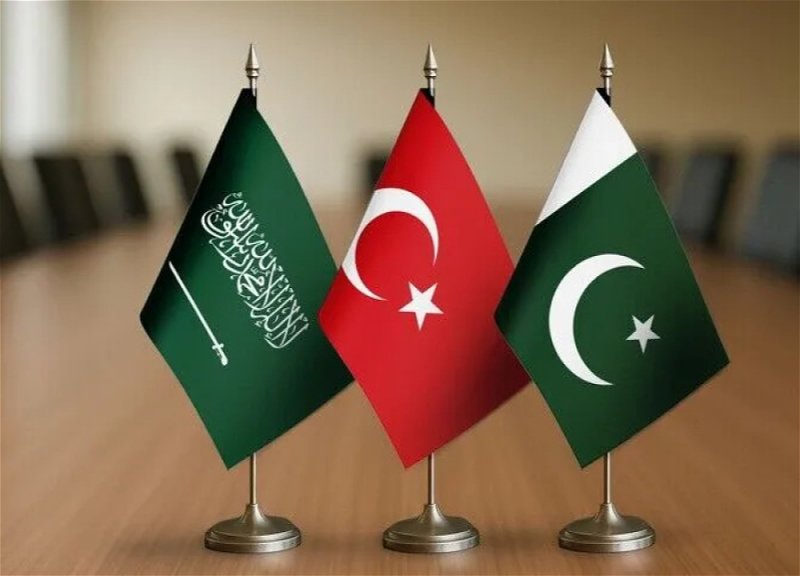
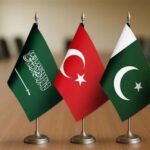
,In 2026, August 7th, Kingdom of Saudi Arabia, Turkey and Pakistan signed a pact called the Makkah Joint Defense Agreement (MJDA). Many experts and people call it a milestone moment, and some journalists even used the phrase “Islamic NATO” or “Muslim Alliance”.
However is this a correct comparison? In my opinion, this pact is not a new NATO or Muslim Alliance. It is something more careful, reasonable, and yet limited. It is a strategic barrier by middle powers who no longer trust the United States of America and are cautious about the expansion and aggression of Israel who have their own separate reasons for signing.
What the pact actually says: The most important element of this agreement is its collective defense section. It states that an attack on one member is treated as an attack on all members, which is similar to Article 5 of the NATO treaty. This is a sensational event which made the world grab attention.
Experts at Harvard Kennedy School say that this pact did not appear out of nowhere. It builds directly on the Strategic Mutual Defense signed by Saudi Arabia and Pakistan in September 2025. So, the Makkah Pact is not a sudden new alliance but more of a gradual expansion of an already existing relationship, and now Turkey has joined.
Three countries and three different motivations explained: This is the most important part of this pact, because not all three countries are joining for the same reason.
Pakistan has the most symbolic gains in this pact. This country is considered the only nuclear-armed state in the Muslim world, and this fact shows its real weight. Some experts argue that this pact quietly sends a nuclear-related signal toward India, showing their self-defense is enough for any military action. Simultaneously, Pakistan spent years trying to change its global image from a country linked with militancy to a country that provides regional stability. Its recent role in US-Iran mediation supports this idea of image, and this new Makkah Pact adds another piece of evidence to that status of country.
Turkey’s motivation is different in this mentioned pact. Over the last few years, Ankara experienced growing tensions with Brussels and Washington, particularly inside NATO, as stated by some experts. As this pact was signed by Turkey, the country remains a NATO member, and officials say that the Makkah Pact does not conflict with or replace it. But this creates a paradox, as Senem Aydin Duzgit, who is Belfer Center analyst at Harvard Kennedy School. She states that Turkey is trying to gain more strategic independence by joining more security arrangements; it may actually create new dependencies and new obligations if it gets pulled into real conflicts that are not its own, for example, Pakistan’s rivalry with India.
Saudi Arabia’s reason is the most pragmatic in this pact. Kingdom faces continuous local security problems such as Houthi forces in Yemen, along with tensions with Shia groups in Iraq and general volatility along its borders. These above-mentioned problems are not colossal or existential on their own, but they create perpetual disturbance. Moreover, Riyadh appears deeply worried about relying only on the United States of America. After the recent Israel-Iran war showed unpredictable American behavior, Saudi Arabia seems to be diversifying its protection portfolio rather than replacing Washington completely.
Is this really about Israel? Another layer of this story has concerns about Israel. Some analysts suggest that this created pact is partly to the reaction of Israel regional expansion and growing military courage. Ironically, US attention during recent regional conflicts focused greatly on Israel’s side and left Gulf and Muslim-majority states less protected. Some Israeli political activists reportedly view this Makkah Pact as a serious and concerning advancement for Israel’s own security calculations, even though Pakistan officially called the agreement purely defensive and non-directional.
Some experts say that this signed pact will not matter much. Karen Elliott House writes that this agreement is more about public relations rather than real military power. She says this pact creates an appearance of independence because Saudi Arabia already knows that the U.S military can actually protect it from Iran and possible threats, without changing the real balance of power. This is a fair and crucial criticism. Declaring a defense pact is simpler than establishing mutual command structures, cooperative training, or real integration between three different militaries.
Both views can be true at the same time in this context. This announced Makkah Defense Pact is symbolically powerful and limited in strategic terms. It openly shows that these three countries no longer want to depend on a single security guarantor. This is an important shift in world politics and how regional powers think about their own security. In the following years, if this develops into real cooperation on missile defense, intelligence sharing, or defense production, it might truly reshape the region. If it is as “ink on paper” as Edward Djerejian describes it, then it will mostly function as a political signal rather than a working alliance.
The Makkah Defense Pact should not be ignored as empty symbolism but also not be overestimated as a new NATO. This is a careful step by three countries trying to protect their interests without relying on a single superpower. Time will show if this produces real security or if it is just diplomatic talk, depending on what they, in fact, build together.

Shodiyor Gaybullaev is a graduate of Webster University with a Bachelor’s degree in International Relations. His research focuses on Central Asian and Middle Eastern geopolitics, Gulf regional affairs, and governance. He is particularly interested in strategic partnerships and how evolving alliances shape political and security dynamics across these regions.