
Arooj Sabir
The promise of moderation marked the return to power of the Taliban regime in August 2021 as compared to their rule in the 1990’s. Four years later, those promises have proved to be nothing but a white lie. Afghanistan today stands as the world’s most devastating example of the systematic persecution of women and girls. It is the only country in which a 12-year-old girl has the classroom doors shut on her because she has turned a year older. The UN, Human Rights advocates, and International Courts define the current situation as “gender apartheid.”
This is chaos built by design. Since 2021, the Taliban have issued more than 230 decrees, each meant to systematically restrict women, which led to a formalized campaign in August 2024: “Law on the Promotion of Virtue and Prevention of Vice.” New laws require women to wear full face coverings and to travel only with a male guardian (mahram). The decree prohibits women from singing or any audible speech outside their homes. The May 2026 marital separation law made it harder for women to escape abusive marriages, strengthened male guardianship, and increased concerns regarding child marriage trends. These are abusive laws knitted in patience to punish a being for their gender.
According to UNICEF, by 2025, around 2.2 million adolescent girls were barred from gaining education beyond the primary level. The draconian laws have driven 78 percent of young Afghan women out of education, employment, and training of any sort. The crisis deepens, given that current professionals are hindered from working and there is no next generation prepared to replace them. Beauty salons, gyms, parks, and even bathhouses are declared off limits as they are considered ‘immoral’ by the Taliban regime.UN Special Rapporteur Richard Bennet questioned how the closure of Band-e-Amir national park for women could align with “sharia and Afghan culture.’’
This is and was never about faith. The forceful conversion of roughly 50 Ismaili villagers in Badakshan to Sunni Islam depicts that the Taliban are away from the true spirit of Islam, which clearly states, “Let there be no compulsion in religion.”In Baniyan, Shia gatherings and religious books were banned, and in the same year, the Taliban forced approximately 200 men, women, children, and elders from the Hazara community residing in Rashak village from their homes with no resources.
The pattern is clear: The Taliban do not protect Islam. Even the ICC prosecutor stressed that the interpretation of Sharia by the Taliban cannot be used to justify their systematic suppression of women and girls. They use religion as a political weapon to subdue the weak: women, Hazara, Ismaili, etc.
Silencing journalists is a key pillar of the Taliban regime. Writers, activists, and journalists live under routine monitoring and censorship. Women journalists not only face the hard rules of dress codes, but also restrictions on public anchoring. Since 2021, the Taliban have closed more than 300 media houses and detained journalists who spoke against their policies. The fear forced current media houses operating in Afghanistan to shift to scripts that were regime-approved.
All policies of the Taliban violate international legal obligations. In 2003, Afghanistan became party to the Convention on the Elimination of All Forms of Discrimination against Women (CEDAW). Through CEDAW, the country must guarantee women the chance to live in a society free from any discrimination. Taliban policies therefore go against promises Afghanistan legally committed to uphold. Global efforts have shifted from words to action.
The ICC issued arrest warrants against Taliban Supreme Leader Haibatullah Akhunzada and Chief Justice Abdul Hakim Haqqani for crimes against humanity, including persecution of women and girls. The legal actions are a strong message for the Taliban, but will they be enough to help Afghan women regain their freedom?
On the international level, all states must endeavor to keep up diplomatic pressure against the Taliban and ensure that humanitarian aid is reaching vulnerable citizens without any hindrance. Foreign parties must give priority to women’s organizations in Afghanistan, protect threatened journalists and human rights activists, and ensure access to education wherever possible.
Furthermore, it is necessary that Afghan women get a diplomatic voice so that they can join in the deliberations about the future of their country. As legal jargon determines prosecution, Amnesty International has pressed for registering gender apartheid as an international crime.
Irrespective of the Taliban suppressive regime, Afghan women have not given up. They continue their daily defiance through underground schools, local activism and literature. Their courage is proof that the Taliban regime’s campaign to erase women publicly has and will turn out to be futile. These acts of defiance by Afghan women will show the world that women’s rights cannot and should not be treated as political and cultural currencies.
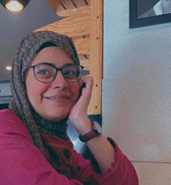
The author is an MS scholar in Peace and Conflict Studies at NUST after completing an M.A. in English Literature from Quaid-i-Azam University. I have worked as a sub-editor at the Islamabad Policy Research Institute (IPRI) and as a content writer at The Truth International.